
What Are the 2026 Top Overlay Welded Pipe Suppliers?

Identifying the 2026 top Overlay Welded Pipe suppliers requires more than comparing catalog prices or polished websites. Buyers should examine welding capabilities, alloy selection, dimensional control, and documented quality systems. A reliable supplier can explain how the overlay bonds to the base pipe, how thickness is measured, and how defects are handled before shipment.

This guide focuses on suppliers with verifiable production experience, qualified welding procedures, traceable materials, and consistent inspection records. Practical evidence matters. Look for mill certificates, welding procedure qualifications, ultrasonic testing reports, and clear references from oil, gas, chemical processing, or power projects. Factory capacity also deserves attention. A supplier may offer impressive specifications but struggle with large diameters, tight tolerances, or urgent schedules.

The strongest Overlay Welded Pipe manufacturers usually combine engineering support with dependable after-sales service. They should help select corrosion-resistant alloys, clarify operating temperatures, and recommend testing based on the application. Independent inspections can add confidence, especially for critical pipelines.

Still, “top” is not a permanent label. Market conditions change. Production quality can vary between facilities, batches, or subcontractors. That point is easy to overlook. This comparison therefore treats supplier reputation as evidence-based, not absolute. It considers technical competence, certification credibility, delivery performance, communication, and customer feedback. Readers should verify current records directly before making a purchasing decision. A careful review may reveal that the cheapest quotation is not the lowest-cost option over the pipe’s service life.
What Are the 2026 Top Overlay Welded Pipe Suppliers?

What Is Overlay Welded Pipe and Where Is It Used?

What Are the 2026 Top Overlay Welded Pipe Suppliers?

What Is Overlay Welded Pipe and Where Is It Used?

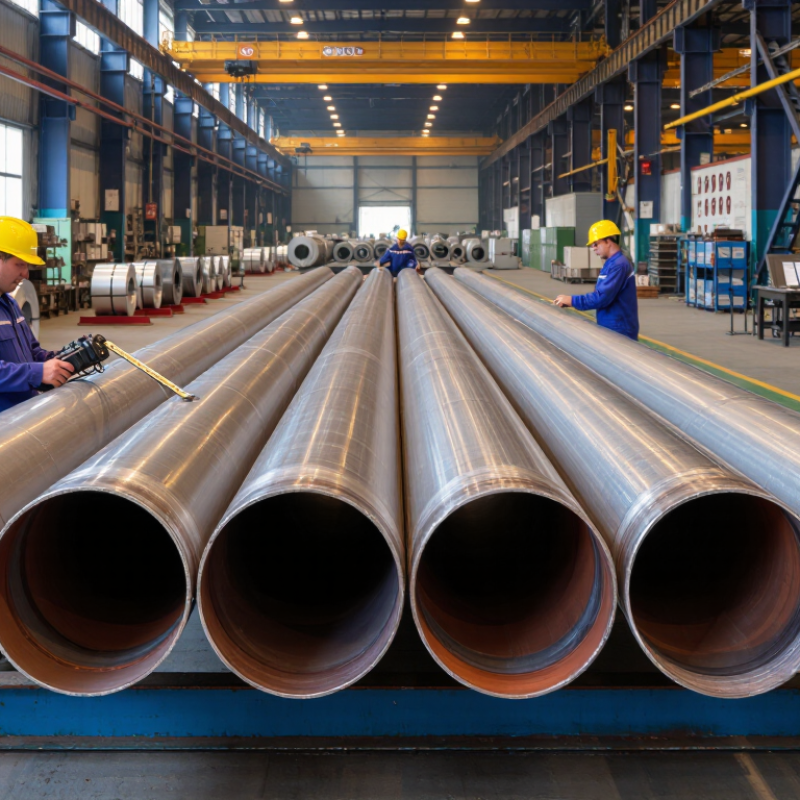
Overlay welded pipe is a steel pipe with a metallurgically bonded alloy layer. The overlay protects the internal surface from corrosion, erosion, heat, or chemical attack. Common alloys include stainless steel, nickel-based materials, and other corrosion-resistant grades. The base pipe provides structural strength. The overlay handles the harsh environment.

This pipe is used in oil and gas processing, chemical plants, power generation, mining, and marine systems. For example, a refinery transfer line may carry hot fluids containing chlorides or hydrogen sulfide. A properly selected overlay can extend service life and reduce replacement work. Field experience shows that weld quality matters as much as alloy selection. Uneven thickness can create weak areas.

In 2026, reliable suppliers should provide traceable material certificates, qualified welding procedures, and documented inspection results. Look for ultrasonic testing, dimensional checks, chemical analysis, and clear repair records. Ask about overlay thickness tolerance and pipe-end treatment. These details affect installation. Supplier capacity also matters when projects require long lengths or complex diameters.

No supplier is perfect. Some offer excellent welding control but limited delivery flexibility. Others provide fast production but weaker technical support. That trade-off deserves careful review. Engineers should compare test reports, production experience, and after-sales response before approval. A sample inspection can reveal more than polished sales language.

How to Evaluate Overlay Welded Pipe Suppliers in 2026

Evaluating overlay welded pipe suppliers in 2026 requires more than comparing prices or polished catalogs. Start with the service conditions: fluid chemistry, temperature, pressure, abrasion, and expected operating life. A supplier should recommend a suitable base pipe and overlay alloy, not simply offer a standard thickness.

Ask for proof. Request welding procedure qualifications, operator records, overlay thickness maps, dilution data, and heat-number traceability. Reliable suppliers can explain how they control porosity, cracking, distortion, and uneven coverage. Numbers matter. Check ultrasonic testing, penetrant testing, hardness results, bend tests, and metallographic reports when required. Independent inspection can reveal gaps between production claims and delivered quality.

Production experience also deserves close attention. Visit the facility when possible, or request dated process photographs and sample inspection records. Ask how rejected sections are repaired and documented. That gap matters. A supplier may pass laboratory tests yet struggle with long pipe lengths, complex diameters, or urgent replacement orders. Delivery capacity, packing methods, technical support, and response time should appear in the evaluation.

A polished brochure is not enough. Sometimes, even a technically strong supplier provides incomplete records or unclear tolerances. That should trigger further questions, not immediate rejection. Compare several suppliers using the same technical checklist, then examine whether their data remains consistent across projects, batches, and inspectors.

Leading 2026 Overlay Welded Pipe Suppliers by Capability

In 2026, leading overlay welded pipe suppliers are judged by capability, not catalog size. Experienced suppliers manage corrosion-resistant alloys, carbon steel bases, and demanding service conditions. Their workshops should handle defined pipe diameters, wall thicknesses, and overlay widths. Practical capacity matters more than impressive machinery.

Strong suppliers use qualified welding procedures and controlled heat input. They monitor dilution, penetration, bead overlap, and surface geometry during production. Automated welding can improve consistency, but skilled technicians still matter. They review procedure qualification records, welder credentials, and inspection results before release. Non-destructive testing may include visual checks, ultrasonic testing, and liquid penetrant inspection. Traceable heat numbers connect each pipe to its material certificates.

Ask for evidence from comparable projects. Field experience with pressure equipment, chemical lines, or energy infrastructure can reveal useful judgment. Reliable suppliers provide inspection plans, dimensional reports, repair records, and shipment documentation. Small details matter. A clear weld map can prevent a costly mistake. Still, no supplier is perfect. Minor repairs, delayed certificates, or uneven communication may appear during complex orders. The better question is how openly the supplier reports problems and corrects them. Some buyers focus too heavily on price. That can hide risks in testing, lead time, or service support. Capability deserves closer attention than polished sales language.

How Overlay Welded Pipe Suppliers Compare on Quality and Cost

Overlay Welded Pipe Suppliers: Comparing Quality and Cost

A low quotation is not always economical. Overlay welded pipe suppliers often reduce cost by applying a corrosion-resistant alloy over carbon steel. This can lower material spending compared with solid alloy pipe. The World Steel Association’s October 2024 outlook projected global steel demand at 1.75 billion tonnes in 2024 and 1.77 billion tonnes in 2025. That volume keeps carbon steel widely available, but alloy prices remain sensitive to nickel and chromium markets.

Quality depends on more than alloy grade. Ask for procedure qualification records under ISO 15614-7 and welder qualifications under ASME Section IX. Request dilution results, hardness mapping, ultrasonic testing, and bend-test records. A practical overlay commonly measures about 3–6 millimeters, but thickness must match corrosion calculations. Suppliers aligned with API 5LD can offer stronger documentation for clad or lined line-pipe applications. Field inspection often finds incomplete fusion near pipe ends. Small detail. Expensive repair.

Cost comparisons should include welding repairs, inspection, delivery, and service life. A supplier quoting 8% less may use thinner overlays or provide fewer non-destructive tests. That saving can disappear after installation. The 2024 World Steel Association outlook also noted continued pressure from energy and raw-material costs, which affects fabrication pricing. I would compare at least three technically equivalent offers, not three headline prices. Some supplier claims remain difficult to verify. Independent inspection is worth budgeting for.

What Are the 2026 Top Overlay Welded Pipe Suppliers? - How Overlay Welded Pipe Suppliers Compare on Quality and Cost

Indicative 2026 market benchmark based on commonly specified welded-overlay pipe capabilities. Prices and lead times vary by diameter, alloy, order quantity, testing requirements, and delivery location.
Supplier Profile Typical Overlay Process Common Base Pipe Typical Overlay Materials Typical OD Range Typical Overlay Thickness Quality and Compliance Evidence Typical Lead Time Relative Cost
Profile A: Premium Process Specialist Automated strip cladding with controlled heat input Seamless or longitudinally welded carbon-steel pipe Nickel alloys, stainless steels, and corrosion-resistant alloys 6–36 in 2–6 mm Welding procedure qualification, welder qualification, chemical analysis, dimensional inspection, ultrasonic testing, and macro examination 12–20 weeks High
Profile B: Large-Diameter Industrial Supplier Submerged-arc welded overlay or tandem-wire cladding Longitudinally welded and spirally welded pipe Austenitic stainless steel and nickel-based alloy systems 16–60 in 3–8 mm Material certificates, weld maps, visual inspection, radiographic or ultrasonic testing, hydrostatic testing, and traceability records 10–18 weeks Medium–High
Profile C: Flexible Custom-Fabrication Supplier Gas-metal-arc or gas-tungsten-arc overlay for custom geometries Carbon-steel, low-alloy steel, and fabricated pipe spools Stainless steel, duplex stainless steel, and nickel alloys 2–24 in 1.5–5 mm Procedure qualification records, visual and dimensional inspection, dye penetrant testing, hardness testing, and customer-specific inspection plans 8–16 weeks Medium
Profile D: High-Volume Cost-Focused Supplier Automated submerged-arc or electroslag strip overlay Welded carbon-steel pipe for process and utility service Stainless steel and standard corrosion-resistant alloys 8–48 in 2–5 mm Mill test certificates, weld procedure documentation, visual inspection, ultrasonic testing, and hydrostatic testing when specified 6–12 weeks Low–Medium
Profile E: Energy-Project Qualification Supplier Automated strip or wire cladding with project-specific qualification Line pipe and pressure-service welded pipe Duplex stainless steel, super duplex, and nickel-based alloys 10–42 in 3–7 mm Mechanical testing, corrosion testing when required, positive material identification, ultrasonic testing, hardness mapping, and complete weld traceability 14–24 weeks High
Comparison guide: Quality is primarily influenced by overlay uniformity, dilution control, bond integrity, inspection coverage, and material traceability. Cost is typically driven by alloy type, overlay thickness, pipe diameter, testing scope, order volume, and delivery schedule.

How to Select the Right Overlay Welded Pipe Supplier

How to Select the Right Overlay Welded Pipe Supplier

Selecting an overlay welded pipe supplier requires more than comparing prices. The NACE IMPACT Study estimated global corrosion costs at about US$2.5 trillion annually, equal to nearly 3.4% of global GDP. That figure makes material compatibility a business decision, not only an engineering detail. Ask suppliers to explain their cladding alloy, base-pipe grade, welding process, dilution control, and minimum overlay thickness. Request test records for hardness, ferrite content, bond integrity, and corrosion resistance. Clear answers matter.

Inspect the supplier’s quality system closely. Confirm procedure qualification records, welder qualifications, heat-treatment controls, and traceability from plate to finished pipe. For pipeline applications, check alignment with project requirements and relevant standards, such as API 5L, ISO 3183, ASME Section IX, and ISO 15156 where sour service applies. Independent inspection can verify ultrasonic testing, dimensional tolerances, and repair procedures. Do not accept vague claims.

Tips: Request a production sample, not only brochures. Compare actual reports. A supplier handling large volumes may still lack overlay experience. World Steel Association data recorded roughly 1.88 billion tonnes of crude steel production in 2024, but steel output alone does not prove cladding quality. I would also examine delivery records and nonconformance history. A clean presentation can hide weak process control. This is where careful questioning matters.

What Are the 2026 Top Overlay Welded Pipe Suppliers?

How to Select the Right Overlay Welded Pipe Supplier

This procurement weighting model highlights the factors buyers commonly use when comparing overlay welded pipe suppliers. Technical performance and documented quality evidence should receive the highest priority, followed by traceability, dimensional compliance, delivery capability, lifecycle cost, and certifications. Adjust the weighting to match the operating environment, such as abrasive slurry, high-temperature service, or corrosive chemical transport.

Enquire Today

"*" indicates required fields