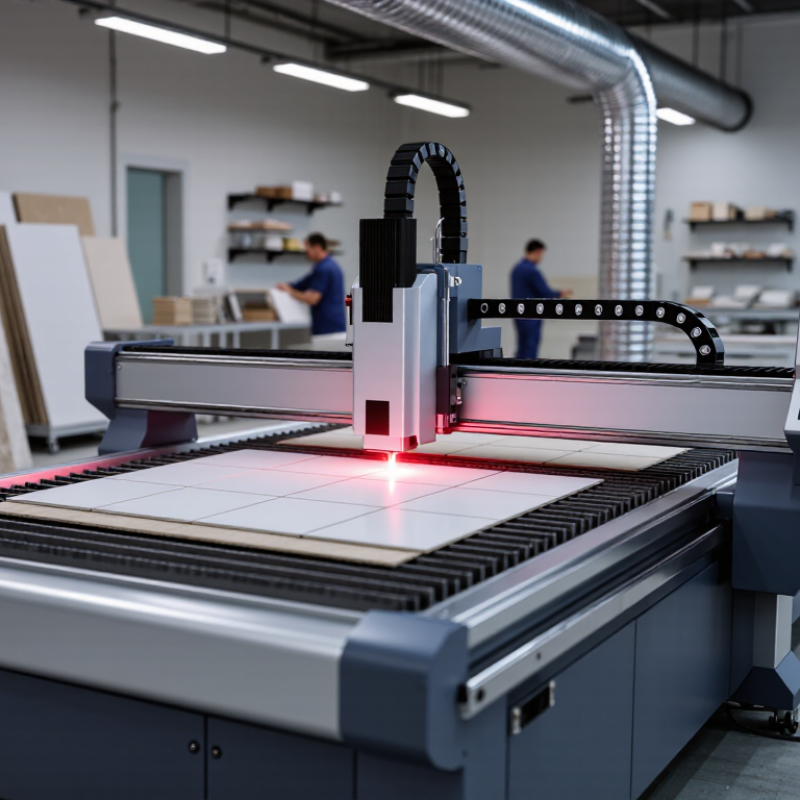
Choosing a Tile Laser Cutting Machine is not simply a matter of comparing wattage and advertised speed. Global buyers must examine cutting accuracy, ceramic compatibility, cooling performance, software stability, and after-sales support. A machine that looks impressive online may struggle with glazed porcelain, thick slabs, or repeated production work. Small details matter. Edge chipping can appear after several hours, not during a showroom demonstration.
Dr. John Powell, a recognized laser-processing specialist, has said, “The laser is only a tool; the process makes the quality.” This principle is highly relevant to tile fabrication. The right lens, focus distance, feed rate, extraction system, and operator training often determine the final result. Therefore, this guide reviews seven leading Tile Laser Cutting Machine options for international buyers. Each model is considered through practical criteria, including working-table size, laser source reliability, beam control, maintenance requirements, and regional service access.
There is no perfect machine. That deserves attention. A compact model may offer excellent precision but limit large-format projects. A powerful system may cut faster but require higher energy use and stronger ventilation. Buyers should request sample cuts, inspect the underside of finished tiles, and confirm replacement-part availability before ordering. Voltage requirements, language support, shipping protection, installation guidance, and warranty response times also deserve careful review. The best choice is not always the most expensive option. It is the machine that consistently matches the buyer’s materials, workspace, production volume, and technical capability.
7 Best Tile Laser Cutting Machines for Global Buyers?
What Is a Tile Laser Cutting Machine and How Does It Work?
A tile laser cutting machine uses a focused light beam to shape ceramic, porcelain, glass, or similar surfaces. The process begins with a CAD drawing. Software converts the design into cutting paths. Mirrors or fiber optics guide the beam toward a lens. The lens concentrates energy onto a tiny spot, often smaller than one millimeter.
Heat then removes material through melting, vaporization, or controlled fracturing. An assist-gas nozzle clears dust and debris from the cut line. Operators usually adjust power, speed, pulse frequency, and focus distance. A slower setting may create deeper cuts, but excessive heat can discolor glaze or cause edge cracks. That part requires experience.
The market is expanding. Grand View Research valued the global laser cutting machine market at about USD 5.46 billion in 2023 and projects strong growth through 2030. Industry reports also identify construction and interior finishing as important demand areas. For tile processors, laser systems can produce drain slots, ventilation patterns, logos, and curved openings with repeatable accuracy. However, thicker porcelain remains difficult. Thermal shock is real. Test pieces matter.
A practical setup needs extraction, enclosure protection, stable cooling, and calibrated alignment. Dust control is not optional. Poor ventilation can reduce lens life and measurement accuracy. I have found that speed claims often look better than finished edges. Buyers should inspect sample cuts, kerf width, chipping, energy use, and operator training before comparing machines.
Laser tile cutting systems are commonly selected by laser source, working area, and material thickness. The chart compares typical laser-power configurations used for ceramic, porcelain, glass, and decorative tile processing. Higher power generally supports thicker materials and faster cutting, while final performance depends on tile composition, focus, air assistance, and cutting strategy.
How it works: A focused laser beam concentrates heat on a narrow line, locally melting, vaporizing, or thermally separating the tile surface. CNC motion follows the programmed pattern, allowing precise straight cuts, openings, and decorative details with limited mechanical contact.
When comparing tile laser cutting machines, cutting quality matters more than advertised wattage. Grand View Research valued the global ceramic tiles market at about USD 227 billion in 2022, with continued growth expected through 2030. That scale increases demand for clean, repeatable cuts. Check beam stability, lens quality, and the machine’s ability to maintain accuracy across long production runs. A neat edge should need little polishing.
Water management is equally important. A wet-cutting system should include reliable pumps, filtration, splash protection, and easy drainage. Fine ceramic dust can damage components and affect operator safety. The U.S. Occupational Safety and Health Administration recommends controlling respirable silica through engineering measures, including water suppression. Test the machine with porcelain, glazed tile, and textured surfaces. One material may expose weaknesses quickly.
Automation can improve consistency, but it is not automatically better. Look for clear software, adjustable cutting speed, automatic height sensing, and accessible emergency controls. ISO 11553-1 provides safety requirements for laser processing machines, while ISO 13849-1 addresses safety-related control systems. Ask for measured tolerances, not vague claims. Also inspect the frame, guide rails, service access, and replacement-part availability. In practical purchasing, a slightly slower machine may outperform a faster one if calibration stays stable. That detail is easy to miss.
The seven best tile laser cutting machines differ mainly by the work they are expected to perform. A compact CO2 machine suits studios making samples, small mosaics, or replacement pieces. An enclosed mid-power model works better for workshops that need cleaner operation and safer material handling. For dense porcelain, a higher-power CO2 system can reduce cutting time, but it demands stronger cooling and careful focus control. Power alone is not enough.
Large-format tiles need a wide gantry and stable table support. A dual-head machine may improve output for repeated shapes, although alignment errors can waste material. A vision-assisted cutter helps with printed patterns, allowing the operator to follow grout lines or decorative borders more accurately. Machines with rotary or adjustable fixtures are useful for textured, uneven, or specially shaped tiles. They are less practical for ordinary flat production.
Small batches. Different priorities.
Buyers should compare kerf width, edge quality, extraction, software control, and service access. In real workshops, glaze reflection and tile thickness often create surprises. A machine that performs well on matte ceramic may struggle with polished porcelain. I would request sample cuts before purchasing, using the exact tile batch and design files. That test reveals more than a specification sheet. Even experienced operators sometimes underestimate setup time, maintenance, and rejected pieces.
When comparing seven tile laser cutting machines, match the laser source to the material. CO2 systems usually handle ceramic, porcelain, glass, and some engineered stone tiles. Fiber lasers suit metals better and may damage glazed surfaces. Test samples first. A small enclosed CO2 cutter works well for mosaics and tiles under 600 × 600 millimeters. A larger gantry machine accepts slabs and oversized formats, but it needs more floor space and stronger extraction.
A conveyor model helps with repeated production and consistent spacing. A dual-head system can cut two matching pieces together, although alignment errors may appear after long shifts. Rotary-compatible equipment is useful for curved decorative pieces, but flat tile work remains its strength. High-power machines cut thicker porcelain more confidently, yet excessive heat can darken edges or create hairline cracks. Power is not everything.
Finish quality depends on more than the machine. Polished tiles reveal edge marks quickly. Matte ceramic hides minor variation better. Glazed surfaces need controlled speed, low heat buildup, and clean optics. A water-assisted setup may reduce dust and thermal stress, where the design allows it. I have found that a slower pass often improves fragile glass, but it can leave more discoloration. That trade-off deserves testing. Buyers should inspect cut edges, corner sharpness, kerf width, and dust control using their own tile batches. Confirm voltage, ventilation, replacement parts, operator training, and regional safety requirements before ordering.
When comparing seven tile laser cutting machines, global buyers need more than a catalog price. A practical review starts with total cost. Include shipping, installation, training, spare lenses, filters, and planned downtime. A low quotation may hide expensive service delays. Ask for cutting samples using your actual porcelain or ceramic tiles. Check edge quality, kerf consistency, speed, and heat marks. Real evidence beats polished claims.
Safety deserves direct inspection. Look for a fully enclosed laser path, door interlocks, emergency stops, warning labels, and suitable extraction. Confirm the laser classification and required protective eyewear with the supplier and a qualified local safety professional. Operators also need clear training records and maintenance procedures. A machine that produces clean cuts but creates dust or unsafe reflections is not a good purchase. Small oversight.
Compliance documents should match the destination. Request electrical specifications, conformity declarations, test reports, user manuals, and serial-number traceability. Verify voltage, plug configuration, electromagnetic compatibility, and local import requirements before payment. An independent technician can review the documentation before shipment. Support matters after arrival. Ask who handles remote diagnosis, replacement parts, software updates, and response times across time zones. Get warranty exclusions in writing. Some suppliers promise global support but outsource every difficult case. That weakness may appear only after failure. No scorecard is perfect; production trials can still reveal vibration, learning curves, or unsuitable automation. This is an imperfect process.
The comparison below uses common machine configurations and indicative international market ranges. CO₂ lasers are generally more suitable than fiber lasers for ceramic, porcelain, glass, and glazed tile applications. Actual cutting capability depends on tile composition, thickness, glaze, moisture, tolerances, ventilation, and process testing.
| Rank / Machine Configuration | Best Application | Typical Laser Source and Power | Typical Working Area | Indicative Machine Price | Material and Thickness Guidance | Safety Features to Require | Compliance Documentation | Support and Service Expectations | Global Buyer Evaluation |
|---|---|---|---|---|---|---|---|---|---|
| 1. Compact Enclosed CO₂ Tile Laser ★★★★★ | Prototyping, small tile workshops, decorative inserts, sample production, and low-volume custom orders. | Sealed CO₂ laser tube, typically 80–100 W; air assist and water chiller normally included. | Approximately 600 × 400 mm to 900 × 600 mm. | Approximately US$4,000–US$10,000, excluding freight, import duties, installation, and local taxes. | Suitable for ceramic and porcelain samples, glazed surfaces, glass, and thin non-metallic sheets. Through-cutting thick tile may require multiple passes and can produce edge chipping or thermal stress. | Fully enclosed Class 1 design Door interlock Emergency stop Water-flow protection Fume extraction | Require a laser safety classification report, electrical test records, user manual, risk assessment, and evidence of conformity with applicable local rules. | Confirm remote commissioning, spare mirrors and lenses, tube replacement guidance, software support, and response times across the buyer’s time zone. | Best for low initial investment. Verify bed rigidity, cooling stability, extraction performance, and availability of local electrical service. |
| 2. Mid-Size CO₂ Flatbed Laser ★★★★★ | Regular production of decorative tile panels, logos, patterns, mosaic components, and medium-sized architectural pieces. | CO₂ laser, typically 130–150 W; closed-loop water chiller, air assist, and motorized focus commonly available. | Approximately 1,300 × 900 mm to 1,300 × 1,000 mm. | Approximately US$9,000–US$20,000. | Better suited to repeated work on ceramic, porcelain, glass, and stone-related non-metallic materials. Test samples are essential for tile thicknesses above approximately 6–10 mm. | Enclosed beam path Interlocked access doors Over-temperature alarm Water-level monitoring Exhaust filtration | Check CE or equivalent market documentation, IEC 60825-1 laser safety information, electrical schematics, and applicable machinery safety records. | Prefer suppliers offering installation videos, process parameter libraries, replacement optics, preventive-maintenance schedules, and operator training. | Balanced choice for many workshops. Compare usable bed size rather than advertised external dimensions and confirm the rated duty cycle. |
| 3. Industrial CO₂ Tile Cutting System ★★★★★ | Continuous production, tile decoration lines, high-volume custom orders, and integration with automated loading or unloading. | CO₂ laser, typically 200–300 W; industrial chiller, motorized optics, automatic height control, and stronger extraction system. | Approximately 1,300 × 2,500 mm to 2,000 × 3,000 mm. | Approximately US$20,000–US$50,000. | Designed for repeated work on ceramic and porcelain products, but final cut quality varies significantly with glaze, internal porosity, reinforcement, and thermal expansion. | Interlocked enclosure Beam-dump protection Dual emergency stops Smoke and fire monitoring Protected exhaust system | Require a complete technical file or equivalent documentation, conformity declaration, electrical safety test results, and laser safety labeling in the destination language. | Look for documented installation procedures, on-site or video acceptance testing, guaranteed spare-parts availability, and service-level terms for downtime-critical equipment. | Best for production-oriented buyers. Calculate power consumption, extraction requirements, compressed-air demand, and annual optics or tube replacement costs. |
| 4. Large-Format CO₂ Gantry Laser ★★★★☆ | Large architectural tiles, slab decoration, wall panels, signage, and oversized custom designs. | CO₂ laser, typically 300–600 W; large chiller, reinforced gantry, high-capacity extraction, and automatic focus options. | Approximately 2,000 × 3,000 mm to 2,500 × 4,000 mm. | Approximately US$35,000–US$90,000. | Suitable for large non-metallic workpieces where bed size is the main constraint. Heavy or thick tiles may require mechanical cutting, pre-scoring, or hybrid processing to avoid cracking. | Full perimeter guarding Multi-zone interlocks Fire detection High-volume extraction Access-control system | Confirm site-layout requirements, foundation or leveling specifications, electrical load data, exhaust approvals, and conformity documents for the destination country. | Prioritize local commissioning capability, technician travel terms, remote diagnostics, operator certification, and a recommended two-year spare-parts list. | High capital and installation cost. Choose this format only when large workpieces or high throughput justify the additional infrastructure. |
| 5. Galvo CO₂ Tile Engraving and Detail System ★★★★☆ | Fast surface marking, serial numbers, decorative textures, small logos, and detailed designs on finished tiles. | CO₂ galvo source, commonly 30–60 W; scanning head, f-theta lens, and optional rotary fixture. | Approximately 100 × 100 mm to 300 × 300 mm per scan field; larger designs require stitching. | Approximately US$8,000–US$25,000. | Strong for surface engraving and marking on glaze, ceramic, coated materials, and glass. Generally not the first choice for full-depth tile cutting. | Enclosed scan area Door interlock Beam shutter Fume extraction Reflective-surface risk controls | Verify laser class labeling, user-access controls, electrical conformity, software licensing terms, and documentation for reflected-beam hazards. | Confirm compatible design-file formats, calibration support, lens replacement guidance, and availability of scan-head components. | Best for speed and fine detail. Do not evaluate it as a substitute for a flatbed cutting machine unless the supplier demonstrates the required depth and edge quality. |
| 6. Low-Power UV Laser for Delicate Tile Decoration ★★★☆☆ | Fine marking, color-sensitive decoration, artwork, identification codes, and low-heat processing on selected surfaces. | UV laser, typically 10–20 W; air cooling or compact chiller depending on configuration. | Approximately 100 × 100 mm to 300 × 300 mm. | Approximately US$18,000–US$45,000. | Useful for delicate surface work on some glazed ceramics, glass, and coatings. Usually unsuitable for economical through-cutting of standard construction tiles. | Class 1 enclosure UV-rated viewing window Door interlock Ozone and fume extraction Emergency stop | Require UV laser hazard information, wavelength and power verification, electrical test results, conformity declaration, and destination-market labeling. | Request application testing, sample results, lens and source warranty terms, software training, and a clear procedure for calibration and replacement. | Higher price for specialized work. Select it when low heat input and surface quality matter more than cutting speed or material thickness. |
| 7. Hybrid Laser-and-CNC Tile Processing Cell ★★★★☆ | Mixed production involving laser marking or scoring plus mechanical routing, drilling, edge finishing, or conventional tile cutting. | CO₂ laser module commonly 80–150 W combined with a CNC spindle, diamond tool, water cooling, and dust or slurry management. | Approximately 1,300 × 2,500 mm to 2,000 × 3,000 mm. | Approximately US$30,000–US$80,000, depending on automation and tooling. | More practical when thick porcelain, stone, or brittle tile requires mechanical cutting while the laser handles marking, scoring, or detail work. | Interlocked enclosure Tool-guard protection Laser shutter Water-leak protection Dust/slurry extraction | Check conformity for both laser and CNC functions, electrical safety, guarding, emergency-stop circuits, water-management provisions, and local waste-disposal requirements. | Require integrated software support, tooling recommendations, preventive-maintenance training, spare-pump availability, and a documented acceptance test for both processes. | Best for broad material flexibility. Consider total operating cost, operator skill requirements, tooling wear, wastewater handling, and floor-space needs. |

Buyer checklist: Before placing an order, request production samples made from the buyer’s actual tile, a written quotation showing all exclusions, delivery and installation terms, warranty coverage, spare-parts pricing, machine noise and power data, extraction requirements, training scope, and compliance documents accepted in the destination market. Fiber lasers are generally intended for metals and should not be selected for ceramic tile cutting without a documented application test.
Accreditations
ISO 9001 Quality Management
HSE Management Compliant
Products and services comply with relevant Australian (AS) and international (ISO, etc.) Standards.
"*" indicates required fields