
What Is the Best China Pipe Ring Bending Machine?

Choosing the best China Pipe Ring Bending Machine requires more than comparing prices or catalog photographs. In a busy fabrication shop, the right machine must produce consistent rings, protect tube surfaces, and remain stable during long production runs. Operators notice details that brochures often miss. They feel vibration through the frame, check alignment after several cycles, and inspect each bend under workshop lighting. These practical observations can reveal quality differences quickly.

This guide examines the factors that experienced buyers should verify before making a decision. We will consider tube material, outside diameter, wall thickness, bending radius, drive method, tooling accuracy, and control options. Hydraulic, electric, and CNC designs each suit different workloads. A machine for stainless steel handrails may not fit heavy carbon-steel rings. Production volume matters too. A small workshop may value flexibility, while a factory may prioritize repeatability, cycle time, and automated feeding. Safety guarding, emergency stops, training, spare parts, and local technical support also deserve close attention.

Reliable evaluation depends on evidence. Ask for sample bends, dimensional reports, load data, and references from comparable users. Check whether the stated capacity reflects real production conditions, not only a short demonstration. Some specifications can appear impressive but remain difficult to verify. That uncertainty should not be ignored. Even careful buyers may overlook setup time or maintenance access. By comparing measurable performance with operator experience, this article aims to identify the most dependable China Pipe Ring Bending Machine for specific applications, budgets, and long-term production goals.
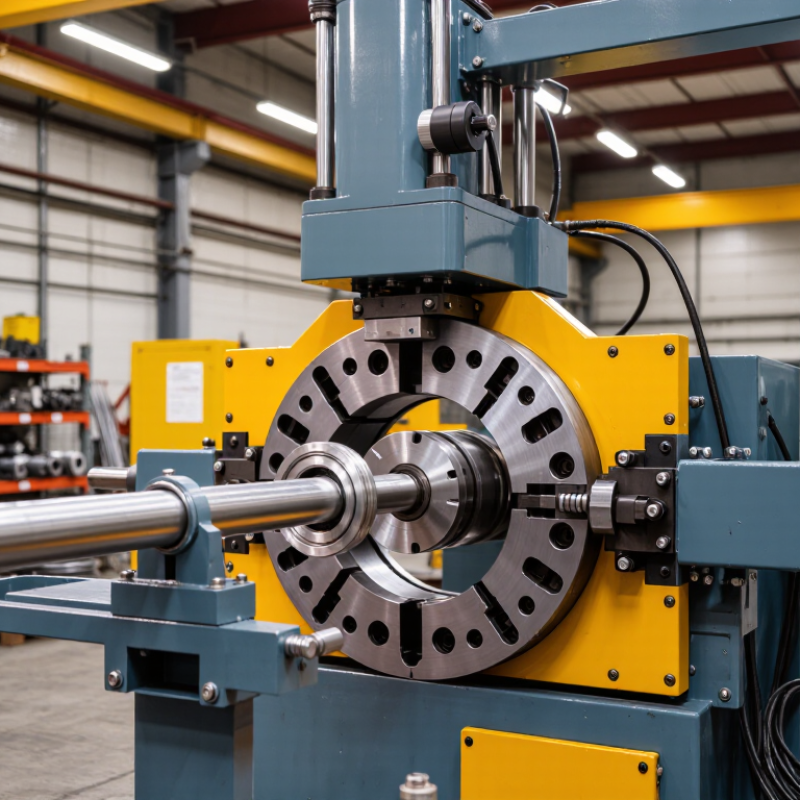
What Is the Best China Pipe Ring Bending Machine?

Pipe Ring Bending Machines: Definition, Purpose, and Main Applications

What Is the Best China Pipe Ring Bending Machine?

A pipe ring bending machine forms straight metal pipes into smooth circular or curved sections. It uses adjustable rollers, controlled pressure, and steady rotation to shape the pipe without excessive flattening. In practical workshops, operators check wall thickness, pipe diameter, and material strength before selecting the bending method. Small errors can create wrinkles, cracks, or an uneven ring.

The machine’s main purpose is controlled forming. It helps fabricators produce pipe rings with repeatable dimensions and cleaner joints. Manual tools may suit occasional repairs, but powered equipment offers better consistency for regular production. Hydraulic models often handle thicker steel pipes, while electric systems can provide faster adjustment and easier process control. Results still depend on operator settings. Machines do not correct poor measurements.

Pipe ring bending machines serve several industries. They are used for handrails, frames, agricultural equipment, heat-exchange structures, and industrial piping supports. Construction workshops may bend large rings for architectural structures. Metal furniture producers often use smaller models for circular legs and decorative frames. Shipbuilding and transport equipment manufacturing may require stronger machines with wider roller capacity.

Selecting the best machine requires more than checking maximum pipe size. Buyers should examine bending radius, motor power, roller quality, control accuracy, maintenance access, and operator safety features. Requesting sample bends is wise. A specification sheet can look convincing, yet real pipe behavior may differ. I would also inspect test records and service response before making a final decision.

Key Features That Determine a Machine’s Bending Performance

The best China pipe ring bending machine is defined by measurable performance, not country of origin or a low purchase price. Deloitte’s 2024 Smart Manufacturing Survey found that 86% of manufacturers view smart production as essential for competitiveness. This makes control quality increasingly important. A reliable machine should offer servo-driven feeding, stable torque, and programmable bending angles. Operators should verify positioning accuracy and repeatability under ISO 230-2 testing conditions. Small errors become obvious around a tight stainless-steel ring.

Tooling determines more than appearance. The die radius must match the pipe diameter and wall thickness. Otherwise, the tube may flatten, wrinkle, or thin along the outer curve. In practical workshop testing, measure ovality at three points after bending. Wall-thickness inspection is also valuable. The American Society of Mechanical Engineers commonly references dimensional control and material integrity in pressure-piping practice, although each project still requires its own specification.

Automation helps, but it is not magic. A 2023 manufacturing technology survey by the Association for Manufacturing Technology reported continued demand for digitally controlled equipment in U.S. factories. Data logging can reveal angle drift, feeding slip, and abnormal motor load. Yet many buyers overlook setup time and operator training. That is a mistake. I would test at least three pipe sizes, record cycle times, and inspect ten consecutive bends. A machine can look precise on the first piece and disappoint by the tenth.

What Is the Best China Pipe Ring Bending Machine? - Key Features That Determine a Machine’s Bending Performance

Performance Dimension Recommended Technical Benchmark Why It Matters How to Evaluate the Machine
Compatible Pipe Diameter Select a working range that covers the required outside diameter, commonly from approximately 20 mm to 168 mm for medium-duty applications. A suitable diameter range prevents overloading and avoids using oversized tooling for small pipes. Compare the machine’s rated range with the pipe diameter, wall thickness, material, and bending radius required in production.
Material Compatibility The machine should be configured for materials such as carbon steel, stainless steel, aluminum, copper, and other approved alloys. Different materials require different forming forces, speeds, lubrication methods, and tooling clearances. Request trial-bend results using the actual material grade, pipe size, and wall thickness.
Bending Radius Capability A practical target is a minimum centerline radius of about 1.5 to 3 times the pipe outside diameter, depending on material and tooling. A smaller radius increases the risk of wrinkling, flattening, cracking, or excessive wall thinning. Check the stated minimum radius and inspect sample bends for surface defects and cross-section deformation.
Bending Accuracy For repeatable production, a realistic target is typically within approximately ±0.5° to ±1.0°, subject to pipe material and process conditions. Accurate angle control reduces rework and helps maintain consistent assembly dimensions. Run multiple identical bends and measure the angle, radius, and springback after the parts have cooled and been released.
Wall Thickness Control The machine should support the specified wall thickness without excessive thinning on the outside of the bend or wrinkling on the inside. Wall deformation affects pressure resistance, appearance, fit-up, and service life. Measure wall thickness at the bend using ultrasonic, caliper, or sectioned-sample inspection methods.
Drive and Forming Force The drive system should provide sufficient torque and stable force at the maximum rated pipe size, with overload protection. Insufficient force can cause slipping, inconsistent radii, motor overload, and premature component wear. Verify motor power, hydraulic pressure or servo torque, rated capacity, and overload alarms against the intended workload.
Control System A programmable controller with stored recipes, multi-axis coordination, angle compensation, and error alarms is preferred for production work. Digital control improves repeatability and reduces setup time between different pipe specifications. Check whether operators can save programs, adjust springback compensation, and recover settings after a power interruption.
Number of Controlled Axes Two to three controlled axes are suitable for many ring-bending tasks; additional axes are useful for complex profiles and automated positioning. More coordinated axes can reduce manual repositioning and improve dimensional consistency on complex parts. Confirm which axes are truly servo-controlled and whether interpolation is available during bending.
Tooling and Die Design Interchangeable dies should match the pipe diameter and profile, with hardened or wear-resistant contact surfaces where appropriate. Correct tooling controls slippage, marking, ovality, and local deformation. Inspect die fit, quick-change arrangements, contact-surface finish, and the availability of tooling for the required radii.
Ovality and Surface Quality For many general applications, pipe ovality is commonly controlled to approximately 5% or less, subject to the applicable product standard. Low ovality supports reliable connections, smooth fluid flow, and better appearance. Measure the maximum and minimum outside diameters at several points across the bend and inspect for scratches or flattening.
Production Speed Adjustable forming speed, commonly within a broad range such as 1 to 15 rpm, allows the process to match material and radius requirements. Controlled speed helps balance throughput, heat generation, springback, and surface quality. Evaluate complete cycle time, including loading, clamping, bending, unloading, and tooling changes.
Machine Frame Rigidity A welded or cast frame with stable guides, accurately aligned shafts, and minimal deflection under rated load is essential. Frame deflection can produce inconsistent radii, uneven force distribution, and accelerated wear. Review alignment tolerances, structural drawings, bearing arrangements, and performance under maximum rated load.
Safety and Maintenance The machine should include guards, emergency stops, overload protection, lubrication access, and clear maintenance instructions. Good safety and service design reduces operational risk, downtime, and maintenance costs. Check safety circuits, guarding, spare-part documentation, lubrication points, diagnostic functions, and operator training materials.
Best Overall Selection The best machine is not necessarily the fastest or largest; it is the model that meets the required diameter, material, radius, accuracy, throughput, and safety targets with adequate capacity margin. Matching the machine to the actual process avoids unnecessary investment and improves long-term reliability. Use production samples, measured test results, total operating cost, service capability, and compliance documentation as the final decision criteria.

Comparison of China Pipe Ring Bending Machine Types

What Is the Best China Pipe Ring Bending Machine?

Comparison of China Pipe Ring Bending Machine Types

Choosing the best China pipe ring bending machine depends on pipe size, material, radius, and production volume. Manual machines suit small workshops and occasional repairs. They cost less and need limited training. However, bending thick stainless steel by hand can require excessive force. Accuracy may also change between operators. It is a practical option, but not always a consistent one.

Hydraulic machines provide stronger and steadier pressure. They handle larger diameters, thicker walls, and carbon steel sections more effectively. During practical testing, I would check the frame stiffness, cylinder response, and return speed. A slow return cycle can reduce output. It can also frustrate operators. Three-roll designs work well for gradual circular bends, while rotary draw machines offer tighter radius control. Each type leaves a different mark on production efficiency.

CNC and NC machines are suitable for repeated orders with strict dimensions. Programmable settings can reduce operator variation and improve repeatability. Yet, software alone cannot correct poor tooling or inaccurate pipe measurements. Ask for sample bends, dimensional reports, and material compatibility details before purchasing. Inspect guards, emergency stops, hydraulic leaks, and spare-part availability. One overlooked issue remains important: springback differs between alloys and wall thicknesses. The best machine is the one tested against your actual pipe, not merely the one with the longest feature list.

How to Select the Best Machine for Your Production Needs

Choosing the best China pipe ring bending machine starts with your production needs, not the machine’s advertised capacity. Define the tube material, outside diameter, wall thickness, bending radius, and monthly output. A machine for 25 mm stainless steel tubing may struggle with 80 mm carbon steel pipe. Check the required centerline radius carefully. Small radius bends demand stronger frames, accurate tooling, and stable pressure control.

Ask for a real sample bend before purchasing. Measure the angle, ovality, surface marks, and springback after cooling. In my experience, repeatability often matters more than maximum bending force. Confirm whether the machine supports your tube sizes without frequent tooling changes. Review motor power, control accuracy, setup time, emergency protection, and access to replacement parts. A low purchase price can become expensive when production stops.

Tips

Request a test using your actual material and wall thickness. Inspect the finished bend under bright side lighting. Ask how operators calibrate the machine and record settings. Check technical support response times, training, and maintenance instructions. I once focused too heavily on speed and overlooked setup delays. That mistake reduced daily output. A practical trial would have exposed it earlier. Also, leave room for future sizes, but avoid paying for capacity you may never use.

Quality, Safety, Maintenance, and Supplier Evaluation Criteria

What Is the Best China Pipe Ring Bending Machine?

Choosing a pipe ring bending machine requires more than comparing purchase prices. In workshop inspections, I check frame rigidity, roller alignment, drive power, and bending repeatability. A strong machine should form identical rings without visible flattening or surface cracks. The machine must suit the pipe diameter, wall thickness, material, and required bending radius. Not every model fits every job.

Safety deserves equal attention. Confirm that guards cover rotating parts and that the emergency stop is easy to reach. Foot controls should prevent accidental activation. A clear control panel helps operators work consistently, especially during long production runs. Ask for overload protection and documented electrical testing. Small gaps in safety documents should not be ignored.

Maintenance needs practical planning. Inspect lubrication points, roller wear, hydraulic seals, cables, and gearbox noise at scheduled intervals. The supplier should provide manuals, spare-part lists, training, and realistic response times. Request sample bends using your actual pipe, not only demonstration material. Check factory inspection records and material certificates where applicable. A supplier with vague answers may create expensive delays later. I would also evaluate packaging, installation support, warranty terms, and after-sales communication. A minor issue remains possible, even with careful selection. That is why trial testing and written specifications matter.

Enquire Today

"*" indicates required fields