
China is becoming a serious sourcing destination for buyers evaluating a Vr Movie Theater. Its advantages extend beyond lower production costs. Manufacturers can combine headsets, motion platforms, projection systems, seating, and control software within one supply chain. This integration can reduce installation delays and simplify technical support.
Market evidence supports continued interest in immersive entertainment. PwC’s Global Entertainment & Media Outlook 2024–2028 forecasts strong growth in virtual reality and immersive content revenues. Grand View Research also identifies Asia-Pacific as a major region for virtual reality market expansion. These reports indicate opportunity, not automatic success. That difference matters.
A capable Chinese supplier should demonstrate more than attractive showroom footage. Buyers should inspect motion accuracy, headset hygiene procedures, audio clarity, emergency controls, and daily maintenance records. A practical test includes repeated sessions, varied body sizes, and realistic loading conditions. Small details matter. A loose cable can interrupt an entire group experience.
China’s manufacturing depth is valuable, but quality varies between factories and trading companies. The best supplier should provide documented testing, transparent component specifications, software update procedures, and export experience. Independent inspection remains sensible. So does checking content licensing and local safety requirements before purchase.
This article examines how China compares with other sourcing markets for a Vr Movie Theater. It considers equipment quality, customization, operating costs, after-sales service, and buyer risk. The conclusion may not be simple. A low quotation can become expensive when replacement parts, staff training, or technical downtime are ignored. Reliable evidence should guide the decision, not impressive promises.
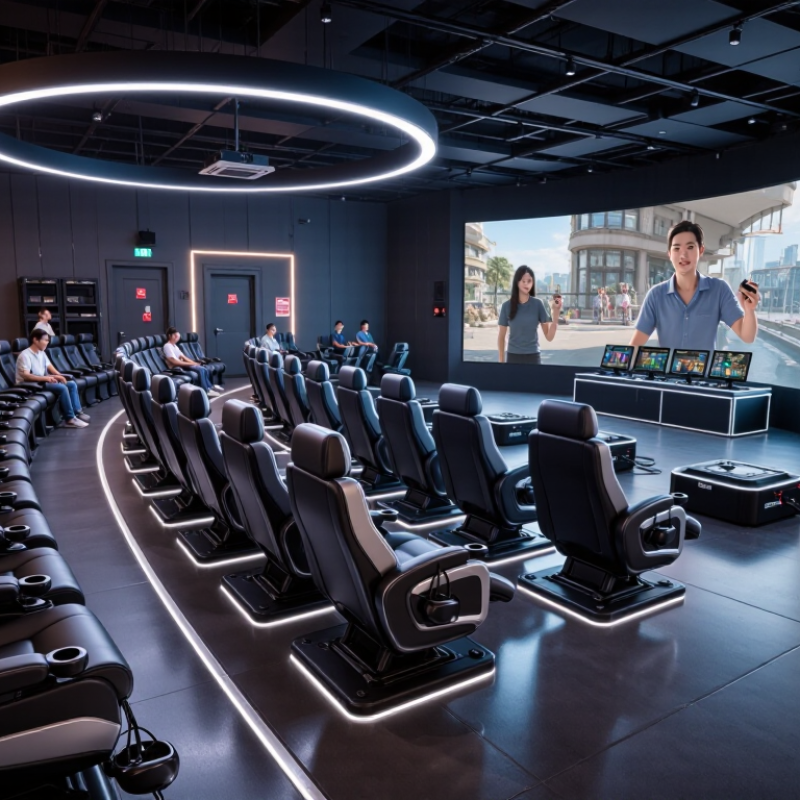
What Defines the Best VR Movie Theater in China?
The best VR movie theater in China is not defined by headset resolution alone. It combines immersive storytelling, dependable hardware, and disciplined daily operations. A strong venue should offer clear 360-degree images, balanced sound, and comfortable seating for different body types. Motion must feel smooth, not aggressive. Some visitors may become dizzy within minutes.
Clean equipment matters just as much. Staff should disinfect face cushions after every session and record maintenance checks. Ventilation, emergency exits, cable management, and accessible seating deserve equal attention. These details show operational experience more clearly than a polished showroom.
For global buyers, reliable support is essential. The supplier should provide installation guidance, multilingual manuals, spare parts, and practical staff training. Content should have proper distribution rights and suit local audience preferences. A trial session can reveal tracking delays, weak subtitles, or uncomfortable heat that brochures often hide. Buyers should also examine visitor capacity, energy use, warranty terms, and software update procedures.
Small tests reveal more. Ask operators to run a full day, not one demonstration. Watch how staff handle a failed headset or a confused visitor. The best theater may still have imperfections, but it identifies them honestly and improves through measured feedback.
China’s VR movie theaters are built around more than headsets. Their core system combines 6DoF tracking, high-resolution displays, spatial audio, and motion seating. Inside-out cameras map the room without external sensors. Edge servers deliver synchronized scenes with low latency. In practice, a viewer can turn toward a virtual doorway and hear footsteps shift behind them. That detail matters more than a larger screen. Grand View Research valued the global VR market at US$59.96 billion in 2023 and projects a 27.5% CAGR from 2024 to 2030. The figure supports investment, but it does not prove every theater will succeed.
For overseas buyers, network architecture deserves close inspection. Wi-Fi 6 or private 5G can connect multiple headsets, while local rendering reduces dependence on unstable international links. Cloud rendering supports complex environments, yet local fallback keeps shows running during packet loss. Haptic platforms add vibration under the seat, not theatrical force. Spatial audio needs room calibration, because reflective walls can blur direction. The China Academy of Information and Communications Technology highlights low latency, interactive content, and standardized testing in its recent virtual reality reports. Buyers should request measured latency, uptime records, and cleaning procedures. Promotional claims are not enough.
Operational experience reveals less glamorous problems. Lenses collect fingerprints, batteries age, and tracking can drift after repeated sessions. Strong theaters need replaceable face interfaces, charging racks, and staff calibration routines. Accessibility also needs deliberate design, including seated modes and adjustable motion intensity. Some visitors feel discomfort within minutes. Content renewal remains harder. PwC’s Global Entertainment & Media Outlook 2024–2028 forecasts immersive media revenue to grow strongly, but repeat visits still depend on useful content. A technically excellent room can feel empty when its library changes slowly.
A practical technology reference for evaluating immersive VR cinema installations and commercial entertainment venues.
| Technology Dimension | Typical Technical Specification | Function in a VR Movie Theater | Buyer Evaluation Point |
|---|---|---|---|
| Head-Mounted Display | Two independent displays; commonly 2K–4K per eye; 90–120 Hz refresh rate; approximately 100°–120° diagonal field of view | Presents stereoscopic 360-degree films and interactive visual scenes | Check optical clarity, lens type, refresh stability, interpupillary adjustment, weight, and cleaning procedures |
| Six-Degree-of-Freedom Tracking | Tracks head and controller position across three-dimensional space; inside-out tracking uses multiple cameras and inertial sensors | Allows viewers to look around, move naturally, and interact with virtual objects | Review tracking accuracy, latency, line-of-sight requirements, calibration time, and performance in multi-user rooms |
| Motion Controllers | Wireless handheld controllers with inertial measurement units, optical tracking, buttons, triggers, and vibration feedback | Supports selection, object manipulation, navigation, and simple game-like interactions | Confirm battery life, charging workflow, controller sanitation, drop resistance, and replacement availability |
| Spatial Audio | Binaural or object-based audio rendering with directional sound cues; headphones or integrated speakers | Synchronizes dialogue, music, and environmental effects with the viewer’s position and head movement | Assess sound localization, volume control, language-track support, acoustic isolation, and hygiene requirements |
| Content Delivery System | Local media servers or secure network streaming; common video formats include H.264 and H.265/HEVC | Distributes film files, software updates, subtitles, multilingual audio, and session licenses | Verify offline playback, content encryption, remote monitoring, update control, and compatibility with local network standards |
| Wireless Connectivity | Dedicated wireless network using modern Wi-Fi standards; 5 GHz or 6 GHz operation may reduce interference where permitted | Synchronizes headsets, controllers, operator consoles, and multiplayer sessions | Measure latency, roaming stability, channel interference, network capacity, and regulatory compatibility in the destination market |
| Haptic and Environmental Effects | Seat vibration, airflow, lighting, scent, temperature effects, or wearable feedback modules, depending on the experience | Adds physical sensations that correspond with events shown in the virtual film | Check synchronization accuracy, intensity adjustment, maintenance needs, accessibility, and user opt-out controls |
| Motion Platforms | Motorized seats or compact platforms with limited pitch, roll, or vibration movement; movement range varies by design | Simulates acceleration, turning, impact, and other physical motion cues | Evaluate load rating, emergency stop functions, noise, service intervals, transport requirements, and local safety certification |
| Real-Time Rendering | Graphics processing designed to maintain approximately 72–120 rendered frames per second, depending on headset and application | Generates interactive scenes, dynamic lighting, avatars, and responsive visual effects | Ask for sustained performance data, thermal management details, software update policy, and content-production tools |
| Session Management | Central operator console for user assignment, content selection, headset status, play control, and fault alerts | Enables staff to start, pause, synchronize, and end multiple customer sessions | Prioritize multilingual interface support, user permissions, activity logs, remote diagnostics, and simple staff training |
| Safety and Hygiene | Sanitized facial interfaces, replaceable eye guards, cable management, physical clearance zones, ventilation, and emergency shutdown procedures | Reduces cross-contact, collision risk, overheating, and discomfort during repeated commercial use | Request documented cleaning protocols, electrical compliance records, risk assessments, warranty terms, and spare-parts support |
| Accessibility Features | Adjustable visual settings, seated-play modes, subtitles, volume controls, and content options with reduced motion | Makes the attraction usable by a wider range of visitors and reduces motion discomfort | Confirm support for different heights, glasses, mobility needs, hearing requirements, and motion-sensitivity preferences |
| Commercial Throughput | Typical session structures include 10–30 minutes of content plus approximately 5–10 minutes for fitting, cleaning, and turnover | Determines daily visitor capacity and staffing requirements | Calculate seats per installation, operating hours, cleaning time, utilization rate, staffing, electricity, and content licensing costs |
China Best VR Movie Theater for Global Buyers?
Main Types of VR Movie Theater Experiences
VR movie theaters usually offer three experience types. The first is seated 360-degree cinema, where viewers wear headsets and explore filmed scenes by turning their heads. It suits documentaries, tourism, and educational stories. The second is interactive narrative VR. Viewers choose viewpoints, trigger events, or follow different characters. This format creates stronger engagement, but poor navigation can confuse first-time users. The third is location-based VR, combining headsets, tracked movement, spatial audio, and physical scenery. Visitors may walk through a digital city, space station, or historical setting. Some venues also add motion platforms and environmental effects. Keep it comfortable.
Grand View Research valued the global virtual reality market at about USD 59.96 billion in 2022. It also projected a 27.5% compound annual growth rate from 2023 to 2030. These figures support demand for immersive entertainment, but they do not guarantee profitable theater operations. For global buyers, practical testing matters more than impressive specifications. Check session length, headset hygiene, floor space, ventilation, multilingual instructions, and staff training. A 10-minute experience may perform better than a complex 40-minute production. PwC’s Global Entertainment & Media Outlook 2024–2028 also identifies immersive formats as part of expanding digital entertainment consumption. Still, some experiences feel repetitive after one visit. Content renewal, reliable tracking, and accessible seating deserve equal attention before equipment selection.
Choosing a Chinese VR theater supplier requires more than comparing prices. Global buyers should examine the complete system, including headsets, motion platforms, screens, audio, software, and venue design. Ask for technical specifications, production photos, and a live demonstration. A polished showroom can hide maintenance problems.
Request a sample unit or arrange an independent factory inspection. Check frame materials, seat movement, ventilation, emergency stops, and cleaning access. Confirm whether the equipment supports your local voltage and language requirements. Review warranty terms carefully. Response times matter when a theater is busy and a component fails. I have seen impressive demonstrations perform differently after several hours of continuous use. Real operating conditions deserve more attention.
Tips: Test before ordering. Ask for a written parts list, installation plan, training schedule, and after-sales contact. Compare at least three suppliers using the same checklist. Verify relevant safety and electrical documents with qualified local professionals. Do not rely only on certificates sent by email. Request references from buyers in similar climates and venue sizes. A small pilot installation may cost more initially, but it can reveal motion comfort issues, software delays, or difficult cleaning procedures. Some supplier promises may remain vague. Put every important detail into the contract.
For international buyers, choosing a VR movie theater in China requires more than comparing prices. Request a complete equipment list, room drawings, and a production timeline. Confirm headset specifications, motion-platform limits, screen brightness, audio performance, and daily operating capacity. Ask for test videos and a live factory demonstration when possible. A low quotation can hide installation fees, software updates, or replacement parts.
Installation needs careful planning. Check local electrical requirements, fire-safety rules, ceiling height, ventilation, and emergency access before ordering. The supplier should provide wiring diagrams, foundation details, calibration procedures, and operator training. Onsite installation is useful, but remote guidance may reduce costs. Still, remote support cannot fix every measurement mistake. I have learned that a small room-layout error can delay opening for weeks.
Support after delivery often decides whether the theater remains profitable. Seek a written warranty, response-time commitments, spare-parts availability, and clear software licensing terms. Ask who handles faults across different time zones. English manuals should include maintenance schedules and practical troubleshooting steps. Request training for cleaning lenses, checking cables, and inspecting moving components. No supplier gets every detail right, so record acceptance tests carefully and keep photographs of the final installation. A pilot session with local staff may reveal uncomfortable seats, confusing controls, or weak sound before paying the final balance.
Accreditations
ISO 9001 Quality Management
HSE Management Compliant
Products and services comply with relevant Australian (AS) and international (ISO, etc.) Standards.
"*" indicates required fields