China Best Dismantling Joint Manufacturer and Supplier?

Choosing the China best dismantling joint manufacturer and supplier requires more than comparing prices. It requires evidence, engineering judgment, and attention to installation realities. A reliable dismantling joint connects flanged pipes while allowing controlled adjustment during maintenance. It can also reduce stress on valves, pumps, and nearby pipework.

Liang Jun, a senior waterworks pipeline engineer, explains, “A dismantling joint earns trust through fit, testing, and traceable materials.” His view reflects what experienced contractors see on site. A few millimeters of adjustment can prevent hours of valve removal. Strong tie rods, accurate flange drilling, and a resilient EPDM gasket matter greatly. Ductile iron or steel construction should match pressure, temperature, and corrosion conditions. Protective coatings matter too. Buried pipelines need more than attractive paint.

Quality must be visible.

The strongest Chinese suppliers usually provide dimensional drawings, material certificates, pressure-test records, and batch traceability. They should explain compliance with relevant EN, ISO, AWWA, or project-specific requirements. However, no catalog proves performance by itself. Factory inspection, sample verification, and clear warranty terms remain necessary. Some suppliers communicate well before payment, then respond slowly after delivery. That risk deserves honest consideration.

This guide compares manufacturers through product design, production control, testing, customization, export experience, and after-sales support. It also considers practical details, including flange spacing, bolt accessibility, coating thickness, and replacement conditions. The best dismantling joint supplier is not always the cheapest option. It is the partner whose product performs predictably when the pipeline must be opened, adjusted, and returned to service.
China Best Dismantling Joint Manufacturer and Supplier?

What Is a Dismantling Joint and How Does It Work?

China Best Dismantling Joint Manufacturer and Supplier?

What Is a Dismantling Joint and How Does It Work?

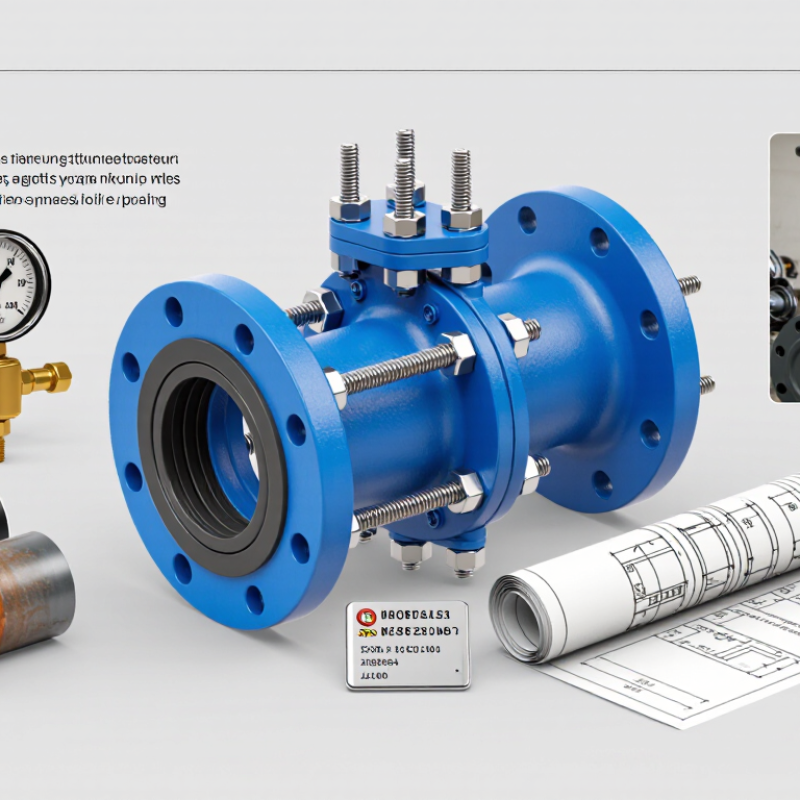
A dismantling joint is a flanged pipe fitting used to connect valves, pumps, and other equipment. It has a central sleeve, two flanges, sealing gaskets, and adjustable tie rods. The sleeve allows controlled length adjustment during installation. The tie rods maintain mechanical stability after the joint is tightened.

It makes maintenance easier. Technicians can loosen the tie rods and create space around a valve or pump. This clearance helps remove heavy equipment without cutting the pipeline. The joint also supports axial forces within its rated limits. It is not a substitute for an expansion joint. It should not absorb unlimited vibration or thermal movement.

Correct installation matters. The pipe ends should be aligned before bolts are tightened. Uneven tightening may distort the gasket and cause leakage. A practical method is tightening bolts in a cross pattern, then checking the joint length against the specification. Pressure testing should follow the project standard.

One detail is easy to overlook. The tie rods need enough adjustment for future removal. A joint installed too tightly may leave no working space. During installation reviews, this problem appears more often than expected. Material selection also deserves attention. Coatings, stainless components, and gasket materials should match the water quality, temperature, and service conditions. Good technical documents should state pressure ratings, dimensions, tolerances, and testing requirements clearly. Mistakes still happen. Careful inspection reduces them.

Key Features of a Reliable Dismantling Joint Manufacturer

Choosing the China best dismantling joint manufacturer requires more than comparing prices. A reliable supplier understands pipeline installation challenges and provides evidence of consistent production. Look for ductile iron or steel components with verified material certificates, accurate dimensions, and suitable corrosion protection. Each joint should allow controlled axial adjustment and simplify valve or pump removal. Clear tolerances matter, especially when site conditions are less precise than drawings.

Experienced manufacturers maintain documented quality procedures, including casting inspections, pressure testing, coating checks, and final dimensional verification. They should explain bolt grades, gasket materials, flange standards, and working pressure without vague claims. Traceability is important. Batch numbers and inspection records help engineers investigate problems quickly. Technical support should continue after delivery, with installation guidance and practical responses. No supplier is flawless. However, a dependable manufacturer admits limitations and corrects recurring defects instead of hiding them.

Tips: Request a sample inspection report before ordering. Confirm the joint’s pressure rating and flange dimensions. Ask how misalignment is measured. Check whether replacement gaskets and bolts are available. A short factory audit can reveal more than polished catalog images. Also review packaging methods, because damaged coatings or bent flanges may create trouble before installation. Reliable cooperation grows through accurate documents, honest communication, and repeatable workmanship.

Key Features of a Reliable Dismantling Joint Manufacturer

This chart shows common nominal pressure classes used in water pipeline dismantling joints: PN10, PN16, and PN25. The values represent nominal pressure ratings in bar, not guaranteed operating pressure. A reliable manufacturer should provide products that match the pipeline design pressure, flange standard, material requirements, axial adjustment needs, and applicable testing specifications.

Materials, Standards, and Applications of Dismantling Joints

Dismantling joints connect pipes, valves, and pumps while allowing controlled disassembly. Material choice determines service life. Ductile iron suits buried water mains and offers strong impact resistance. Carbon steel supports larger diameters and demanding mechanical loads. Stainless steel performs well in corrosive or treated-water environments. EPDM gaskets are common for potable water, while NBR may suit oil-contaminated conditions. The word “stainless” is not enough. Chloride exposure still requires careful grade selection.

Standards make performance measurable. EN 545 and ISO 2531 address ductile iron pipe systems, dimensions, and pressure-related requirements. EN 1092-2 helps verify compatible flange dimensions. AWWA C219 covers bolted, sleeve-type couplings, including dismantling designs. Factory checks should include hydrostatic testing, coating inspection, gasket verification, and material traceability. Field alignment matters too. Poor bolt tightening can damage sealing surfaces, even with certified components.

Applications include water treatment plants, pumping stations, irrigation networks, and fire-protection pipelines. The UN World Water Development Report 2024 states that agriculture accounts for about 70% of global freshwater withdrawals. Reliable joints therefore support both municipal and agricultural infrastructure. WHO and UNICEF’s 2024 JMP report also found that 2.2 billion people lacked safely managed drinking water in 2022. This highlights the cost of avoidable leakage. A capable supplier should provide drawings, test records, pressure ratings, and installation guidance. Specifications can still be imperfect. Actual soil chemistry, temperature, movement, and maintenance access deserve a final engineering review.

China Best Dismantling Joint Manufacturer and Supplier? - Materials, Standards, and Applications of Dismantling Joints
Evaluation Dimension Typical Specification or Option Relevant Standard or Reference Common Application Selection Considerations
Main Body Material Ductile iron, commonly EN-GJS-400-15 or EN-GJS-500-7 EN 1563; ISO 1083 Potable water, raw water, wastewater, and general pipeline systems Check mechanical properties, casting quality, corrosion protection, and compatibility with the connected pipe material.
Flange Material Ductile iron or carbon steel, depending on design and pressure class EN 1092-2; ASME B16.5 where applicable Flanged valves, pumps, flow meters, strainers, and pipeline fittings Confirm flange drilling, nominal pressure, outside diameter, bolt-hole pattern, and gasket-face dimensions.
Tie-Rod and Fastener Material Carbon steel, stainless steel, or galvanized steel ISO 898-1 for mechanical properties of carbon-steel fasteners Restrained dismantling assemblies exposed to axial pipeline forces Stainless steel is generally preferred for aggressive, humid, saline, or chemically exposed environments.
Sealing Element EPDM, NBR, or another elastomer selected for the service medium EN 681-1; ISO 4633 Water, wastewater, air, and selected industrial fluids EPDM is widely used for water applications; NBR is commonly selected where resistance to oils and hydrocarbons is required.
Protective Coating Fusion-bonded epoxy, liquid epoxy, polyurethane, or zinc-rich coating EN 14901-1; ISO 12944 for corrosion-protection principles Buried pipelines, treatment plants, pumping stations, and exposed installations Specify coating thickness, surface preparation, holiday testing, adhesion, and suitability for potable-water contact when required.
Nominal Diameter Range Usually manufactured from small service sizes to large transmission-pipeline sizes; verify the supplier's actual range EN 545; ISO 2531; AWWA C219, depending on the project Distribution networks, transmission mains, plant pipework, and utility connections Match the dismantling joint to the actual pipe outside diameter, not only the nominal diameter shown on drawings.
Pressure Classification PN 10, PN 16, PN 25, or another project-specific rating EN 1092-2; ISO 2531; applicable national or utility specifications Water-supply networks, pumping systems, and pressure pipelines The joint rating must meet or exceed the system design pressure, including transient and test pressures where applicable.
Axial Restraint Non-restrained or restrained design with tie rods Manufacturer design calculations and project engineering requirements Valve chambers, pump connections, above-ground pipework, and locations requiring controlled disassembly Determine whether the assembly must resist pressure thrust, thermal movement, or installation loads.
Adjustment Capability Longitudinal adjustment to accommodate installation tolerances and equipment removal Product design documentation and approved installation instructions Valve replacement, pump maintenance, flow-meter installation, and pipeline retrofit work Confirm the available adjustment length and ensure the joint is not used to compensate for excessive angular misalignment.
Flange Drilling EN PN drilling, ANSI Class drilling, or another specified pattern EN 1092-2; ASME B16.5; ASME B16.47 where applicable Connections between equipment and pipelines manufactured to different standards Check bolt-hole quantity, pitch-circle diameter, flange thickness, facing type, and bolt compatibility before ordering.
Water-Service Compliance Materials suitable for contact with drinking water when required Applicable national drinking-water regulations, WRAS, NSF/ANSI/CAN 61, or equivalent approval Potable-water treatment plants and municipal drinking-water networks Approval requirements vary by destination country; coating and elastomer certificates should cover the complete wetted assembly.
Wastewater Compatibility Corrosion-resistant materials and elastomers selected for sewage and chemically active environments EN 598 and project-specific chemical-resistance requirements Sewer force mains, wastewater treatment plants, and sludge-handling systems Evaluate hydrogen sulfide exposure, biological corrosion, cleaning chemicals, temperature, and abrasion risk.
Installation Function Provides axial adjustment and allows equipment or valve removal without extensive pipe cutting Approved method statement and manufacturer installation instructions Maintenance-sensitive locations such as pump stations, valve chambers, and meter assemblies Install with the correct gasket, bolt tightening sequence, joint position, and final alignment; pressure-test after installation.
Quality Documentation Dimensional drawings, material certificates, coating records, inspection reports, and pressure-test documentation ISO 9001 quality-management framework; project inspection and test plan Municipal, industrial, infrastructure, and export projects A reliable supplier should provide traceability from raw materials through inspection and final delivery.
Supplier Selection Criteria Verified manufacturing capability, dimensional consistency, testing capacity, and technical support Applicable product standards, third-party inspection requirements, and purchaser specifications Procurement of standard or customized dismantling joints Compare compliance, total installed cost, lead time, spare-part availability, warranty terms, and after-sales support rather than price alone.

How to Evaluate Dismantling Joint Suppliers

China Best Dismantling Joint Manufacturer and Supplier?

Choosing a dismantling joint supplier requires more than comparing prices. Check the supplier’s manufacturing experience, engineering team, and quality control process. Ask for material certificates, dimensional drawings, pressure ratings, and inspection records. Reliable suppliers explain how each joint handles alignment, pipe movement, and flange adjustment. Their answers should be specific, not copied from a sales sheet.

Request samples or clear product photographs. Examine bolt quality, flange thickness, coating coverage, and sealing surfaces. Confirm the joint suits your pipe material, diameter, pressure class, and installation environment. Independent testing adds confidence, especially for large water, industrial, or infrastructure projects. References from similar installations can also reveal delivery accuracy and long-term performance. A low price looks attractive. It may hide thinner materials or weaker inspection.

Tips: Compare total value, not only unit cost. Review lead times, packaging, spare parts, and technical support. Ask how the supplier manages nonconforming products. Clarify warranty terms in writing. Factory visits can help, but they are not perfect proof. Production conditions may change after approval. Keep communication records and require pre-shipment inspection for critical orders. A supplier who welcomes reasonable questions often demonstrates stronger reliability. However, trust should still follow evidence.

Choosing the Best Dismantling Joint Manufacturer for Your Project

Choosing the Best Dismantling Joint Manufacturer for Your Project

Selecting the best dismantling joint manufacturer begins with project conditions, not catalogue claims. Confirm pipe diameter, pressure class, temperature, media, and installation clearance. A joint must absorb dimensional variation while maintaining stable sealing under pressure.

The World Bank has reported that global non-revenue water can reach roughly 30 percent of supplied water. Small leakage points deserve serious attention.

Ask manufacturers for material certificates, pressure-test records, coating specifications, and traceability documents. EN 14525 and ISO 2531 provide useful benchmarks for restrained pipe components and ductile iron fittings.

However, compliance alone does not prove field reliability. Inspect gasket quality, bolt protection, flange tolerances, and coating thickness. A practical supplier should explain these details without hiding behind technical language.

Request evidence from projects using similar pipe sizes and operating pressures. Factory testing should match the joint’s actual configuration, not only a standard sample. Check whether the manufacturer offers installation guidance and responsive technical support. This matters when a joint is adjusted beside a crowded valve chamber.

A perfect specification is unlikely. I have seen projects focus on price, then overlook access space and bolt tightening. That mistake can delay commissioning. Select a supplier willing to discuss those uncomfortable details, document risks, and correct unclear requirements before production.

Article Source:

Enquire Today

"*" indicates required fields