What Are China Top 10 Globe Valve Manufacturers?
China’s globe valve manufacturing sector has become a major part of the global flow-control supply chain. Its producers serve power stations, refineries, chemical plants, water systems, and industrial equipment builders. However, factory scale alone does not prove dependable performance. A polished catalog can hide weak testing, inconsistent materials, or limited after-sales support.
As valve specialist Dr. Richard W. Miller has stated, “A valve is only as good as its selection, installation, and maintenance.” This practical view guides our review of China’s top 10 globe valve manufacturers. Each company should be examined through measurable details, including pressure ratings, body materials, trim options, sealing design, manufacturing certificates, and inspection procedures. Field experience matters too. A valve operating beside a hot steam line faces different demands from one controlling clean water.
The ranking in this article is not presented as an unquestionable verdict. That would be careless. Supplier capabilities change, and public information is sometimes incomplete. We therefore compare technical expertise, export experience, production capacity, quality systems, customization ability, and customer feedback. We also consider whether manufacturers can provide traceable test reports and responsive engineering assistance.
Real performance is found in details. Does the stem move smoothly after repeated cycles? Does the seat remain tight under pressure? Can replacement parts arrive without long delays? These questions often matter more than a company’s promotional language. Our guide aims to help engineers, buyers, and project managers identify credible Chinese manufacturers and choose a globe valve suited to actual operating conditions. Mistakes remain possible, but careful evaluation reduces them.
Globe Valve Fundamentals: Design, Flow Control, and Common Applications
A globe valve controls fluid by moving a plug toward a stationary seat inside a shaped body. This travel creates a predictable restriction. Unlike a simple isolation valve, it is built for throttling. The body may use an angle, tee, or axial pattern. Each layout changes pressure loss and installation space. In practice, I check the flow arrow before installation. It sounds basic. Mistakes still happen.
The plug and seat geometry determines how smoothly flow changes with stem movement. Parabolic plugs suit precise regulation, while simpler designs may serve less demanding duties. A rising stem gives visible position feedback, but it needs clearance and protection. Packing prevents leakage around the stem, while a correctly selected gasket protects the pressure boundary. Oversizing is a common engineering flaw. A valve that is too large may hunt, erode, or respond poorly at low loads. Designers should compare flow coefficient, pressure rating, temperature, fluid chemistry, and actuator force. Calculations matter more than catalog appearance.
Typical applications include boiler feedwater, cooling circuits, steam lines, fuel systems, and process plants. Steam service needs careful attention to flashing, thermal shock, and seat wear. Corrosive fluids demand compatible body and trim materials, not hopeful assumptions. During supplier evaluation, I look for traceable testing, clear dimensional drawings, pressure-test records, and service guidance. Independent inspection can reveal weaknesses hidden by polished documentation. No selection is perfect. Field conditions often challenge the original specification.
Ranking Criteria: API 6D, ASME B16.34, ISO 15848, and Quality Metrics
What Are China Top 10 Globe Valve Manufacturers?
A reliable top-ten ranking should begin with evidence, not advertising claims.
API 6D
confirms design and testing expectations for pipeline valves.
ASME B16.34
examines pressure-temperature ratings, materials, and construction safety.
ISO 15848
measures fugitive emissions, packing performance, and stem sealing under repeated cycles.
These standards reveal different strengths. A manufacturer may meet API 6D but show weak emission control. Another may offer excellent documentation but inconsistent casting quality.
Ranking should therefore combine certification validity, pressure test records, material traceability, machining accuracy, and delivery consistency.
Factory audits also matter. Inspectors should check calibration labels, hydrostatic testing benches, welding procedures, and inspection reports.
Small details often expose large risks.
Warranty response and spare-part support deserve measurable scores.
Tips:
Request current certificates, not scanned copies alone.
Compare heat numbers on material reports with valve markings.
Ask for third-party test evidence and sample inspection data.
Review the last three delivery records when possible.
Public information can be incomplete, so any ranking remains provisional without site verification.
This is an uncomfortable limitation, but ignoring it weakens professional judgment.
Experienced buyers should test representative valves under realistic pressure, temperature, and cycling conditions before approving large orders.
A low purchase price may hide higher maintenance costs later.
China’s Top 10 Globe Valve Manufacturers by Technology and Market Reach
China’s Top 10 Globe Valve Manufacturers by Technology and Market Reach
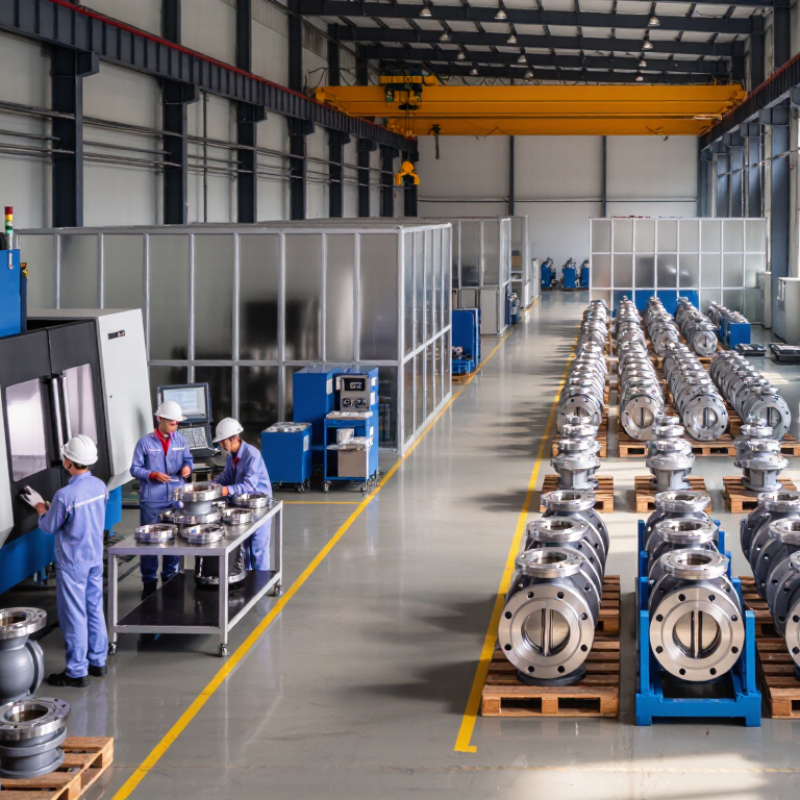
China’s leading globe valve manufacturers compete through engineering depth, production scale, and export reliability. Their facilities commonly use CNC machining, automated pressure testing, and controlled casting processes. Many supply valves for power plants, chemical facilities, water treatment, and long-distance pipelines. Their market reach depends on certifications, local service teams, and stable delivery performance.
Technical strength matters more than factory size. Experienced manufacturers can design valves for high temperature, corrosive media, and frequent throttling. They also provide forged or cast bodies, stainless steel options, pneumatic actuators, and customized connections. A reliable supplier should share material certificates, test records, and clear pressure ratings. Some catalogs look impressive. Field performance may still vary.
Tips: Check the valve’s flow direction, seat material, operating temperature, and maintenance access. Request sample documents before placing a large order. Compare testing standards, not only prices. Ask about spare parts availability in your region. This small step can prevent long shutdowns. The “top 10” list should therefore reflect verified technology and market reach, rather than online visibility alone. Even strong manufacturers may have uneven performance across product lines. That deserves careful review.
China's Top 10 Globe Valve Manufacturers by Technology and Market Reach
Technical benchmark for comparing industrial globe valve capabilities: ASME B16.34 pressure classes and their rated pressure at 100°F (38°C) for carbon steel valves.
Higher pressure-class coverage generally indicates broader capability for demanding oil and gas, power generation, chemical processing, and industrial applications. Actual valve ratings vary by material group, temperature, design standard, and certification.
Manufacturer Profiles: Materials, Pressure Classes, Sizes, and Certifications
What Are China Top 10 Globe Valve Manufacturers?
A practical review of China’s ten leading globe valve manufacturers should examine engineering details, not marketing claims. Their product ranges commonly include cast steel, forged steel, stainless steel, duplex stainless steel, and nickel-based alloys. Soft seats may use PTFE, while high-temperature designs often use graphite packing and metallic seating surfaces. Material certificates, heat numbers, and traceability records provide useful evidence of manufacturing control.
Pressure capability varies widely. Standard offerings may cover ASME Class 150, 300, 600, 900, 1500, and 2500, alongside PN16 to PN420 designs. Sizes can range from compact NPS 1/4 valves to large NPS 48 units.
However, size alone proves little. Buyers should compare wall thickness, bonnet construction, trim combinations, and tested flow direction. A larger valve can still be unsuitable for severe throttling service.
Certification reviews should include ISO 9001 quality systems, API 600, API 602, API 623, ASME B16.34, and applicable pressure-testing standards. Projects involving sour service may require NACE MR0175 compliance. European installations may also need PED documentation.
Factory acceptance testing, hydrostatic reports, fugitive-emission testing, and inspection plans strengthen reliability. Some catalogs remain vague about testing scope. That deserves careful questioning. In practice, the strongest manufacturer profile combines documented materials, repeatable testing, accurate dimensional drawings, and responsive technical support. Even experienced buyers can overlook actuator loads or unusual temperature cycles.
How to Compare Chinese Globe Valve Suppliers for Industrial Projects
When comparing China’s top ten globe valve suppliers, begin with application fit, not catalogue size. A refinery line needs pressure ratings, trim compatibility, and documented testing. A small water project may value delivery speed more. Price is only the opening filter.
Mordor Intelligence’s 2024 Industrial Valves Market report estimates the global market at USD 78.67 billion in 2024. It projects USD 100.54 billion by 2029. UN Comtrade data for 2023 also places China among the leading valve exporters under HS 8481. These figures show strong manufacturing capacity, but they do not prove every supplier’s reliability. Request ISO 9001 records, material certificates, hydrostatic test results, and traceability from casting to packing. For critical service, check API 623 requirements and ISO 15848-1 fugitive-emission testing.
Build a weighted comparison sheet. Give quality documentation 30 percent, engineering support 20 percent, delivery performance 15 percent, and total cost 20 percent. Reserve 15 percent for after-sales response. Ask for three recent project references, not just factory photographs. Inspect sample markings, bonnet bolts, packing arrangement, and flange dimensions. A low quotation may hide weak inspection or expensive rework. I would also challenge unusually short lead times. No scorecard is perfect. A supplier can pass an audit and still disappoint during production changes, so require hold-point inspections and written approval before substitutions.