
Choosing the right Udon Noodle Machine can shape your output, labor costs, and serving consistency. A compact shop making fresh noodles to order has different needs from a kitchen producing hundreds of portions each day. The best choice is not always the fastest machine. It must fit your dough recipe, available floor space, staff experience, and cleaning routine. Small details matter: the width of the sheeter, the thickness settings, and whether one person can safely manage each production step.
This introduction uses a fictional composite expert, Kenji Sato, to frame a practical point: “A machine earns its place when it makes good noodles consistently, without slowing the kitchen down.” This is an illustrative quote, not a verified statement from a real industry professional. Use it as a reminder to compare machines against real production needs, not just headline capacity. Ask suppliers for a demonstration using dough similar to yours. Check how easily the cutter handles your preferred noodle width, and inspect parts that touch the dough. Then consider maintenance, warranty coverage, training, and access to replacement components. A machine may look simple in a brochure. Daily cleaning can tell another story. Some kitchens also underestimate the space needed for dough resting and finished noodles. That is worth reconsidering. The sections ahead will help you weigh these factors and choose an Udon Noodle Machine that supports reliable service as your business grows.
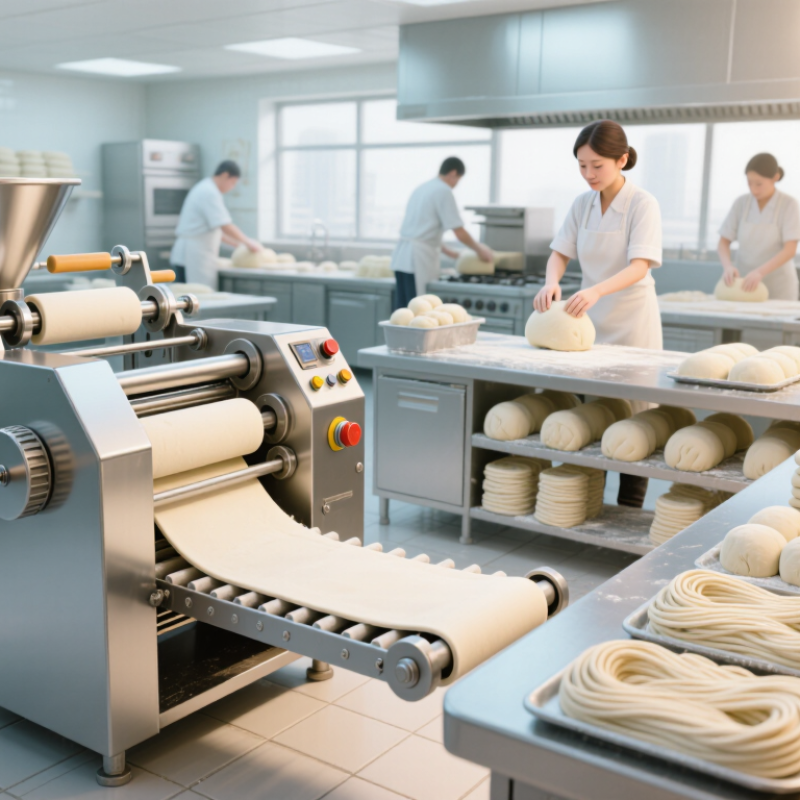
Before choosing an udon noodle machine, define how much you need to produce on an ordinary day and during peak service. Estimate portions per hour, operating hours, and expected growth over the next few years. A small kitchen supplying one restaurant has different needs from a central kitchen serving several locations. Note your available floor space, staff experience, and power supply. These details can prevent an impressive machine from becoming an awkward fit.
Tips: Record your current dough weight, noodle thickness, and batch time. Ask staff where production slows down. Measure the doorway, too. It is an easy detail to overlook.
Set clear business goals before comparing machine features. You may want steadier noodle thickness, less repetitive rolling, or more reliable output during lunch service. Decide which result matters most, then check whether a machine’s capacity matches your actual workflow. Consider cleaning time, changeover between batches, and routine maintenance, not just hourly output. If possible, test a sample dough batch and inspect the noodles after cooking. Specifications help, but dough behavior can vary. I would leave some room for trial and adjustment; production estimates are rarely perfect on the first pass.
Define your udon production needs and business goals before selecting a machine.
These are planning scenarios, not machine specifications. Estimates assume 200 g of fresh noodle dough per serving: multiply expected daily servings by 0.2 kg, then divide by your planned production hours to estimate the hourly output you need. Check a machine’s rated capacity and allow for cleaning, changeovers, and peak demand.
Choosing an udon machine starts with how your kitchen works. A compact sheeter and cutter can suit a shop making fresh noodles in small batches. Larger operations may need a continuous line that mixes, sheets, cuts, and portions dough. Some machines handle only one stage, so check what equipment you already own. Small batches matter. Compare hourly output with your busiest service, not just an average day. A machine rated for high capacity may still struggle if staff cannot feed dough consistently.
Automation changes both labor needs and control. Semi-automatic models leave operators to guide dough or transfer noodles between stages. Fully automated systems can reduce repetitive handling, but require space, training, and careful cleaning. Ask suppliers for a practical demonstration using a dough recipe close to yours. Check noodle thickness, cut consistency, changeover time, and how easily flour and dough residue can be removed. Specifications are useful, but they do not show every daily inconvenience. I would leave room for some trial and error.
Tips: Estimate peak demand in portions per hour, then allow a modest buffer. Confirm the machine fits through your doorway and has suitable power. Ask who will perform routine maintenance, and whether replacement parts are readily available. A faster machine is not always the better fit.
Judge an udon machine by the bowl it produces, not its advertised speed. Run your own flour blend and hydration level through a trial. Check strand thickness, surface smoothness, chew, and cooking loss after a timed boil. Uneven strands may cook at different rates. That matters during a busy lunch service. The National Restaurant Association’s 2024 State of the Restaurant Industry report found that 45% of operators lacked enough employees to meet customer demand. Consistent output and simple controls can ease pressure on a small team.
Inspect the features that shape daily work: adjustable rollers, interchangeable cutters, portion controls, and accessible parts for cleaning. Ask how quickly staff can switch strand sizes or adjust dough settings. PMMI’s food-and-beverage automation research highlights flexibility and integration as important equipment considerations. Still, more options can mean more training and maintenance. A polished demo can mislead. Test a full production cycle, including setup, cleaning, and a recipe change, before choosing. Bring a sample batch to compare texture after cooking; a slightly rough edge is worth noting, even if it is not a deal-breaker. Request custom settings only when they solve a real menu or capacity need.
A udon machine needs more room than its footprint suggests. Measure the doorway, turning space, and the route from delivery to installation. Leave clear access for loading dough, moving trays, and cleaning around the machine. A tight corner may look efficient on a floor plan, but it can slow routine work. Check expected peak output, too; buying for an average day may leave staff struggling during busy periods.
Match the machine’s utility needs to your site before ordering. Confirm voltage, phase, amperage, and any water, drainage, or ventilation requirements in the technical specifications. Have a qualified technician verify the connection rather than relying on a label alone. Safety deserves the same attention. Look for accessible emergency stops, secure guards, and controls that operators can reach without leaning over moving parts. Train staff on safe operation and cleaning.
Plan maintenance before production begins. Ask how often rollers, cutters, and other wear parts need inspection, and whether they can be reached without dismantling half the machine. Flour dust can collect in awkward places. Daily cleaning should be practical, not merely promised in a manual. Keep space for basic tools and replacement parts, and record service checks. I would leave more clearance than seems necessary; it can feel wasteful at first, but cramped access becomes frustrating fast.
| Evaluation Area | What to Assess | Smaller or Lower-Volume Operation | Larger or Higher-Volume Operation | Before You Buy |
|---|---|---|---|---|
| Available space | Measure the machine footprint and allow room for operators, ingredient loading, dough handling, cleaning, and product transfer. | A compact layout may suit a small kitchen, but confirm that access panels and removable parts can be reached. | Allow space for the machine plus dough preparation, cutting, staging, and safe movement around the production line. | Check the overall dimensions, delivery route, doorways, floor loading, required clearances, and any space needed for accessories. |
| Production fit | Match rated output to expected demand, batch size, operating hours, and the rest of the production process. | Batch equipment can be appropriate when production is intermittent and operators can manage each stage. | Higher-throughput production may require coordinated mixing, sheeting, cutting, and downstream handling capacity. | Ask how output is measured and under what conditions. Confirm whether the stated capacity applies to your dough recipe and operating schedule. |
| Electrical supply | Identify the required voltage, phase, frequency, current, plug or hard-wiring arrangement, and circuit protection. | Do not assume a machine will run from a standard outlet; requirements differ by model and location. | Higher-powered equipment may require a dedicated circuit or a different electrical supply. | Compare the machine nameplate and installation manual with the site supply. Have a qualified electrician assess the connection. |
| Water and drainage | Determine whether the machine needs a water connection, water for a process step, or only water for cleaning. | Plan access to suitable cleaning water and a practical way to manage wash water. | Review water access and drainage for the machine and surrounding cleaning tasks, especially in a multi-stage line. | Confirm connection details and cleaning instructions. Use potable water wherever water contacts food, and follow local plumbing and food-safety rules. |
| Ventilation and environment | Check the operating environment, heat exposure, humidity, and any ventilation requirements in the installation instructions. | Keep the machine away from obstructed walkways and unsuitable sources of heat or moisture. | Consider heat and moisture from nearby cooking or washing equipment and maintain access for service and cleaning. | Verify the permitted operating conditions and any ventilation or environmental requirements for the specific machine. |
| Operator safety | Review guarding, accessible moving parts, emergency stops where provided, safe loading, and operator training. | Ensure the operator can feed dough and collect noodles without reaching into hazardous moving parts. | Assess risks across the full production line, including transfer points and interaction between operators and equipment. | Inspect safety features and instructions before purchase. Follow applicable workplace-safety requirements and never bypass guards. |
| Food-contact hygiene | Assess whether food-contact surfaces are accessible, corrosion-resistant, and practical to clean. | Check that dough-contact parts can be cleaned between batches and recipes. | Plan cleaning access across connected equipment and establish procedures that fit the production schedule. | Request material details, disassembly instructions, and approved cleaning methods. Follow applicable food-hygiene regulations. |
| Routine maintenance | Identify inspection points, lubrication needs, wear parts, cleaning intervals, and tasks requiring trained service personnel. | Choose a design your staff can inspect and clean consistently without unnecessary downtime. | Consider maintenance scheduling, spare-part availability, and the effect of service downtime on production. | Request the maintenance schedule and parts list. Isolate and disconnect energy sources before servicing, following the manual and local rules. |
| Installation and support | Confirm delivery, installation, commissioning, training, warranty coverage, and access to technical support. | Check whether installation can be completed without disrupting normal kitchen operations. | Coordinate installation with electrical, plumbing, production-line, and staff-training requirements. | Get installation requirements and service terms in writing, and confirm who is responsible for site preparation and commissioning. |
Planning note: Requirements vary by machine and jurisdiction. Use the selected machine’s nameplate, installation manual, and local electrical, plumbing, food-safety, and workplace-safety requirements as the final reference.
A low purchase price can hide costly gaps. Compare the udon machine’s price, installation, utilities, cleaning time, spare parts, and expected service life. The U.S. Department of Energy’s Federal Energy Management Program evaluates equipment through life-cycle costs, including purchase, operation, maintenance, and disposal. Use that same lens. Ask suppliers for written energy and water consumption figures at your expected production rate, not just maximum output.
Supplier support has a price, too. Ask how quickly technicians respond, which parts they stock, and whether staff training is included. Request a sample maintenance schedule and the cost of routine wear parts, such as belts, seals, and cutting components. Small details matter. ENERGY STAR reports that qualified commercial steam cookers use about 10% less energy and 20% less water than standard models. That is a useful utility benchmark, not a guarantee for noodle machines; compare each model’s verified specifications.
Estimate annual costs using your own operating hours, local utility rates, and cleaning routine. Then compare the totals across the machine’s expected service life. A supplier’s warranty may sound reassuring, but check what it excludes and who pays for travel or labor. I would not assume the cheapest model is poor value—or that the most expensive one lasts longer. Get references from kitchens with similar daily output, and verify claims before committing.
Accreditations
ISO 9001 Quality Management
HSE Management Compliant
Products and services comply with relevant Australian (AS) and international (ISO, etc.) Standards.
"*" indicates required fields