How to Choose the Right Gas Valve for Your Needs?
Choosing the right gas valve is crucial for safety and efficiency. Many factors influence your decision. You must consider the type of gas, pressure ratings, and flow requirements. Gas valves come in various designs, each serving specific needs. A well-selected valve ensures optimal performance in your system.
Understanding the technical aspects is essential. Factors like valve materials and sizes can impact longevity and functionality. For example, a valve made from corrosion-resistant materials offers better durability. However, not all situations require high-end options. Weighing your needs against the cost is often challenging.
It's common to feel overwhelmed when making a choice. There may be instances where the perfect solution is not immediately clear. Consulting with a professional can help clarify uncertainties. Ultimately, the right gas valve enhances safety and optimizes your system's operations.
Types of Gas Valves: An Overview of Options and Their Applications
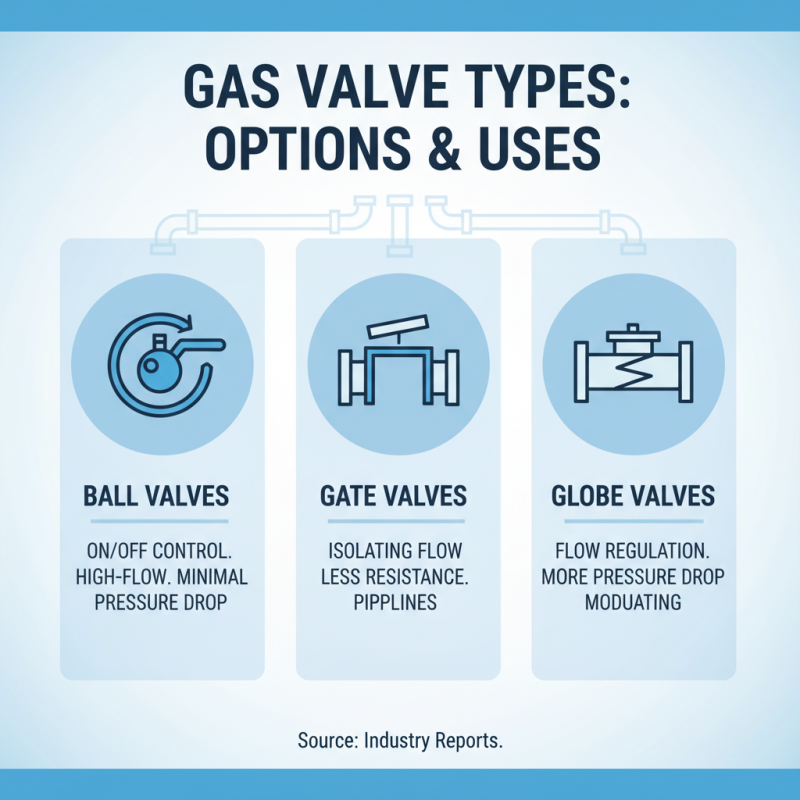
When selecting a gas valve, understanding the types available is crucial. There are several main types: ball valves, gate valves, and globe valves. According to industry reports, ball valves are widely favored for on/off control. They offer minimal pressure drop, making them ideal for high-flow applications. Gate valves provide less resistance and are often used in pipelines where isolating flow is key. Conversely, globe valves excel in regulating flow but can introduce more pressure drops.
Tip: Assess your specific needs before buying. Consider the pressure and temperature rating required for your application. This will guide you to the right valve type.
Exploring the practical applications of each type can be enlightening. Ball valves are common in residential settings due to their ease of use. Globe valves find their niche in systems where flow control is essential, like in heating applications. While these valves serve distinct purposes, aware users should also consider maintenance factors. For instance, ball valves generally require less upkeep, whereas globe valves can accumulate debris, leading to performance issues.
Tip: Regular inspections can prevent problems. Know when to clean or replace your valves. Balancing performance and maintenance is key to achieving durability and reliability in your systems.
Key Factors to Consider When Selecting a Gas Valve for Your Project
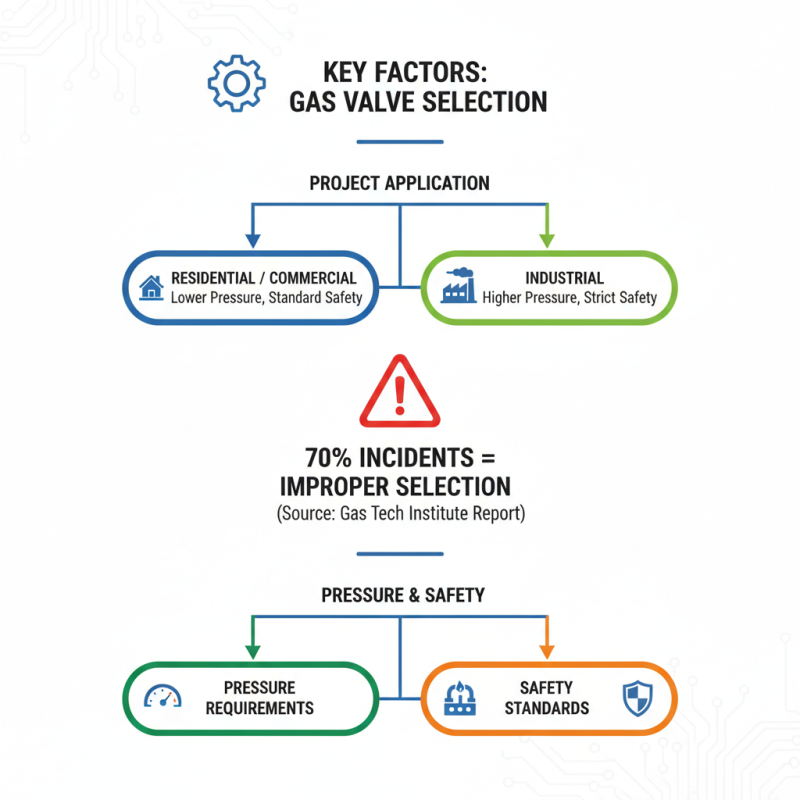
When selecting a gas valve for your project, several key factors must be considered. First, the application specifics greatly influence valve choice. According to a report by the Gas Technology Institute, approximately 70% of gas-related incidents stem from improper valve selection. Understanding whether your application is residential, commercial, or industrial is crucial. Each setting has different pressure requirements and safety standards.
Material compatibility is another essential factor. Valves made from brass or stainless steel may be appropriate for certain gases, while others may require specialized materials. A study published in the Journal of Engineering found that over 25% of valve failures result from material degradation. It’s critical to ensure the valve can withstand the gas type and environmental conditions.
Lastly, valve size and flow rate must align with your system demands. Oversized or undersized valves can lead to inefficiencies. The American Society of Mechanical Engineers suggests that ensuring the right sizing can improve system performance by up to 30%. Evaluating these factors with precision can prevent costly errors and enhance system reliability in the long run.
Understanding Flow Rates and Pressure Ratings in Gas Valve Selection
Choosing the right gas valve requires a solid understanding of flow rates and pressure ratings. Flow rate relates to the volume of gas that can pass through a valve within a given timeframe. It's typically measured in cubic feet per hour or liters per minute. You should determine the required flow rate for your application. Evaluate how many appliances will use gas simultaneously. A mismatch can lead to performance issues.
Pressure ratings are equally vital. Each gas valve has a maximum pressure rating. This rating indicates the highest pressure the valve can handle safely. Exceeding this limit risks leaks or catastrophic failure. Make sure to assess the pressure needs based on your system's specifications. Ignoring these factors may lead to unsafe conditions and costly repairs.
Take time to consider your specific needs. Underestimating the required flow rate or overestimating the pressure capacity could result in inadequate performance. These considerations are crucial for ensuring safety and efficiency in gas systems. Always consult with a professional to reflect on these aspects. Understanding them can make a significant difference in your selection process.
How to Choose the Right Gas Valve for Your Needs?
| Gas Valve Type |
Flow Rate (CFM) |
Pressure Rating (PSI) |
Material |
Applications |
| Ball Valve |
10-100 |
0-150 |
Brass |
Residential, Commercial |
| Globe Valve |
5-75 |
0-300 |
Cast Iron |
Industrial, HVAC |
| Check Valve |
15-80 |
0-200 |
Stainless Steel |
Pipelines, Water Systems |
| Needle Valve |
1-20 |
0-1000 |
Brass, Stainless Steel |
Gas Control, Fine Tuning |
| Solenoid Valve |
3-50 |
0-150 |
Plastic, Brass |
Automation, Pneumatics |
Compatibility of Materials: Choosing a Valve for Different Gas Types
When selecting a gas valve, the material compatibility is crucial. Different gases interact uniquely with various materials. For example,
corrosive gases like hydrogen sulfide may require specialized materials to prevent degradation. On the other hand, inert gases,
such as nitrogen, can generally use standard materials without risk. Identifying the gas type guides the material choice.
Consider the environment as well. High temperatures or pressures may weaken certain materials, leading to failure. Regular inspections should be a
practice for safety. One must also consider potential gas mixtures. An improperly chosen valve can mix gases and lead to dangerous outcomes.
Detailed research is vital in these cases.
Selecting the right valve is not just about finding the right fit. It's also about anticipating future needs. Missteps in material choice can lead to
costly repairs or hazardous situations. Each project needs a tailored approach, taking into account all aspects of the application.
Careful consideration and expertise are required to make informed decisions.
Industry Standards and Regulations Impacting Gas Valve Selection
When selecting the right gas valve, understanding the industry standards and regulations is crucial. Various organizations, such as the American Society of Mechanical Engineers (ASME) and the National Fire Protection Association (NFPA), set guidelines that ensure safety and performance. Compliance with these standards can prevent system failures and mitigate risks.
Industry reports indicate that approximately 30% of gas system failures stem from improper valve selection. This statistic highlights the importance of adhering to established norms. For instance, valves must meet pressure and temperature ratings specified by ANSI/ISA standards. These requirements inform users about the valve's operational limits and performance reliability.
Tips: Always prioritize valves accredited by recognized authorities. Review local codes to ensure compliance. Seek expert opinion when in doubt.
Attention to detail in selecting gas valves can’t be overstated. You might find valves that superficially seem adequate. However, subtle discrepancies in specifications or materials can lead to significant issues. For example, choosing a valve made from incompatible materials could result in corrosion, impacting longevity and safety. It’s essential to balance convenience with a thorough understanding of requirements to avoid costly mistakes.
Gas Valve Selection Criteria and Compliance Standards