Top Pop Up Electrical Socket Manufacturers Worldwide
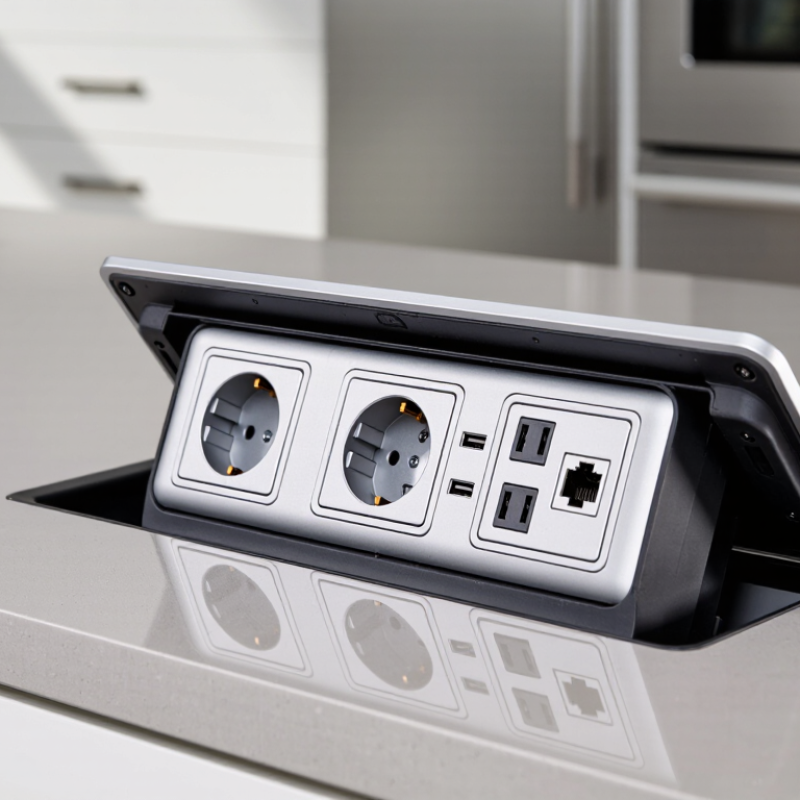
Pop Up Electrical Socket solutions are changing how power reaches modern workspaces, kitchens, hotels, and shared tables. Unlike fixed wall outlets, these units stay concealed until users need them. A gentle press can raise several sockets, USB ports, or data connections from a countertop. The mechanism must feel smooth, not loose or noisy. Small details matter.
Benoît Coquart, Chief Executive Officer of Legrand, has said, “Innovation must remain useful, reliable, and easy to live with.” This principle fits the Pop Up Electrical Socket market closely. Buyers now examine more than appearance. They compare load capacity, thermal protection, child safety features, waterproof ratings, cable management, and installation depth. A premium unit should also resist scratches, fingerprints, and repeated daily movement. It must disappear neatly when closed.
This guide reviews leading Pop Up Electrical Socket manufacturers worldwide. It considers product engineering, manufacturing consistency, certification practices, customization, warranty support, and real project experience. These factors reveal differences that glossy product images often hide. A socket may look elegant but operate poorly after thousands of cycles. That weakness deserves attention.
The market is not perfectly transparent. Some claims require closer verification. Therefore, readers should request test reports, material specifications, and installation guidance before choosing a supplier. Regional requirements can also vary. A reliable manufacturer explains these limits clearly instead of promising everything. Performance matters most. So does honest communication.
What Defines a Leading Pop-Up Electrical Socket Manufacturer
A leading pop-up electrical socket manufacturer begins with safety, not appearance. The International Energy Agency reports that buildings consume about 30% of global final energy. Therefore, efficient power management deserves attention, even inside a compact desk unit. A reliable manufacturer should design sockets around recognized standards, including IEC 60884-1 where applicable. It should also provide traceable test records, clear load ratings, and documented material controls. In practical installation work, loose terminals and poor cable routing remain common failure points. Small details matter.
Engineering depth separates a supplier from a true manufacturer. Each pop-up mechanism should withstand repeated opening cycles, accidental pressure, and uneven mounting surfaces. Thermal protection, child-safe shutters, grounding continuity, and flame-retardant housings need verification, not attractive promises. The ISO Survey 2023 recorded more than 1.5 million ISO 9001 certificates worldwide, showing how widely quality-management systems are used. Certification alone proves little. Auditable production controls matter more.
Experienced manufacturers also test products under realistic conditions. They should examine heat buildup behind crowded desks, moisture near kitchen counters, and cable stress during daily use. Independent laboratory testing strengthens credibility. So does transparent corrective-action reporting. No factory is flawless. Honest suppliers explain failure patterns and improve tooling, inspection, and worker training. Some product pages still hide important limits, such as maximum connected load or replacement requirements. That omission deserves scrutiny. A leading manufacturer makes technical information visible before purchase, not after installation.
Key Technologies Used in Modern Pop-Up Socket Design
Modern pop-up sockets combine compact mechanics with controlled power delivery. A small motor or spring lifts the module from a desk, island, or conference table. Position sensors stop movement before the cover reaches its travel limit. Some designs use a manual push system, reducing motor noise and maintenance. The visible rim often uses anodized metal or impact-resistant polymer. It must resist scratches, crumbs, and repeated cleaning.
Electrical safety begins inside the housing. Insulated terminals, grounding contacts, and overload protection help control heat during heavy use. Thermal cutoffs disconnect power when internal temperature rises unexpectedly. Child-protection shutters can block direct access to live contacts. USB-C power modules add negotiation chips, allowing compatible devices to request suitable charging levels. However, high-wattage charging creates more heat in a shallow enclosure. Heat still matters. Ventilation and spacing are essential.
Engineers also design against spills. Silicone gaskets and angled drainage paths can slow liquid entry, but no pop-up socket is automatically waterproof. Dust can collect around the lifting ring and affect smooth movement. Dust wins eventually. Field installers frequently report that installation quality matters as much as component selection. Uneven cutouts may twist the frame or strain the cable. Reliable manufacturers validate prototypes through cycle tests, insulation checks, load testing, and independent laboratory review. Yet test conditions rarely match every busy kitchen or office. Clear instructions, replaceable parts, and honest ratings deserve equal attention.
Safety Standards and Certifications for Pop-Up Electrical Sockets
Safety Standards and Certifications for Pop-Up Electrical Sockets
Pop-up electrical sockets must meet strict safety requirements before installation in homes, offices, or hospitality spaces. Relevant standards may include IEC 60884-1, UL 498, or regional equivalents. The correct standard depends on the destination market and socket design. A credible manufacturer should provide test reports, certification numbers, and clear product specifications. Look for protection against electric shock, overheating, short circuits, and accidental contact. Certification alone is not enough.
During field inspections, installers should check the socket’s grounding path, cable strain relief, enclosure strength, and water-resistance rating. A kitchen unit near a sink needs different protection from a desk-mounted office unit. Moving parts also deserve attention. The lift mechanism should operate smoothly without trapping fingers or damaging cables. It is easy to trust a printed mark. That can be a mistake. Certification documents should match the exact model, voltage, current rating, and factory location.
Tips: Confirm the local approval mark before ordering. Ask for recent laboratory reports from an accredited testing body. Test the socket under realistic load conditions, not only when empty. Inspect the cable after repeated opening cycles. Keep installation instructions available for maintenance staff. Small details matter. Even a loose earth terminal can create serious risk. Manufacturers should also state whether the product meets EMC, RoHS, and relevant fire-resistance requirements, while users should verify these claims through official documentation rather than marketing language.
Pop-Up Electrical Socket Safety Requirements by Market
Typical nominal mains voltage and frequency used when defining electrical ratings and conformity requirements
Pop-up electrical sockets should be evaluated against the requirements of the target market. Common reference frameworks include IEC 60884-1 for household and similar socket-outlets, IEC 60670-1 for boxes and enclosures for electrical accessories, UL 498 for receptacles in North America, and applicable national certification schemes such as CE, UKCA, or Japan’s PSE. Voltage and frequency values shown are typical nominal supply values; final certification depends on the complete product design, installation method, materials, protection features, and intended use.