How to Source Substituted Pyridines for Drug Discovery?

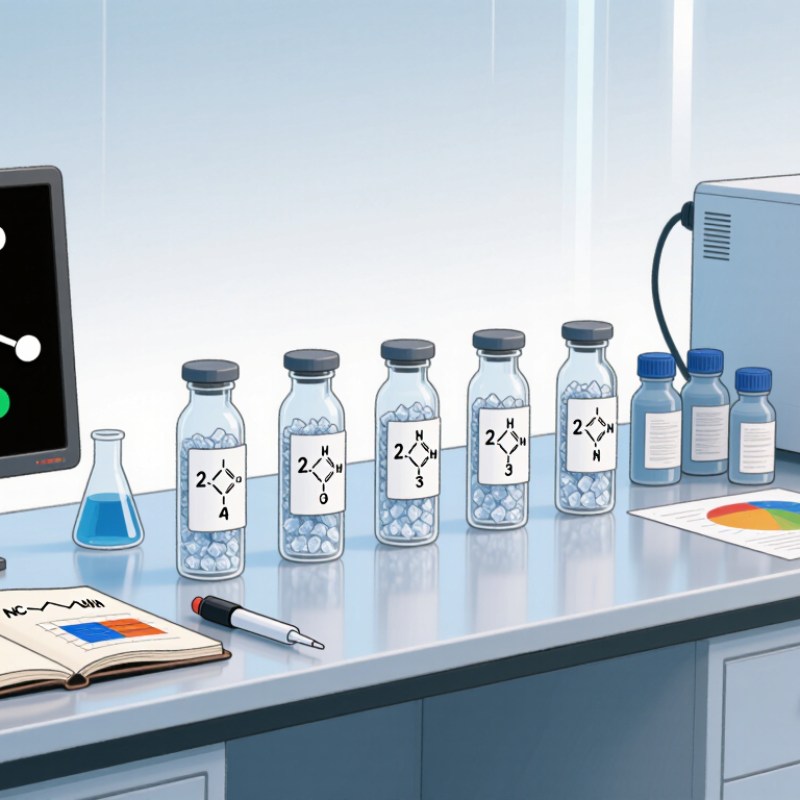
Sourcing Substituted Pyridines For Drug Discovery requires more than finding a familiar catalog structure. It requires a clear route, dependable quality, and evidence that the compound can support medicinal chemistry decisions. Pyridine substitution changes polarity, basicity, metabolic stability, and binding geometry. A small change at the 2-, 3-, or 4-position can reshape the entire project.

Professor Chris Moody, a respected heterocyclic chemist, has observed, “Pyridines are deceptively simple molecules.” That warning is useful. A vendor may list the desired analog, yet provide limited data on purity, salt form, residual solvents, or long-term availability. Reliable sourcing therefore begins with identity confirmation. Check the structure carefully. Review analytical data. Ask whether the material is research-grade or suitable for repeated biological studies.

A practical sourcing workflow should compare commercial catalogs, custom synthesis options, and route feasibility. Search by structure, not only by name. Verify regioisomer identity with certificates, NMR data, and high-resolution mass spectrometry when necessary. Examine lead times beside price. The cheapest vial may become the slowest decision.

Experience also exposes uncomfortable gaps. Some suppliers publish incomplete specifications. Some compounds degrade during storage. A seemingly efficient route may fail at scale. For that reason, this guide will examine supplier credibility, substitution patterns, synthesis constraints, analytical verification, and contingency planning. The goal is not merely to buy pyridines. It is to secure usable building blocks that remain reliable throughout discovery.

How to Source Substituted Pyridines for Drug Discovery?

Defining Substituted Pyridines and Their Role in Drug Discovery

How to Source Substituted Pyridines for Drug Discovery?

Substituted pyridines are aromatic six-membered rings containing one nitrogen atom. Their attached groups can change polarity, acidity, steric shape, and metabolic stability. These small changes matter greatly in drug discovery. A fluorine atom may alter lipophilicity, while an amine can improve binding or water compatibility. Position matters too. A substituent at the 2-, 3-, or 4-position can produce different molecular behavior.

In practical screening, substituted pyridines often serve as binding elements, synthetic intermediates, or fragments for structure-based design. Their nitrogen atom can accept hydrogen bonds and coordinate with important regions of a protein target. However, this interaction is not guaranteed. A stronger binding signal may also create poor solubility or rapid metabolism. I have seen promising structures weaken after simple changes in substitution pattern. That result is frustrating, but it prevents premature conclusions.

Reliable sourcing begins with a clearly defined structure and intended use. Confirm the chemical name, registry information, molecular formula, and available quantity. Request analytical evidence, including proton NMR, carbon NMR, mass spectrometry, and chromatographic purity. Check whether the material has a documented batch history and suitable storage conditions. For uncommon analogues, custom synthesis may be necessary. Discuss expected lead time, impurity profiles, and scale before ordering. A certificate alone is not enough. Independent verification is sometimes worth the extra time, especially when trace impurities could distort an early assay.

Identifying Structural Requirements and Target Compound Profiles

How to Source Substituted Pyridines for Drug Discovery?

A reliable sourcing plan begins with the target compound profile. Define the required pyridine position, substitution pattern, and functional groups before contacting suppliers. A 2-chloro pyridine behaves differently from its 3- or 4-isomer during synthesis. Small positional changes can alter binding, solubility, and metabolic stability.

Record molecular weight, estimated pKa, cLogP, hydrogen-bond capacity, and preferred polarity range. These values help filter unsuitable candidates early. Specify acceptable purity, salt form, residual solvent limits, and storage conditions. Analytical evidence should include LC-MS, NMR data, and a recent certificate of analysis. Identity matters. So does batch consistency.

Sourcing should also reflect the next synthetic step. A compound with a protected amine may simplify coupling, while an unprotected analogue could reduce purification time. Halogenated, cyano, amino, hydroxyl, and alkoxy substitutions often support useful diversification. Check available quantities, lead times, packaging, and scale-up options before final selection. A neat database is not enough. Some entries contain incomplete spectra or unclear isomer labels. That weakness deserves attention. Reconfirm critical structures through independent analytical review, especially when several positional isomers share similar names and molecular weights. A practical shortlist balances chemical relevance, verified quality, and realistic availability rather than choosing the largest catalogue.

Selecting Reliable Sources and Synthetic Supply Routes

How to Source Substituted Pyridines for Drug Discovery?

Selecting a reliable pyridine source starts with route transparency. Ask for a structure-specific certificate of analysis, residual-solvent results, and batch-to-batch impurity profiles. These details matter because positional isomers can show different reactivity, solubility, and biological activity. The FDA’s Center for Drug Evaluation and Research reported 55 novel drug approvals in 2023, highlighting the continuing need for dependable small-molecule building blocks. Early sourcing decisions can affect an entire discovery timeline.

Commercial catalogs suit fast screening, especially for common halopyridines, aminopyridines, and boronic-acid derivatives. Custom synthesis becomes more practical when substitution patterns are unusual or stability is limited. A capable supplier should explain whether the route uses direct functionalization, cross-coupling, halogen exchange, or late-stage oxidation. Route choice affects cost, lead time, scalability, and impurity control. The 2024 Global Trends in R&D report from the IQVIA Institute described sustained growth in pharmaceutical research investment, but faster research does not guarantee better materials. I have seen teams trust a low price too early. That decision often creates delays later.

Tips: Compare at least two independent analytical packages before ordering. Confirm salt form, stereochemical needs, water content, and shipping stability. Request a small pilot batch when the compound is novel. Review the synthetic route, not only the product page. A supplier may provide an elegant scheme that performs poorly at scale. Ask for evidence from a recent batch.

Evaluating Purity, Characterization, and Regulatory Documentation

Sourcing substituted pyridines for drug discovery requires more than checking availability. Purity data should match the intended experiment. A reported 98% assay may still hide isomeric impurities, residual solvents, or water. Request a lot-specific certificate of analysis, not a generic product sheet. Review the test method, acceptance limits, and release date carefully.

Characterization should support the structure and the number. Useful records include proton and carbon NMR, high-resolution mass spectrometry, HPLC or GC traces, and water content. For sensitive reactions, trace metals can matter. Ask whether the analytical sample came from the shipped batch. It sounds obvious, but this detail is sometimes missing. A clear chromatogram helps, yet it does not prove complete identity.

Regulatory documentation should be practical and current. Obtain the safety data sheet, specification sheet, transport classification, country-of-origin information, and available impurity statements. Confirm storage conditions, retest dates, and packaging details before placing an order. Requirements vary by jurisdiction, so a document acceptable in one region may need review elsewhere. Traceable batch numbers are essential for later investigations. Supplier change notifications also deserve attention.

A small uncertainty remains. Some suppliers provide excellent spectra but limited process history. That gap may not affect an early screen, but it can complicate repeat studies. Document every assumption in the project record. Good sourcing leaves an audit trail.

How to Source Substituted Pyridines for Drug Discovery? — Evaluating Purity, Characterization, and Regulatory Documentation
Representative Pyridine CAS Registry Number Molecular Weight Purity Evaluation Recommended Characterization Package Key Impurity and Quality Checks Regulatory and Supply Documentation
Reference compounds for early-stage medicinal chemistry sourcing
2-Aminopyridine 504-29-0 94.12 g/mol Define a fit-for-purpose assay target before purchase. For discovery use, an assay value of approximately 95% or higher may be acceptable; higher purity should be specified for sensitive biological assays or advanced intermediates.
  • Identity by LC-MS or GC-MS
  • 1H NMR and 13C NMR
  • HPLC or GC assay with chromatogram
  • Water content when hygroscopicity is relevant
Check regioisomeric aminopyridines, unreacted pyridine, residual solvents, inorganic residues, and degradation products. Require a defined reporting threshold for unknown peaks.
  • Lot-specific certificate of analysis
  • Safety Data Sheet with GHS classification
  • Manufacturing lot and retest or expiry information
  • Residual-solvent statement referencing ICH Q3C where applicable
3-Aminopyridine 462-08-8 94.12 g/mol Use an orthogonal identity check because it is an isomer of 2-aminopyridine and 4-aminopyridine. A single HPLC retention time is not sufficient to establish regiochemical identity.
  • LC-MS or HRMS for molecular identity
  • 1H/13C NMR for substitution pattern
  • HPLC or GC purity profile
  • Melting-point data as supporting information
Give specific attention to aminopyridine regioisomers, residual starting materials, water, and solvent residues. Confirm that the analytical method resolves the relevant isomeric impurities.
  • CoA with analytical method references
  • Representative chromatogram or access to raw data
  • SDS and transport classification, if applicable
  • Change-control and traceability statement
4-Aminopyridine 504-24-5 94.12 g/mol Specify both total purity and limits for the two aminopyridine positional isomers. For biological screening, establish an internal limit for unidentified chromatographic impurities.
  • LC-MS or GC-MS
  • 1H NMR and 13C NMR
  • Validated or qualified HPLC purity method
  • Elemental analysis when used as a synthetic intermediate
Monitor 2-aminopyridine, 3-aminopyridine, unreacted pyridine derivatives, residual solvents, and nonvolatile residue. Compare the supplied spectrum with the stated lot number.
  • Lot-specific CoA and specification sheet
  • SDS/GHS documentation
  • Country-of-origin and manufacturing-site information where required
  • Statement on animal-derived materials, if relevant to the project
2-Bromopyridine 109-04-6 158.00 g/mol For a volatile liquid, assay may be determined by GC-FID or GC-MS. Purity targets should distinguish the main compound from positional bromopyridine isomers and volatile process impurities.
  • GC-FID or GC-MS purity profile
  • 1H NMR and 13C NMR
  • LC-MS or HRMS as an orthogonal identity test
  • Density and refractive index as supporting physical data
Check 3-bromopyridine, 4-bromopyridine, unreacted pyridine, water, residual halogenated solvents, and nonvolatile residue. Confirm packaging protects the material from light and moisture when specified.
  • CoA including appearance and assay method
  • SDS with hazard and handling information
  • Storage and transport conditions
  • Residual-solvent and elemental-impurity statements when required
3-Bromopyridine 626-55-1 158.00 g/mol Require chromatographic separation from 2-bromopyridine and 4-bromopyridine. The acceptable limit for each regioisomer should be agreed before ordering.
  • GC-MS or GC-FID
  • 1H/13C NMR with assignment of the substitution pattern
  • HRMS when exact-mass confirmation is needed
  • Water determination for moisture-sensitive workflows
Review regioisomers, debrominated material, unreacted pyridine, residual solvents, and oxidation or decomposition products. Verify that the chromatographic method is stability-indicating when stored for long periods.
  • Current lot CoA
  • SDS/GHS classification
  • Retest or expiry date supported by storage conditions
  • Supplier change-notification commitment
4-Methylpyridine 108-89-4 93.13 g/mol Use GC-based testing for volatile impurities and define limits for water, nonvolatile residue, and other methylpyridine isomers. Confirm whether the stated purity is area percent or an absolute assay.
  • GC-FID or GC-MS
  • 1H NMR and 13C NMR
  • LC-MS if nonvolatile impurities are a concern
  • Water determination where reaction performance is moisture-sensitive
Check 2-methylpyridine, 3-methylpyridine, pyridine, water, residual solvents, and nonvolatile residue. Confirm that the container closure is suitable for a volatile liquid.
  • Lot-specific CoA
  • SDS and hazard-label information
  • Storage, container, and shipping requirements
  • Declaration of residual solvents and impurities, as applicable
4-Dimethylaminopyridine 1122-58-3 122.17 g/mol Specify assay, water, and limits for dimethylaminopyridine-related impurities. A high assay alone does not demonstrate suitability for catalytic or stereochemically sensitive reactions.
  • HPLC-UV or LC-MS purity profile
  • 1H/13C NMR
  • HRMS or elemental analysis when required
  • Water content and residue-on-ignition, if relevant
Monitor 4-aminopyridine, pyridine, partially methylated analogues, residual solvents, water, and inorganic residue. Include a defined limit for unknown impurities.
  • CoA with method and specification version
  • SDS/GHS documentation
  • Elemental-impurity statement referencing ICH Q3D when relevant
  • Packaging and storage information
Cross-product sourcing and qualification checklist
Identity and traceability Required The material name, CAS number, molecular formula, molecular weight, lot number, and container label should be consistent across the order, CoA, SDS, and shipping documents. Confirm identity with at least one spectroscopic or mass-spectrometric method and use an orthogonal technique for positional isomers. Resolve discrepancies before material release. Do not rely solely on a supplier catalogue description or a single chromatographic peak. Retain CoA, SDS, lot traceability, storage history where available, and a documented deviation or investigation record for any mismatch.
Purity and analytical data Required Define the intended use, assay target, individual impurity limits, total impurity limit, water limit, and residual-solvent requirements before sourcing. Prefer an analytical package combining chromatography with NMR and MS. Request representative chromatograms and confirm method suitability for the chemical form supplied. Distinguish known impurities, unknown impurities, water, inorganic residue, residual solvents, and degradation products. Area percent should not automatically be interpreted as absolute assay. CoA should identify the test method, specification, result, unit, acceptance criterion, analyst or laboratory reference, and lot number.
Regulatory documentation Risk-based Documentation depth should increase as the material progresses from exploratory screening to a regulated development program. For advanced work, evaluate residual solvents under ICH Q3C, elemental impurities under ICH Q3D, and potentially mutagenic impurities using the risk-based principles of ICH M7. Assess whether the synthetic route could introduce halogenated residues, metals, genotoxic alerts, or other process-related impurities that are not covered by a basic purity assay. Maintain SDS/GHS files, CoA, specifications, change-control information, country-of-origin data where required, transport details, and declarations concerning animal-derived or genetically modified materials when relevant.
Packaging, storage, and retest Required Select packaging based on volatility, moisture sensitivity, light sensitivity, corrosivity, and compatibility with the compound. Confirm appearance, container closure, storage temperature, protection from light or moisture, and any recommended inert-gas handling. Re-test material if the container has been opened, storage conditions were exceeded, or the material has passed its stated retest period. Require a retest or expiry date, storage statement, transport classification where applicable, and notification of significant changes to specification, process, site, or packaging.

Comparing Suppliers, Costs, Lead Times, and Scale-Up Options

Substituted pyridines rarely fail because of chemistry alone. They fail when purity, isomer control, or delivery timing is misunderstood. Compare suppliers by specification depth, not only price per gram. Request chromatograms, water content, residual solvent data, and trace-metal results. A low-cost 100-gram lot may become expensive after re-testing, expedited freight, or failed coupling reactions.

Indicative planning ranges help, but they are not promises. Standard catalog materials may arrive within one to three weeks. Custom synthesis can require six to twelve weeks, especially for unstable halopyridines or multi-step routes. The U.S. FDA’s Drug Shortages Task Force report states that more than 60% of shortages involve quality problems. Its 2019 analysis also found that about 80% of active pharmaceutical ingredient facilities serving the U.S. were located overseas. These figures make dual sourcing and documented change control practical safeguards, even for early discovery compounds.

For scale-up, ask whether the supplier can move from milligrams to kilograms without changing the synthetic route. A strong quotation should separate development, analytical, and manufacturing charges. It should also state minimum order quantity, batch size, retest period, and shipping conditions. Non-GMP material may suit screening, while GMP-aligned production can reduce later transfer risk. I would still challenge every lead-time estimate. Pyridine chemistry often looks simple on paper, yet crystallization and impurity purge can shift the schedule sharply. ACS Green Chemistry Institute guidance also supports tracking solvent use and process mass intensity during route selection, not after scale-up.

How to Source Substituted Pyridines for Drug Discovery?

Comparing typical lead times, relative procurement costs, and scale-up readiness across common sourcing routes.

The benchmark uses representative planning values for substituted pyridines commonly used in medicinal chemistry. Relative cost is indexed to routine catalog procurement, while scale-up readiness is scored from 1 to 5, with 5 indicating the strongest suitability for kilogram-scale development. Actual pricing and delivery schedules vary by structure, purity, documentation, and batch size.

Enquire Today

"*" indicates required fields