
7 Tips for Buying a Tin Bar Casting Machine

Buying a Tin Bar Casting Machine is not simply a matter of comparing prices, motor power, or attractive photographs. The right machine must match your tin alloy, bar dimensions, production volume, cooling method, and available floor space. Small oversights can create rough surfaces, uneven bar weights, excessive dross, or costly production delays.

Dr. Chris Corti, a respected metallurgist and materials specialist, offers a useful principle: “Casting quality begins with process control, not equipment alone.” His observation matters when reviewing suppliers. A strong machine should provide stable temperature control, consistent mold filling, dependable cooling, and practical access for cleaning. Ask to see test results, maintenance records, and sample bars produced with a similar alloy. Do not rely on promises.

Real factories reveal details that brochures often omit. Check whether operators can reach the mold safely, whether thermocouples are easy to replace, and whether spare parts arrive quickly. Listen for excessive vibration. Inspect the casting line after continuous operation, not only during a polished demonstration.

Some choices remain imperfect. A highly automated system may reduce labor but increase repair complexity. A cheaper model may appear efficient until downtime erodes the savings. Your production plan may also change sooner than expected. Therefore, this guide, “7 Tips for Buying a Tin Bar Casting Machine,” focuses on practical questions, measurable performance, supplier reliability, and long-term operating costs. The goal is not to find the most impressive machine. It is to find the machine your team can operate, maintain, and trust every working day.
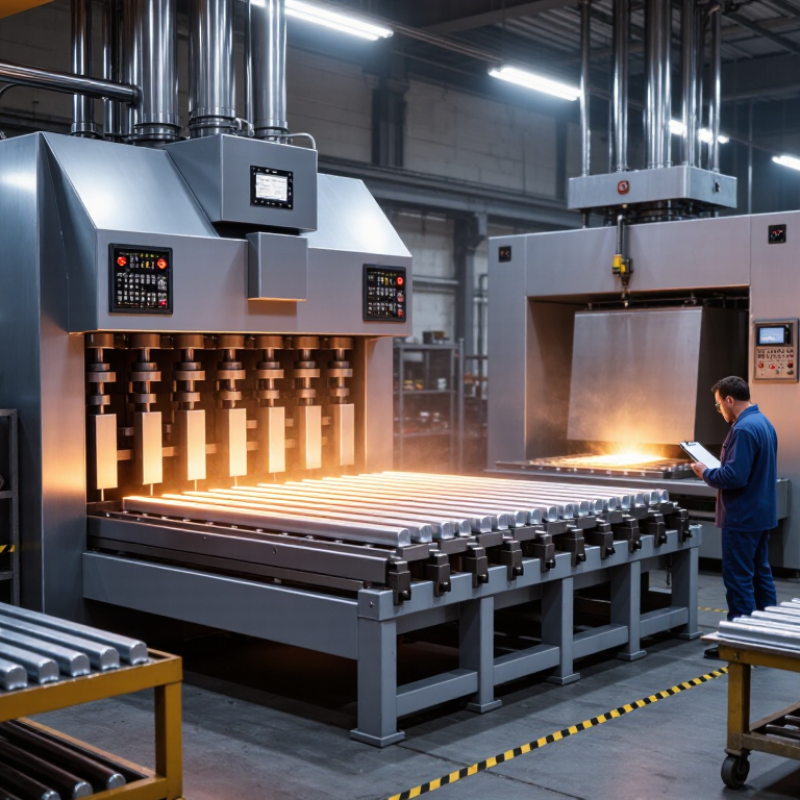
7 Tips for Buying a Tin Bar Casting Machine

Define Your Required Tin Bar Specifications and Production Capacity

Define Your Required Tin Bar Specifications and Production Capacity

Before comparing a tin bar casting machine, write down the exact product you need. Specify bar length, width, thickness, and target weight. A small difference can affect mold design, cooling time, and trimming work. Also define the tin alloy, purity range, surface finish, and acceptable dimensional tolerance. Shiny bars may require different cooling control than matte products. Be precise.

Production capacity must reflect real working conditions, not only the supplier’s maximum figure. Calculate your required output per hour, shift, and month. Include melting time, pouring, solidification, mold release, inspection, and short cleaning stops. For example, a machine producing 500 kilograms daily may not meet demand if only 420 kilograms are usable after rejects and downtime.

Ask for trial casting data using your specified bar size and alloy. Check cycle time, temperature stability, bar weight variation, and surface defects. Review maintenance access and spare-part availability. These details often matter more than a large capacity number. Do not ignore operator skill. A complex control system may reduce performance when training is limited. My own assessment would remain provisional until several continuous production cycles are observed. One successful test is not enough. Record actual output, reject rates, and energy use before approving the machine.

Compare Casting Methods, Machine Types, and Automation Levels

Tip 1: Compare the casting method with your required bar quality. Sand casting suits small batches and flexible shapes, but surfaces may need extra finishing. Permanent mold casting offers cleaner surfaces and repeatable dimensions. Continuous casting can produce steady output, although setup costs and process control are higher.

Tip 2: Choose the machine type around your production rhythm. A manual machine may suit trials or occasional orders. Semi-automatic equipment reduces lifting and pouring work without removing operator judgment. Fully automatic lines improve consistency, especially when bar length and weight must stay stable. However, automation cannot repair poor mold design.

Tip 3: Check temperature control carefully. Tin flows easily, yet overheating can increase oxidation and energy use. Look for clear temperature displays, insulated holding pots, and simple access for cleaning. Ask whether the machine records temperature changes during a shift. That detail often reveals process reliability.

Tip 4: Match automation to your team’s real skills. Sensors, automatic pouring, cooling, and bar removal can reduce repetitive work. They also require maintenance knowledge and dependable calibration. A cheaper machine may become expensive when basic faults stop production.

Tip 5: Inspect the finished bars under normal light. Look for cracks, uneven edges, trapped air, or different lengths. Request sample runs using your own tin alloy and target dimensions. Supplier claims are useful, but physical samples are stronger evidence. I would not skip this step.

Tip 6: Review cleaning and mold-change time. Five extra minutes per cycle can become hours each week.

Tip 7: Leave room for improvement. My first equipment comparison would probably overvalue speed and undervalue operator training, spare parts, and floor space.

Evaluate Material Quality, Build Design, and Operating Safety

7 Tips for Buying a Tin Bar Casting Machine

Material quality should be verified, not assumed. Ask for the alloy grade of the melting chamber, molds, heating elements, and contact surfaces. Stainless steel may resist corrosion, but its grade and weld quality still matter. The USGS Mineral Commodity Summaries 2024 reported about 290,000 metric tons of global tin mine production in 2023. That scale makes consistent material handling essential. Request test certificates, hardness data, and records for thermal cycling. A shiny surface is not proof. I would inspect sample welds personally, because small cracks can spread under repeated heating.

Build design affects output and maintenance. Choose a rigid frame with guarded moving parts, accessible inspection panels, and clear drainage around the casting area. The mold should align without forcing it. Uneven alignment creates rough bars, metal leakage, and avoidable cleaning work. Check whether temperature sensors are placed near the actual melt, not merely on the outer wall. ISO 12100 recommends risk reduction through inherently safer design, guarding, and clear operating information. That principle is easy to overlook during a fast purchase.

Operating safety needs practical evidence. Look for interlocked covers, emergency stops, insulated handles, stable controls, and alarms for overheating or cooling failure. The ILO reported 2.78 million work-related deaths annually in its 2019 safety report, showing why routine hazards deserve serious attention. Ask to observe a live demonstration. Watch the operator’s hands. If molten material can splash toward the control panel, the design needs reconsideration. Manuals matter, but workers often improvise. That uncomfortable detail should influence the machine choice.

Check Energy Use, Maintenance Needs, and Replacement Parts

7 Tips for Buying a Tin Bar Casting Machine

Check the machine’s energy use per casting cycle, not only its advertised motor rating. Ask for measured data under a realistic production load. A lower standby demand can reduce costs during long pauses. Confirm whether the heating system supports precise temperature control. Poor control may create uneven bars and more rejected material. Review electrical requirements with a qualified technician before ordering. Your facility may need wiring changes, which are easy to overlook.

Examine the maintenance schedule in detail. Ask how often heaters, thermocouples, molds, bearings, and filters require inspection. Choose a design that allows quick access without removing half the machine. Simple cleaning matters. Metal residue can harden around channels and increase downtime. Request service records from comparable installations when possible. Do not rely on promises alone.

Check replacement-part availability before signing anything. Confirm prices, expected delivery times, part numbers, and compatibility with later machine revisions. Keep critical items, such as sensors and heating elements, on site. A small spare can prevent a full production stop. Read the maintenance manual carefully. Vague instructions are a warning sign. I would also test the supplier’s response time with practical questions. Slow replies before purchase may become a serious problem afterward. No machine is maintenance-free. Budget for training, inspections, and occasional mistakes.

7 Tips for Buying a Tin Bar Casting Machine - Check Energy Use, Maintenance Needs, and Replacement Parts

Buying Tip Key Dimension to Check Practical Benchmark or Requirement Why It Matters Questions to Ask Before Purchase
1Check the heating system Rated electrical power, temperature range, insulation, and heating-zone control For small and medium melting units, installed heating power commonly falls around 6–30 kW. Look for independent temperature control and insulated furnace walls. Heating is usually the largest energy-consuming stage. Better insulation and zoned control can reduce heat loss, improve temperature stability, and support more consistent bar quality. What is the rated power at full load? Is the actual energy consumption measured in kWh per batch or kWh per kilogram? How quickly does the furnace reach the operating temperature?
2Match capacity to production Melting capacity, mold capacity, cycle time, and usable output Compare the specified output with your required production rate. A useful evaluation should include kg per hour, batch size, cooling time, and expected yield rather than furnace size alone. A machine that is too small may cause excessive waiting and frequent reheating. An oversized system may consume unnecessary energy during idle periods. What is the guaranteed output using the intended tin alloy? What percentage of the nominal capacity becomes saleable bar after trimming and dross removal?
3Verify temperature control Control accuracy, sensor type, alarm functions, and temperature display For controlled tin casting, request a documented temperature-control accuracy of approximately ±2–5°C, subject to the machine design and process specification. Stable metal temperature helps limit defects such as incomplete filling, excessive dross, surface irregularities, and inconsistent bar dimensions. Where is the temperature sensor located? Is over-temperature protection included? Can process data or alarms be recorded for quality control?
4Review mold and cooling design Bar dimensions, mold material, cooling method, release system, and changeover time Confirm the available mold sizes and the dimensional tolerance required for your product. Water-cooled systems should include flow monitoring, leak protection, and accessible cleaning points. The mold determines bar shape, surface finish, cycle time, and ease of product changeover. Poor cooling control can lead to sticking, distortion, or uneven solidification. How long does a mold change take? Are replacement molds interchangeable? What happens if cooling flow or water pressure falls below the safe limit?
5Estimate maintenance needs Cleaning frequency, inspection points, lubrication schedule, and access to wear components Plan routine checks per shift or production day, with periodic inspection of heaters, thermocouples, pumps, seals, electrical terminals, and mold surfaces. Follow the supplier's service intervals. Regular removal of dross and inspection of heat-transfer surfaces help maintain efficiency and reduce unplanned downtime. Simple access can lower labor and service costs. Which tasks can operators perform safely? What tools and cleaning agents are required? Is a preventive-maintenance checklist supplied with the machine?
6Confirm replacement-part availability Common wear parts, lead times, interchangeability, and service support Obtain a parts list for heating elements, thermocouples, relays or solid-state switches, pumps, seals, mold inserts, insulation, and fuses. Prefer standard electrical components where suitable. Short lead times for critical parts can prevent a minor failure from becoming a prolonged production stoppage. Proprietary parts may increase lifecycle cost and inventory requirements. Which parts are recommended as on-site spares? What are typical lead times? Are drawings, part numbers, and electrical specifications included?
7Check safety, utilities, and total cost Electrical supply, ventilation, guarding, emergency stops, operating cost, and warranty Verify voltage, phase, current demand, compressed-air or water requirements, ventilation needs, guarding, emergency-stop access, and documented operating instructions before installation. The purchase price is only part of the investment. Energy, labor, consumables, maintenance, downtime, installation, and safety improvements affect the total cost of ownership. What site utilities are required? Are safety tests and manuals provided? What is covered by the warranty, and who performs commissioning and operator training?

Note: The figures are general evaluation benchmarks for industrial tin bar casting equipment. Actual energy use, output, temperature accuracy, and maintenance intervals vary with alloy composition, bar size, furnace design, operating temperature, batch size, and site conditions. Request measured test data for the exact configuration before purchasing.

Verify Supplier Support, Warranty Terms, and Total Purchase Cost

Buying a tin bar casting machine is not only a capacity decision. Supplier support can determine whether production starts smoothly or stalls for weeks.

Ask for a written support plan before signing. It should identify response times, remote diagnosis, spare-parts access, and technician availability. Request installation guidance with clear details, such as foundation requirements, cooling connections, and electrical specifications. A dependable supplier should explain routine maintenance without hiding behind technical language. Test the support channel before purchase. Send practical questions and observe the quality of the replies. Fast answers are useful, but accurate answers matter more. I once focused on the machine’s output and overlooked operator training. That mistake created avoidable delays.

Warranty terms deserve careful reading. Confirm which components are covered, including heating elements, sensors, controls, and casting molds. Ask whether labor, travel, shipping, and replacement parts are included. Some warranties exclude damage caused by poor maintenance, unstable power, or incorrect installation. These conditions should be visible before payment. Total purchase cost also extends beyond the quoted machine price. Include freight, customs charges, commissioning, training, ventilation, cooling equipment, spare parts, energy use, and expected downtime. A low initial quote can become expensive after setup. Build a simple three-year cost sheet and compare realistic service assumptions. Leave room for uncertainty; production rarely follows the spreadsheet perfectly.

7 Tips for Buying a Tin Bar Casting Machine

Verify supplier support, warranty terms, and total purchase cost before placing an order.

The chart ranks the seven most important purchasing checks on a practical 1–10 buyer-priority scale. Supplier support, machine performance, warranty coverage, and total ownership cost should be reviewed together because the lowest purchase price may not provide the best long-term value.

Enquire Today

"*" indicates required fields