Top 10 Tips for Choosing a Concrete Batching Plant?
Choosing the right Concrete Batching Plant is crucial for your project’s success. A well-selected plant ensures efficient production and high-quality concrete. When facing numerous options, it can be daunting to make the right choice.
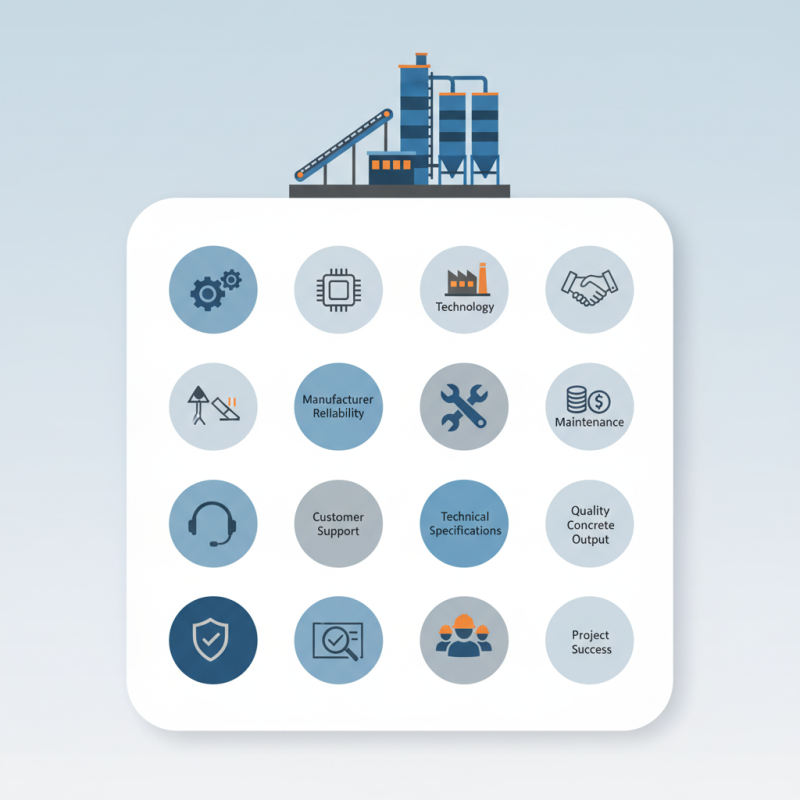
Understanding the key features of a Concrete Batching Plant helps narrow down the field. Look for plants that match your production capacity needs and operational style. Pay attention to the technology used, as this can affect both output and quality. It’s important to evaluate the reliability of the manufacturer. Do they have a strong track record?
Many companies overlook maintenance when selecting a plant. The ease of maintenance can significantly impact long-term costs. Reflect on the total cost of ownership, not just the initial price tag. Make sure to assess customer support options as well. A responsive support team can be invaluable when issues arise. Ultimately, get familiar with the specifications and consult industry professionals to make an informed decision.
Key Factors to Consider When Selecting a Concrete Batching Plant
Choosing the right concrete batching plant requires careful consideration of several factors. Capacity plays a crucial role. You need to determine how much concrete you plan to produce daily. This decision directly influences the plant size and configuration. A plant that cannot meet your production needs may lead to delays.
Another key factor is the type of concrete your projects require. Different projects may need various mixtures. Some plants are versatile, able to handle multiple types. Assessing the ease of operation and maintenance is vital as well. Plants that are complex can disrupt workflows. Easy-to-use controls and accessible maintenance points save time during operations.
Location also affects your decision. Consider transportation costs and logistics. A plant situated close to your projects reduces expenses. It also enhances delivery efficiency. Lastly, think about the environmental impact. Compliance with regulations is essential. Invest in technology that minimizes your carbon footprint. Balancing cost, efficiency, and environmental responsibility is a challenging task. Understanding these factors shapes your success in the industry.
Top 10 Tips for Choosing a Concrete Batching Plant
| Tip Number | Tip | Description |
| 1 | Assess Production Capacity | Evaluate how much concrete you need to produce daily and choose a plant that meets that demand. |
| 2 | Quality of Components | Investigate the quality of the equipment and components of the plant for durability and reliability. |
| 3 | Automation Level | Consider how automated you want the batching process to be to improve efficiency and reduce human error. |
| 4 | Budget Constraints | Set a budget and find a plant that provides the best value for your investment. |
| 5 | Space Requirements | Ensure you have enough space for installation and operation of the batching plant. |
| 6 | Local Regulations | Check local regulations regarding permits and environmental impact for operating a batching plant. |
| 7 | Maintenance Support | Choose a manufacturer that provides reliable maintenance and support services after purchase. |
| 8 | Reputation of Manufacturer | Research the manufacturer’s reputation in the industry for quality and customer satisfaction. |
| 9 | Technology Integration | Consider integrating modern technology like IoT for monitoring and data analysis in batching processes. |
| 10 | Energy Efficiency | Look for plants that are designed to minimize energy consumption and reduce operational costs. |
Assessing Production Capacity and Output Requirements
When choosing a concrete batching plant, assessing production capacity is crucial. Each project has specific requirements. You need to know how much concrete you will produce. Consider the scale of your projects. A small plant may suffice for smaller jobs. Large-scale projects demand higher outputs and larger mixers.
Output requirements directly influence your plant choice. Analyze your daily and monthly production needs. For instance, if a project requires 100 cubic meters a day, your plant must meet that without delay. However, many overlook peak times. What happens during busy seasons? Your plant should handle those demands, providing a cushion for unexpected orders.
It's essential to consider future needs as well. Will your business grow? If so, a plant that meets current demands may not suffice in the long run. Evaluating scalability is vital. Can the plant be upgraded? Or must you invest again soon? Weigh these factors carefully. This reflection ensures that your investment supports growth, rather than just meets immediate needs.
Evaluating the Types of Concrete Mixers Available
When selecting a concrete batching plant, the type of concrete mixer you choose plays a crucial role. Different mixers offer various functionalities and serving capacities. One prevalent type is the drum mixer, known for its simplicity and effectiveness for small to medium-sized projects. It operates by rotating a drum, blending materials at a consistent rate. However, it might not be suitable for large-scale productions needing high accuracy.
Another option is the pan mixer, ideal for producing consistent mix quality. It features a flat pan within which materials mix. Though efficient, these mixers require careful handling and maintenance. Sometimes, they may not perform well with larger aggregate sizes, leading to a less than perfect mix.
Tip: Assess your project's volume and required precision. Larger projects demand more robust mixers, which can impact overall project efficiency. Also, consider the ease of maintenance for longevity. Remember that not every project requires the most complex setup; your specific needs drive the decision. Choose wisely to avoid costly mistakes and ensure your concrete meets all necessary standards.
Understanding Automation and Control Systems in Batching Plants
Automation and control systems are crucial in concrete batching plants. They streamline the production process and ensure consistent quality. An advanced control system can automate material weighing, mixing times, and delivery schedules. This efficiency reduces human error and minimizes waste.
Choosing a batching plant with intuitive software is essential. Operators can monitor the entire process in real-time. However, training is vital. Sometimes, operators struggle to adapt to new systems. The implementation can be challenging.
Look for flexibility in automation features. A good batching plant should allow customization. This ensures it meets specific project needs. Control systems should provide data analytics as well. Yet, too much data can be overwhelming. Finding balance is key. Manufacturers should offer reliable support. This helps in troubleshooting common issues.
Budgeting for Initial Investment and Ongoing Operational Costs
When choosing a concrete batching plant, budgeting is crucial. The initial investment can be substantial, often ranging from $20,000 to over $1 million, depending on capacity and technology. Ongoing operational costs further complicate the financial landscape. Expect expenses related to maintenance, labor, and materials, which can account for up to 60% of your total operational budget.
One essential tip is to analyze your production needs carefully. This involves understanding the types of concrete you'll produce and the expected output. A well-sized plant for your needs can save thousands in unnecessary operational costs. A report from the National Ready Mixed Concrete Association highlights that optimized batch size can reduce waste significantly, impacting your bottom line.
Another vital point is to plan for future scalability. Market demands can shift, and your plant should be able to adapt. Companies that fail to consider growth may find themselves facing costly upgrades later. Investing wisely now can pay off in the long term. Evaluating these aspects reduces risks and enhances the return on your capital investment.