China Best Smoke Alarm Suppliers for Global Buyers
Choosing reliable China Best Smoke Alarm Suppliers for Global Buyers requires more than comparing prices or browsing polished catalogs. A dependable Smoke Alarm supplier should demonstrate practical manufacturing experience, stable quality control, and clear knowledge of different market requirements. Buyers need evidence, not promises. Factory audits, product samples, test reports, and traceable production records can reveal important differences.
Small details matter. Check sensor performance, alarm volume, battery life, housing quality, and installation instructions. Ask how suppliers manage incoming components, calibration, aging tests, and final inspections. A strong supplier should explain these processes in plain language. It should also provide documentation that buyers can verify independently, including applicable certifications and product specifications. Requirements can vary across regions, so one certificate may not satisfy every destination.
Communication is another useful test. Can the supplier answer technical questions without avoiding inconvenient details? Can it provide consistent samples after quotation? Can it support packaging changes, language requirements, replacement policies, and after-sales training? These practical responses often show more than a sales presentation.
No supplier fits every project. A factory serving large retail chains may not suit a smaller distributor. A low quotation may also conceal limited inspection or weak support. That deserves careful reflection. Global buyers should compare total value, not only unit cost. This guide will examine supplier capabilities, product quality, certifications, customization, production capacity, delivery reliability, and long-term cooperation. The goal is a clearer purchasing decision based on verifiable evidence, realistic expectations, and safer product performance.
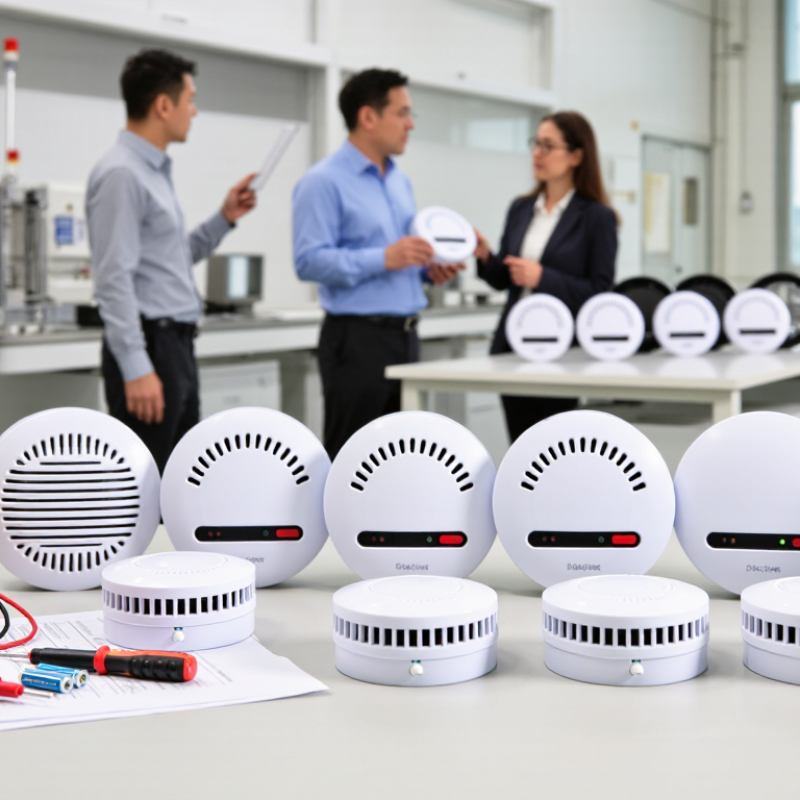
What Makes China a Leading Source of Smoke Alarms
China’s strength in smoke alarm manufacturing comes from industrial depth, not only lower pricing. UNIDO’s International Yearbook of Industrial Statistics 2024 reports that China produced about one-third of global manufacturing value added in 2022. This scale supports nearby suppliers for sensors, circuit boards, molded housings, batteries, packaging, and testing equipment. A buyer can often coordinate these parts within one supply network. That shortens development time and reduces repeated freight between countries.
Practical sourcing still demands technical judgment. Reliable Chinese factories can provide production samples, calibration records, aging-test results, and documentation for standards such as EN 14604 or UL 217. Buyers should compare alarm sensitivity, false-alarm performance, battery life, and low-battery warnings. NFPA’s Smoke Alarms in U.S. Home Fires, 2018–2022, found that smoke alarms were present in 74% of reported home fires, while alarm failure occurred in 25% of cases. Maintenance and product quality both matter. The data is not flattering.
China also offers flexible engineering for private-label and regional requirements. Factories may adjust language prompts, mounting plates, packaging sizes, and test procedures without rebuilding the entire product. However, scale can encourage price-only decisions. That is a weakness. A cheaper detector may hide thinner contacts, weaker plastics, or incomplete validation. Global buyers should audit production lines, verify test reports independently, and inspect random finished units before shipment. Good sourcing is less about finding the lowest quotation and more about proving consistent performance.
Main Types of Smoke Alarms Supplied by Chinese Manufacturers
China Best Smoke Alarm Suppliers for Global Buyers
Main Types of Smoke Alarms Supplied by Chinese Manufacturers
Chinese manufacturers commonly supply three practical smoke alarm types: photoelectric, ionization, and dual-sensor models. Photoelectric alarms use an optical chamber to detect smoke from slow, smoldering fires. They suit bedrooms, corridors, offices, and rooms containing upholstered furniture. During sourcing, buyers should check alarm volume, test-button response, battery access, and chamber stability.
Small details matter.
Ionization alarms respond quickly to fast-flaming fires, although their sensing design may react differently to cooking particles. That distinction deserves clear installation guidance. Dual-sensor alarms combine both detection methods and can offer broader coverage in mixed-use buildings. Some suppliers also provide interconnected, battery-powered, or sealed-battery versions for easier deployment. Sealed units reduce maintenance, but replacement planning still matters.
Chinese factories often support customized housings, languages, packaging, and sampling before mass production. Experienced buyers should request test records, production photographs, component details, and traceable quality checks. Products should also match the safety requirements of the target market. Independent verification remains wise, even when documents look complete.
No sensor is perfect. Humidity, dust, poor placement, and ignored testing can weaken real-world performance. I have seen specifications appear convincing while installation instructions remained too vague. That gap deserves correction before shipment.
Key Standards and Certifications for Global Smoke Alarm Buyers
For global buyers, smoke alarm compliance begins with the destination market. European projects commonly require EN 14604 compliance and appropriate conformity documentation. United States buyers often request UL 217 evaluation, while Canadian projects may require CAN/ULC-S531. Australia commonly follows AS 3786 requirements. These standards address alarm sensitivity, sound output, electrical safety, environmental resistance, and manufacturing consistency.
A reliable supplier should provide certificates, test reports, and a clear model number. Check whether the certificate covers the exact alarm version, battery type, and production site. Do not accept a document showing only a similar product. Ask for laboratory details, certificate validity, and surveillance arrangements. Independent testing adds useful confidence. Factory inspections matter too. Inspectors may review calibration records, incoming components, and final alarm testing.
Real performance also depends on installation and maintenance. A photoelectric alarm should resist nuisance alarms from normal household conditions, but no device handles every environment perfectly. Test samples in humid rooms, near cooking areas, and during low-battery conditions. Listen for a clear alarm through closed doors. Check the silence function and end-of-life warning. Small details matter.
Certification is not a guarantee against every field failure. That is worth admitting. Suppliers should explain limitations instead of promising universal protection. Buyers should also verify labeling, instructions, warranty terms, and regional disposal requirements. A strong supplier supports traceability from factory batch to delivered carton, although paperwork can still contain errors. Careful review remains necessary.
China Best Smoke Alarm Suppliers for Global Buyers: Key Standards and Certifications
This chart compares the publication or revision year of widely referenced smoke alarm standards in major purchasing markets. Buyers should confirm the latest edition, product testing scope, marking requirements, and local approval route before placing an order.
Typical compliance routes include UL 217 for the United States, CAN/ULC-S531 for Canada, EN 14604 with CE marking for the European market, AS 3786 with RCM requirements for Australia and New Zealand, and GB 20517 for China. Radio-enabled products may also require separate wireless or radio-equipment approvals.
How to Evaluate China’s Smoke Alarm Suppliers
China Best Smoke Alarm Suppliers for Global Buyers
How to Evaluate China’s Smoke Alarm Suppliers
Evaluating Chinese smoke alarm suppliers requires more than comparing unit prices. Review their production history, quality controls, and export experience. Ask for recent test reports, product specifications, and certificates required in your target market. Documents should match the exact model, not a similar-looking sample. Check whether the factory records component batches, calibration results, and final inspection data. A clear traceability system suggests stronger professional discipline.
Request several samples from different production batches. Test alarm volume, sensor response, battery access, and reset functions. Place one unit in a hallway and another near a kitchen area. Observe false alarms and response consistency. Ask how suppliers manage aging batteries and discontinued components. Video calls are useful, but an independent factory audit offers better evidence. A polished showroom can still hide weak process control.
Tips: Compare samples, not promises. Confirm lead times in writing. Ask who handles warranty claims. Check packaging strength with a simple drop test. Inspect labels and manuals for clear language. Do not rely only on the lowest quotation. It may exclude testing, spare parts, or safer packaging. I have found that small suppliers sometimes communicate better, though their documentation may need more careful review. Even experienced buyers can miss minor details, especially when urgency affects judgment.
Steps for Sourcing and Importing Smoke Alarms from China
China Best Smoke Alarm Suppliers for Global Buyers
Sourcing smoke alarms from China starts with a clear product specification. Define sensing technology, battery type, alarm volume, lifespan, packaging, and target certification. The National Fire Protection Association reported that working smoke alarms were present in 52% of reported home fire deaths in the United States from 2018 to 2022. This makes reliability more important than the lowest quotation. Ask suppliers for test reports, quality-control records, and traceable production dates. Request samples from different batches, not only one attractive unit.
Check factory capability before negotiating volume. Review production lines, calibration equipment, incoming-component controls, and final alarm testing. A third-party factory audit can reveal weak battery contacts or inconsistent sound levels. Small details matter. Test alarms in a noisy room, with low battery conditions and different mounting positions. The International Organization for Standardization notes that conformity assessment supports confidence in product performance, but certificates still require careful scope verification. I would not accept a certificate without checking its model number, testing standard, laboratory, and validity.
Confirm the destination market’s requirements before placing a purchase order. Common standards may include EN 14604 or UL 217, but rules differ by country and product configuration. Use the correct customs classification, commercial invoice, packing list, and certificate documents. Confirm whether lithium batteries create additional transport paperwork. The World Customs Organization highlights accurate tariff classification as essential for consistent customs treatment. Plan pre-shipment inspection, carton drop tests, and random functional testing. My earlier mistake would be trusting factory videos too quickly; an attractive production line proves little without independent records and failed-sample analysis.