
China Top Graphite Electrode Manufacturers and Suppliers?

China remains a major production base for Graphite Electrodes used in electric arc furnaces. Its manufacturers serve steel mills, foundries, and industrial buyers across many regions. However, choosing a dependable supplier requires more than comparing online prices.

This guide examines China’s top Graphite Electrode manufacturers and suppliers through practical purchasing criteria. It considers RP, HP, and UHP grades, electrode diameter, nipple design, raw materials, and graphitization temperature. It also reviews production capacity, quality-control systems, packaging, lead times, and export experience. These details matter when electrodes face intense current, thermal shock, and mechanical pressure inside a furnace.

Reliable companies should provide clear technical data and traceable inspection records. Buyers should request resistivity, bulk density, flexural strength, and consumption-related test results. Factory audits can reveal workshop cleanliness, machining accuracy, and storage conditions. A polished website proves little. Independent verification matters.

Supplier selection is not always straightforward. Some factories produce electrodes directly, while trading companies coordinate production through partner plants. That difference can affect communication, accountability, and after-sales support. Product performance may also vary between batches, even when specifications appear identical. No supplier is perfect.

The following overview aims to create a more balanced comparison. It highlights manufacturers with relevant experience, stable production systems, and transparent business practices. Buyers should still confirm current certificates, sample quality, payment terms, and delivery capability before placing an order. A careful decision begins with evidence, not promises.
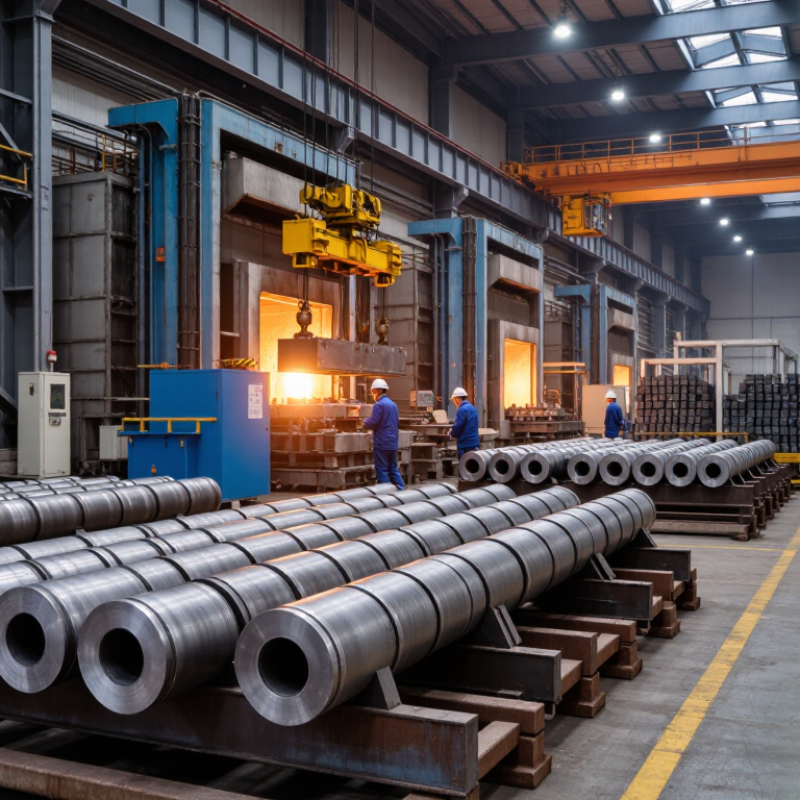
China Top Graphite Electrode Manufacturers and Suppliers?

Graphite Electrode Basics: RP, HP, and UHP Grades for EAF Steelmaking

Graphite electrodes are essential conductors in electric arc furnaces, where they carry high current into the steelmaking process. Their grade affects electrical efficiency, consumption, and furnace stability. RP, or Regular Power, suits moderate current densities and many standard melting operations. HP, or High Power, tolerates stronger electrical loads and faster melting cycles. UHP, or Ultra High Power, supports the most demanding EAF conditions, especially high-current operations and large furnaces.

The right choice depends on more than the label. Engineers should compare resistivity, bulk density, flexural strength, and thermal expansion. A UHP electrode may reduce consumption under severe conditions, but it can cost more. Poor alignment, loose nipples, or sudden temperature changes can still cause breakage. In my experience, delivery records and batch testing matter as much as a catalogue specification. Even experienced teams sometimes select a high grade too quickly. Furnace data should decide.

Tips: Check electrode diameter, pitch, and joint design before ordering. Match the grade with transformer power, current density, and furnace practice. Ask suppliers for recent test certificates and traceable batch information. Inspect surfaces for cracks before installation. Keep electrodes dry and handle them carefully. Small storage mistakes can become expensive furnace delays.

Key Industry Metrics: 1.7–2.0 kg of Electrodes per Ton of EAF Steel

China’s graphite electrode manufacturers and suppliers are often judged by one practical figure: 1.7–2.0 kilograms of electrodes per ton of EAF steel. This range gives buyers a useful starting point when comparing furnace performance, electrode quality, and operating discipline. It is not a fixed promise. Scrap chemistry, furnace size, oxygen injection, power settings, and tapping practice can change consumption quickly.

A reliable supplier should explain how this metric was measured. Ask for test conditions, electrode grade, diameter, joint design, and steel output records. A plant making demanding alloy steel may consume more than a high-volume operation using clean scrap. Moisture, unstable arc control, and repeated power interruptions can also increase breakage. Small cracks matter.

Field experience remains important. Inspectors should check nipple fit, machining accuracy, bulk density, electrical resistance, and shipment protection. A sound electrode arrives dry, sealed, and free from visible damage. Suppliers that share traceable inspection data are easier to assess. Yet data can be incomplete. One production campaign cannot represent every furnace.

The 1.7–2.0 kg range is therefore a benchmark, not a verdict. Buyers should compare consumption with actual furnace records and maintenance costs. Lower use is not automatically better if melting time rises or safety margins shrink. Careful trials, honest reporting, and regular review create a more dependable purchasing decision.

China’s Manufacturing Process: Needle Coke and 3,000°C Graphitization

China’s graphite electrode manufacturers rely on needle coke for high-performance electrodes. Its low sulfur and low ash content support stable electrical conductivity. During production, needle coke is blended with binder pitch and shaped under controlled pressure. The green electrode then enters a baking furnace. Temperature rises slowly, often over several days. This removes volatile compounds and strengthens the structure.

Graphitization is the critical stage. Electrodes are heated to nearly 3,000°C in an electric furnace. At this temperature, carbon atoms rearrange into a more ordered graphite structure. The process improves conductivity, thermal resistance, and mechanical stability.

Experienced suppliers monitor furnace voltage, temperature curves, and electrode dimensions. They also test bulk density, resistivity, flexural strength, and chemical impurities. Small cracks may appear if heating is uneven. This remains a practical challenge, even in advanced plants.

Tips: Ask suppliers for batch test reports and production records. Check needle coke specifications, baking time, and graphitization temperature. Compare results from several batches, not one sample. Visual inspection helps, but it cannot replace laboratory testing. A perfectly uniform result is difficult to guarantee. That detail deserves attention.

Top Chinese Manufacturers: UHP Electrodes with ≤6.2 μΩ·m Resistivity

China’s leading graphite electrode suppliers increasingly focus on ultra-high-power products for demanding electric arc furnace operations. World Steel Association data show that EAF steelmaking produced about 29% of global crude steel in 2023. This supports continued demand for stable UHP electrodes with resistivity at or below 6.2 μΩ·m.

Resistivity is only one checkpoint. A qualified Chinese manufacturer should provide test records for bulk density, flexural strength, thermal expansion, and nipple performance. During factory evaluations, buyers should inspect graphitization furnaces, machining accuracy, and warehouse conditions. Electrodes can meet a laboratory target yet fail under unstable current or rapid thermal cycling. That difference matters.

Look for traceable batch numbers and independent laboratory verification. China’s export-oriented suppliers often support customized diameters, joint designs, and packaging for long-distance transport. The World Steel Association’s steel statistics also underline the importance of consistent EAF productivity, where electrode consumption affects both cost and furnace uptime. A practical specification should therefore combine ≤6.2 μΩ·m resistivity with low oxidation, reliable joints, and controlled dimensional tolerances.

Some supplier claims remain too broad. They may quote average values instead of every batch. Buyers should ask for recent inspection reports, not polished brochures. USGS mineral reporting also distinguishes natural graphite from manufactured graphite, a useful reminder that raw-material labels alone cannot prove UHP electrode quality. Evaluate the finished electrode.

Supplier Selection Criteria: ISO 9001, Testing Data, Delivery, and Cost

China Top Graphite Electrode Manufacturers and Suppliers?

Selecting a graphite electrode supplier requires more than comparing quotations. ISO 9001 certification shows controlled processes, but it does not guarantee every shipment. Ask for the certificate scope, audit date, and production records. A supplier should explain how raw materials, machining, baking, and graphitization are controlled.

Testing data must match your operating needs. Request recent reports for electrical resistivity, bulk density, flexural strength, and thermal expansion. Check the test methods, sample size, and batch number. Data without traceability is weak evidence. Confirm electrode diameter, length, thread accuracy, and nipple fit before approval. Small dimensional errors can cause unstable connections and unexpected breaks.

Delivery performance needs practical verification. Ask for monthly capacity, normal lead time, export packing details, and replacement procedures for damaged goods. Review past shipment records when available. Cost should include freight, inspection, packaging, inventory, and possible downtime. The cheapest quotation may become expensive after one failed connection. A useful trial order can reveal more than a polished presentation. Still, one shipment is not enough evidence. Recheck quality across several batches, because consistency is often harder than meeting a single test result. Clear communication also matters when specifications change. Get every technical promise in writing.

China Top Graphite Electrode Manufacturers and Suppliers? - Supplier Selection Criteria: ISO 9001, Testing Data, Delivery, and Cost
Anonymous supplier-selection matrix based on commonly traded China-origin graphite electrode specifications and buyer verification criteria. Prices and delivery times are market reference ranges, not quotations.
Anonymous Supplier Profile Typical Product Range ISO 9001 Evidence Testing Data Available Typical Order Size Estimated Production Lead Time Indicative FOB Cost Range Quality and Commercial Assessment
Profile A
Large integrated producer
RP, HP and UHP graphite electrodes; approximately 300–700 mm diameter; nipples and machined ends available. Certificate normally available
Request current certificate, scope, issuing body and validity period.
Batch certificate, apparent density, electrical resistivity, flexural strength, ash, coefficient of thermal expansion and dimensional inspection. Usually 20–50 metric tons, depending on diameter and grade. 45–75 days for standard specifications; longer for customized machining. US$2,200–4,800/MT Suitable for recurring steel-mill programs requiring stable capacity, formal quality documentation and shipment planning.
Profile B
Medium-sized export manufacturer
RP and HP electrodes; approximately 250–600 mm diameter; standard nipples and packaging options. Usually available
Verify certificate number, covered processes and surveillance status.
Routine physical-property report, chemical analysis, dimensional report and pre-shipment inspection; third-party testing may be arranged. Typically 10–25 metric tons. 35–60 days for standard sizes. US$2,000–4,200/MT Often competitive for medium-volume orders; confirm furnace capacity, raw-material traceability and actual monthly output.
Profile C
UHP-focused supplier
UHP graphite electrodes, generally 400–700 mm diameter; high-current applications and premium nipple machining. Expected for export supply
Validate that the certificate covers electrode production rather than only general trading activity.
Detailed UHP specification sheet, resistivity, bulk density, flexural strength, CTE, ash, nipple torque data and dimensional records. Commonly 20–40 metric tons. 50–90 days, depending on grade, diameter and production schedule. US$3,000–5,800/MT Appropriate where low resistivity and high mechanical strength are more important than the lowest purchase price.
Profile D
Cost-oriented standard-grade supplier
RP and selected HP grades; approximately 200–500 mm diameter; limited customization. Must be verified
Do not accept an undated scan or a certificate that cannot be checked with the issuer.
Basic certificate of analysis and dimensional report; independent laboratory testing is advisable for first orders. Usually 5–20 metric tons. 30–55 days, subject to stock and production availability. US$1,700–3,600/MT May offer attractive pricing for standard applications; assess consistency, ash level, breakage history and after-sales support carefully.
Profile E
Custom-machining supplier
RP, HP and UHP electrodes with customized lengths, end machining, nipple dimensions and packing requirements. Commonly available
Confirm whether machining and inspection activities are included in the certified scope.
Dimensional inspection, thread gauge report, nipple fit report, physical-property certificate and packing inspection. Typically 10–30 metric tons. 45–75 days; custom drawings can add 7–15 days to approval. US$2,400–5,500/MT Useful for buyers with non-standard drawings or replacement requirements; approve technical drawings before production.
Profile F
Trading and consolidated-supply profile
Multiple grades and diameters sourced from partner factories; mixed-container or consolidated shipments may be available. Supplier-specific
Obtain the actual manufacturer’s certificate and confirm authorization to sell the stated product.
May provide factory reports, pre-shipment inspection and third-party laboratory testing on request. Often 1–10 metric tons per size or mixed order. 20–50 days when stock is available; production orders may require 45–75 days. US$1,900–4,700/MT Helpful for trial quantities and mixed specifications; verify factory identity, batch traceability, warranty terms and responsibility for claims.
Buyer verification checklist: Request a current ISO 9001 certificate, product technical data sheet, recent batch test report, dimensional inspection record, reference order history, production schedule, packaging photographs, Incoterms, payment terms and a pre-shipment inspection plan. Final pricing depends on grade, diameter, nipple type, quantity, raw-material costs, port and freight conditions, and delivery destination.

Article Source:

Enquire Today

"*" indicates required fields