
Neon Led Strip lighting has moved beyond shop signs and nightclub walls. It now shapes kitchens, hotel corridors, retail displays, vehicles, and architectural façades. Buyers face a crowded market, with silicone neon flex, edge-lit profiles, RGB systems, addressable strips, and waterproof outdoor models competing for attention.
Industry data explains this growth. Grand View Research estimated the global LED lighting market at approximately USD 78 billion in 2023. Its forecast also indicates strong expansion through 2030, supported by energy efficiency, flexible installation, and smart-control adoption. MarketsandMarkets reports similar momentum for LED strip lighting, especially in commercial and residential applications. These figures describe LED lighting broadly, not every Neon Led Strip product. That distinction matters.
“Good lighting is about more than lumens,” says Dr. Nadarajah Narendran, a respected lighting researcher and director at the Lighting Research Center. His point remains practical. A bright strip can still look harsh, flicker, overheat, or fail outdoors. Buyers should examine color rendering, voltage stability, bend radius, IP rating, heat dissipation, cut intervals, and control compatibility.
This guide compares the top ten types of Neon Led Strip lights through those real purchasing factors. Some products promise dramatic brightness. Others deliver softer, cleaner contours around a mirror or staircase. The cheapest option may not be the best value. Sometimes, it is a costly mistake. Specifications can also look impressive while leaving installation details unclear. Therefore, careful buyers should question marketing claims, check test evidence, and match the strip to its environment before choosing.
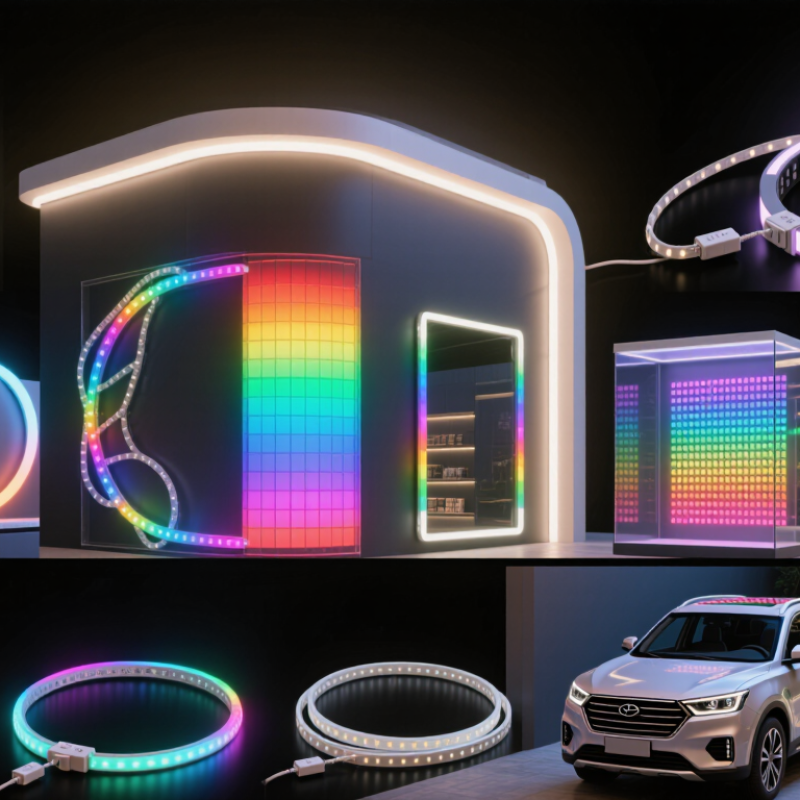
Top 10 Types of Neon LED Strip Lights for Buyers
Neon LED strip lights are flexible lighting systems with LEDs inside a silicone diffuser. The diffuser softens bright points and creates a continuous neon-like line. Unlike traditional glass neon, these strips use low-voltage direct current. A power supply changes household electricity into a safer operating voltage.
Inside the strip, tiny LEDs connect through a circuit board. Resistors regulate current and help prevent early LED failure. Some models produce one color, while others use RGB, RGBW, tunable white, or individually controlled pixels. The controller changes color, brightness, or movement through pulse-width modulation. Watch the heat. Even efficient LEDs need airflow around the power supply and connectors.
The ten common forms include top-bend, side-bend, mini, round, square, single-color, RGB, RGBW, waterproof outdoor, and addressable neon strips. Each shape affects installation. A top-bend strip follows a horizontal curve, while a side-bend version suits vertical letters and tight corners. IP ratings matter, but they do not make every connection waterproof. Sealed end caps and properly protected joints remain necessary. Measure the route carefully before buying. Voltage drop can make the far end visibly dimmer, especially on long runs. A frequent mistake is trusting the advertised brightness without checking watts per meter, diffuser thickness, and cutting intervals. The label may simplify reality. Testing a short sample first is often wiser.
Neon LED strip lights now serve more than decorative signage. The main types include top-bend, side-bend, mini, flat, round, RGB, RGBW, tunable-white, high-density, and waterproof versions. Each design changes how light travels around corners, channels, and wet areas. Top-bend models suit straight outlines and ceiling coves. Side-bend versions follow curved letters and narrow architectural edges. Mini profiles fit shallow grooves, but they usually provide less visual impact.
Application should guide the specification. Waterproof silicone neon flex works well beside pools, storefronts, and outdoor steps. Look for suitable IP protection, sealed end caps, and stable mounting clips. RGB models support animated displays, while RGBW versions add cleaner white light for hospitality spaces. Tunable-white products help offices and retail interiors shift from warm evening tones to cooler task lighting. U.S. Department of Energy guidance reports that LED lighting can use at least 75% less energy and last up to 25 times longer than incandescent lighting. Real results still depend on heat control, voltage stability, and installation quality.
Market data supports this shift. Grand View Research valued the global LED lighting market at approximately USD 78.6 billion in 2023, with continued growth projected through 2030. That figure covers more than neon products, so it should not be treated as neon-strip revenue. A common mistake is choosing brightness before checking bend direction and heat dissipation. I have seen attractive installations fail at corners. The profile looked right, but the cable path was ignored. For buyers, color accuracy, cut intervals, warranty terms, and replacement access deserve equal attention.
Top 10 Types of Neon LED Strip Lights for Buyers
Neon LED strip lights differ mainly in shape, flexibility, and light direction. Flat top-bend strips curve forward, making them useful for signs and straight borders. Side-bend strips turn horizontally around shelves, counters, and curved walls. Round strips create a softer 360-degree glow. Square profiles produce sharper, architectural lines. Corner-shaped strips fit neatly into right angles. Mini neon strips work where space is limited, but their smaller housing may reduce brightness and durability.
Light direction changes the visual result. Front-facing strips cast light through the silicone surface. Side-emitting models project light toward adjacent walls or signs. 360-degree versions create an even halo around tubes and suspended displays. High-output strips suit large installations, while low-output types reduce glare in bedrooms and reception areas. RGB strips provide color changes, and tunable-white strips adjust from warm to cool tones. These are the tenth and ninth types by function, although classifications can overlap.
Flexibility deserves careful checking. Top-bend products follow gentle curves, but they should not be twisted sideways. Review the stated minimum bend radius before installation. A tight corner can damage internal circuits, even when the silicone still looks perfect. Measure twice. Check cut marks and connector spacing as well. Outdoor projects also need verified water resistance, sealed ends, and suitable power calculations. A common mistake is choosing brightness first and flexibility later. That decision often creates uneven bends, visible hotspots, or unnecessary replacement work.
| No. | Neon LED Strip Type | Typical Cross-Section Shape | Flexibility and Bending | Light Direction | Common Installation Surfaces | Typical Outdoor Suitability | Key Buyer Consideration |
|---|---|---|---|---|---|---|---|
| 1 | Top-Bend Neon Strip | Rectangular or rounded profile | Flexible across the strip's width; suitable for horizontal curves and straight runs. | Front-facing, generally perpendicular to the mounting surface. | Walls, signs, cabinets, ceilings, and architectural outlines. | Often available in weather-resistant versions when the jacket, end caps, and connectors are properly sealed. | Best general-purpose option for readable outlines and evenly diffused forward light. |
| 2 | Side-Bend Neon Strip | Slim rectangular or rounded profile | Bends along its length, making it suitable for curves that run vertically or horizontally. | Side-emitting, parallel to the mounting surface. | Letters, logos, edge details, circular designs, and narrow channels. | Suitable outdoors only when the complete assembly has an appropriate ingress-protection rating. | Useful for tracing tight contours, but the bend direction must match the planned design. |
| 3 | Round Neon Rope Light | Circular profile | Can bend in multiple directions, although the minimum bend radius still applies. | Usually radial or omnidirectional, depending on the internal LED layout and diffuser. | Railings, trees, architectural edges, event décor, and free-form outlines. | Commonly offered for outdoor use, but the connector and power-entry seal are critical. | Provides soft, continuous-looking light with a thicker appearance than flat neon profiles. |
| 4 | Square or Flat-Sided Neon Strip | Square or rectangular profile | Usually designed for controlled top bends or side bends rather than twisting. | Front-facing or side-facing, depending on the LED channel orientation. | Aluminum channels, furniture edges, retail fixtures, and straight architectural lines. | Available in indoor and outdoor versions; the profile must be protected from water exposure as specified. | Creates crisp geometric lines and can fit more securely into mounting channels. |
| 5 | Mini Neon LED Strip | Narrow rectangular or rounded profile | Generally more flexible than wider profiles, but it may have a smaller minimum bend radius. | Usually front-facing; side-emitting mini versions are also available. | Small lettering, display cases, shelves, signage, and compact decorative details. | Primarily used indoors unless the full product is specifically rated for exterior conditions. | Good for discreet installations, but it normally has lower maximum brightness and heat capacity. |
| 6 | High-Brightness Neon Strip | Wider silicone profile | Flexible, but usually less tolerant of tight bends because of higher LED density and thermal requirements. | Mostly front-facing or side-facing, depending on the selected profile. | Large signs, façades, commercial interiors, stage sets, and high-visibility outlines. | Outdoor use is possible with a sealed, appropriately rated system and suitable heat management. | Offers stronger illumination, but buyers should check power consumption, voltage drop, and ventilation. |
| 7 | Addressable Neon LED Strip | Flexible silicone diffuser profile | Similar mechanical flexibility to standard neon strips, with extra care needed around data connections. | Front-facing, side-facing, or segmented emission depending on the profile. | Media walls, displays, entertainment spaces, interactive signs, and animated installations. | Outdoor suitability depends on the strip, controller, connectors, and power components as a complete system. | Allows individually controlled pixels or zones, but requires compatible control hardware and wiring. |
| 8 | RGB or RGBW Neon Strip | Rounded or rectangular diffuser profile | Flexible along the intended bend axis; RGBW versions may be slightly wider because of additional channels. | Usually front-facing, with side-emitting versions available. | Hospitality interiors, entertainment areas, retail displays, coves, and decorative signage. | Outdoor use requires a compatible weather-resistant strip, controller, connectors, and power supply. | Provides color-changing effects; RGBW can produce a more useful dedicated white light than RGB alone. |
| 9 | Silicone-Jacketed Waterproof Neon Strip | Continuous silicone extrusion | Flexible but should not be sharply folded, twisted, or bent below the manufacturer's minimum radius. | Front, side, or 360-degree emission depending on the internal structure. | Bathrooms, outdoor façades, landscape features, poolsides, and damp locations. | Designed for moisture resistance when all end caps, joints, and connections are correctly sealed. | Water resistance is determined by the complete installation, not only by the silicone jacket. |
| 10 | Side-Emitting Edge Neon Strip | Thin edge-lit profile | Designed for lengthwise curves and narrow bends; twisting may cause uneven light distribution. | Emits light from the narrow edge, producing a thin luminous line. | Glass edges, acrylic panels, stair details, furniture, and slim sign borders. | Indoor use is common; exterior use requires a sealed profile and protected electrical connections. | Ideal where a low-profile line is needed, but its visible light surface is narrower than top-bend neon. |
Top 10 Types of Neon LED Strip Lights for Buyers
Before choosing a neon LED strip, compare measurable specifications, not only photographs. Brightness is not everything. Check lumens per metre, wattage, voltage, colour temperature, and colour rendering index. The U.S. Department of Energy’s 2023 Solid-State Lighting R&D Opportunities report records laboratory LED efficacies above 200 lumens per watt. Complete strip systems usually deliver less because of diffusers, wiring, and thermal losses. A credible seller should state system-level performance.
Review the strip’s construction carefully. Silicone or flexible polymer housing should resist yellowing, moisture, and repeated bending. IP ratings matter near kitchens, bathrooms, and outdoor ceilings, but IP65 does not mean full submersion protection. Compare cut intervals and minimum bend radius before planning corners. A narrow cut interval creates cleaner layouts. Also check colour consistency, dimming compatibility, and visible flicker. The International Energy Agency’s 2024 lighting analysis confirms LEDs remain central to efficient lighting upgrades, yet efficiency alone cannot predict comfort. A cool-white strip may look harsh beside warm wood. High CRI helps, but published values need independent testing. The imperfect part is installation: a technically excellent strip can still overheat inside a sealed channel. Measure twice. Provide ventilation, suitable power reserves, and accessible connections. 恒一
Typical power consumption is a useful first comparison when selecting flexible neon LED strip lights. The values below are representative planning figures for common product configurations, not company or brand specifications.
How to compare: Confirm the rated voltage, power consumption per metre, IP protection level, colour temperature or colour control, CRI, cut length, minimum bend radius, operating temperature, and required power-supply capacity before buying. Higher-power products may provide greater brightness but can require larger power supplies and improved heat management.
Choosing among the top ten types of neon LED strip lights requires more than comparing colors. Consider flexible silicone neon, side-emitting strips, waterproof models, addressable versions, dimmable strips, and low-voltage options. Match the strip to the room, brightness needs, and installation surface. Measure the route twice. A five-centimeter error can leave an awkward gap.
Installation should begin with a compatible power supply and clear cutting marks. Never connect a strip directly to household voltage. Use connectors rated for the system, and keep wiring away from heat, water, and sharp metal edges. An IP-rated silicone jacket helps in damp areas, but it does not replace proper sealing. Test the lights before fixing them permanently. Adhesive can fail on dusty walls. Mechanical clips often provide better support. A qualified electrician should handle mains connections, especially where local electrical rules apply.
Safety also depends on heat control. Do not cover the strip with insulation unless the instructions allow it. Leave ventilation around the power supply. During maintenance, switch off power before cleaning, and use a soft, dry cloth. Inspect dark sections, flickering, loose connectors, and brittle silicone every few months. Buy by voltage, wattage per metre, color temperature, bend radius, warranty terms, and replacement availability. A longer strip is not always better. I have seen attractive installations fail because the controller was underrated. That mistake is easy to repeat. Check the load, document the layout, and accept that a slightly slower installation usually produces a safer result.
Accreditations
ISO 9001 Quality Management
HSE Management Compliant
Products and services comply with relevant Australian (AS) and international (ISO, etc.) Standards.
"*" indicates required fields