Top Rail Freight Companies for Global Shipping?
Global shipping is often described in ports, vessels, and delivery dates. Yet Rail Freight can be a practical part of the journey, especially when containers must move efficiently across long inland routes. The right provider may connect terminals, warehouses, and major trade corridors with fewer handoffs. Small details matter. A missed departure can leave a container waiting at a terminal, while clear tracking can help teams adjust plans sooner.
This guide introduces leading rail freight companies serving international shippers and explains what to compare before choosing a partner. We look at network reach, intermodal connections, service visibility, schedule options, and the support available when plans change. A route map alone is not enough. Buyers should also consider the specific origin and destination, cargo requirements, transit expectations, and how easily the rail service connects with road or ocean transport. Capabilities differ by corridor, and published schedules may not reflect every disruption or seasonal constraint.
There is no universal winner. A provider that suits a large shipment between established hubs may not fit a smaller, time-sensitive move. That distinction is easy to overlook. Rankings can offer a starting point, but they cannot replace checking current service details and discussing lane-specific needs with providers. The comparisons that follow aim to make that assessment clearer, while recognizing that even a well-connected network can face delays. A realistic plan leaves room for them.
The Role of Rail Freight in Global Shipping
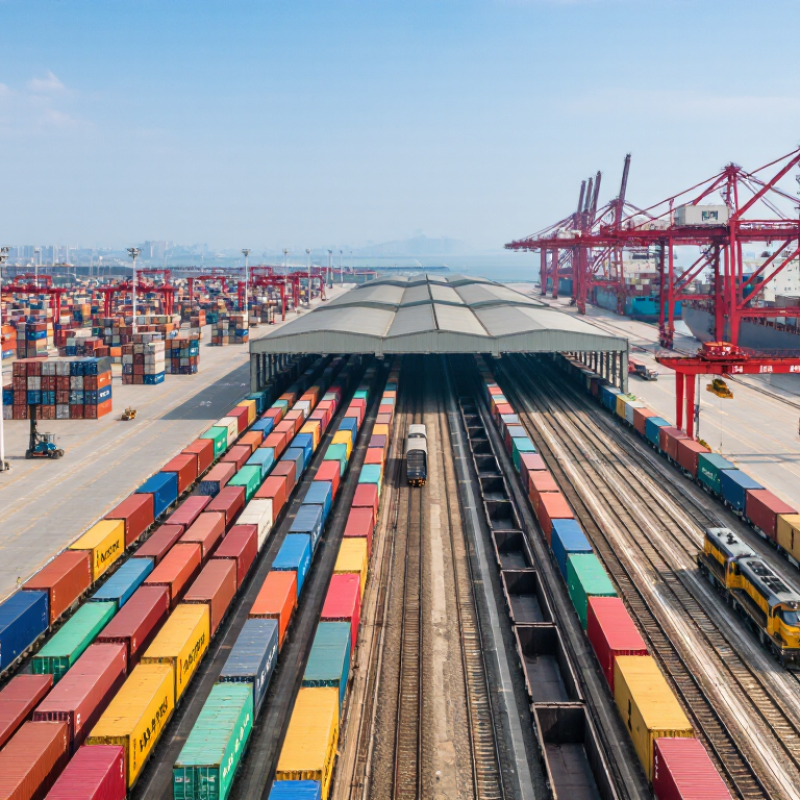
Rail freight gives global shipping a land-based link between seaports, inland terminals, and production centers. A container unloaded from a vessel can be transferred by crane to a train, then moved hundreds of miles without repeated handling. This can ease pressure on busy highways and connect inland businesses to international trade. The benefit depends on reliable schedules, suitable terminals, and smooth transfers between transport modes. Small delays matter.
For importers, rail can be useful when cargo must travel farther than a truck can efficiently cover in one trip. A sealed container may move by ship, rail, and truck, with each handoff planned around its destination. Rail often offers more capacity per trip than road transport, though the actual time and cost depend on the route, infrastructure, and terminal access. Schedules are not promises.
Rail can also support lower-emission shipping when trains are well utilized and powered efficiently. But that advantage varies by corridor and energy source; it should be checked, not assumed. A missed connection can leave containers waiting beside a terminal crane, adding storage costs and uncertainty. Rail’s role is valuable, but not effortless. Shippers need to compare transit time, service frequency, and last-mile options for each lane. Real-world plans can still be imperfect, especially where rail networks do not connect neatly.
How Cross-Border Rail Freight Networks Operate
Cross-border rail freight moves through a chain of terminals, rail networks, and border procedures. A container may travel on one train for part of its journey, then transfer to different wagons or locomotives. At each handoff, operators confirm cargo details, route plans, and arrival times. Track gauges and operating rules can vary between countries, so equipment changes may be necessary. Small details matter.
Rail operators coordinate capacity with terminal teams and border agencies. Digital shipment records help match cargo with train manifests, but data must be accurate and shared on time. A missing reference number can delay a container even when the train is ready. Weather, congestion, and scheduled maintenance can also disrupt carefully planned connections. On paper, the process looks tidy. In practice, handoffs are where plans often fray.
For shippers, useful questions include how often trains depart, where transfers occur, and how delays are reported. Ask whether the quoted transit time includes terminal handling and border checks. A clear estimate should explain its assumptions, not promise a perfect schedule. Rail can carry large volumes over long distances, yet the final delivery may still depend on trucks and local warehouse hours. That last stretch deserves attention.
Leading Rail Freight Companies by Region
Leading rail freight companies differ by region because track ownership, border procedures, and cargo demand vary. In North America, large network operators move long trains of grain, lumber, chemicals, and containers across extensive inland corridors. Their reach can reduce handling, though shipments may depend on limited interchange points. In Europe, freight operators often coordinate across several national rail systems. A container may pass through multiple countries, making terminal capacity and border scheduling as important as distance. Details matter.
Across Asia, major rail freight providers serve dense manufacturing zones and connect inland production centers with ports. Service strength depends on access to terminals, available train paths, and reliable connections with road or sea transport. In India and other fast-growing markets, expanding freight corridors are changing how bulk goods and containers reach industrial regions. African rail freight companies often focus on minerals, agricultural products, and port connections, but service coverage varies sharply between corridors. A regional leader is not automatically the best fit. That distinction is easy to miss.
For a practical comparison, shippers should check route coverage, published transit estimates, equipment availability, and how delays are communicated. Ask whether the provider can handle transfers at the origin and destination terminals. A low quoted rate may not include every handling charge, and schedules can shift when networks are congested. I would not treat a single performance figure as proof of dependable service; results can differ by route and season.
Rail Freight Network Scale in Major Markets
Approximate railway route length, in kilometers
Network length provides context for the scale of major rail freight markets; it is not a ranking of freight companies or traffic volumes. Figures are approximate and reflect the latest publicly reported national totals, which may use differing definitions and reporting years. Sources: national railway statistics and the CIA World Factbook.
Comparing Routes, Services, and Network Reach
Comparing international rail freight providers means looking beyond a route map. Check how often trains depart, which border crossings they use, and whether one operator coordinates the journey end to end. A direct corridor may still involve gauge changes, terminal transfers, or a long wait for a connecting train. Small details matter.
Rail works best as part of a wider shipping plan, not as a universal substitute for ships. UNCTAD’s Review of Maritime Transport 2024 reports that maritime transport carries over 80% of global trade by volume. Rail can offer a useful inland connection where schedules, terminals, and customs handoffs align. But advertised transit times deserve scrutiny; missed connections can erase the advantage.
Network reach also needs context. Eurostat’s 2022 modal-split data put rail at 17.1% of EU inland freight transport performance, compared with 77.8% for road. That figure reflects a region with established rail infrastructure, not every trade lane. Compare providers by coverage of your actual origin and destination, door-to-door options, shipment tracking, and backup plans during disruption. A neat map can mislead. Ask who manages the last mile, and what happens when a border handoff slips by a day.
Key Factors in Choosing a Rail Freight Provider
Choosing a rail freight provider starts with the route, not the sales pitch. Check whether its network serves both origin and destination terminals, and whether transfers require extra handling. Ask for realistic cut-off times, departure frequency, border handoffs, and written rules for missed connections. A low quote can still be expensive. Small print matters.
Capacity and visibility matter, too. The International Energy Agency’s 2019 report, The Future of Rail, estimates that rail carries about 7% of global freight activity while using roughly 2% of transport energy. That efficiency does not guarantee reliable service. Compare on-time performance by corridor, not network-wide averages, and ask how delays are communicated. Delays happen.
The World Bank’s 2023 Logistics Performance Index assesses infrastructure, logistics competence, tracking, and timeliness, among other dimensions. Use these as practical checks when reviewing a provider and its local partners. Request sample milestone records, escalation contacts, equipment plans for peak periods, and a clear claims process. Test one lane before shifting volume. I would not treat a polished dashboard as proof; real exception handling is harder to judge, and sometimes the evidence is thin.