
Who Is a Top Zebra Blind Mechanism Manufacturer in China?

Choosing a Zebra Blind Mechanism Manufacturer in China is not just about finding the lowest quoted price. The mechanism must move smoothly, hold the fabric in position, and withstand repeated daily adjustments. A sample can reveal details that a brochure may miss, such as uneven chain tension, noisy operation, or rough edges on plastic parts. Small details matter.

This guide explains how buyers can assess manufacturers through practical checks, not polished claims alone. Ask about product materials, available sizes, production capacity, quality-control steps, and the tests used before shipment. Request clear specifications and a sample that matches the intended order. These steps help make comparisons more useful, though they cannot remove every risk.

Experience matters, but it should be supported by verifiable evidence. Review product records, factory information, customer references, and the supplier’s ability to answer technical questions consistently. Check how the company handles defects, replacement parts, and changes to an order. A quick reply is helpful; a precise reply is better.

No supplier is perfect. That deserves a closer look. Buyers should weigh cost, consistency, communication, and after-sales support together. The right manufacturer is the one whose capabilities fit the project and whose claims can be checked before commitment.
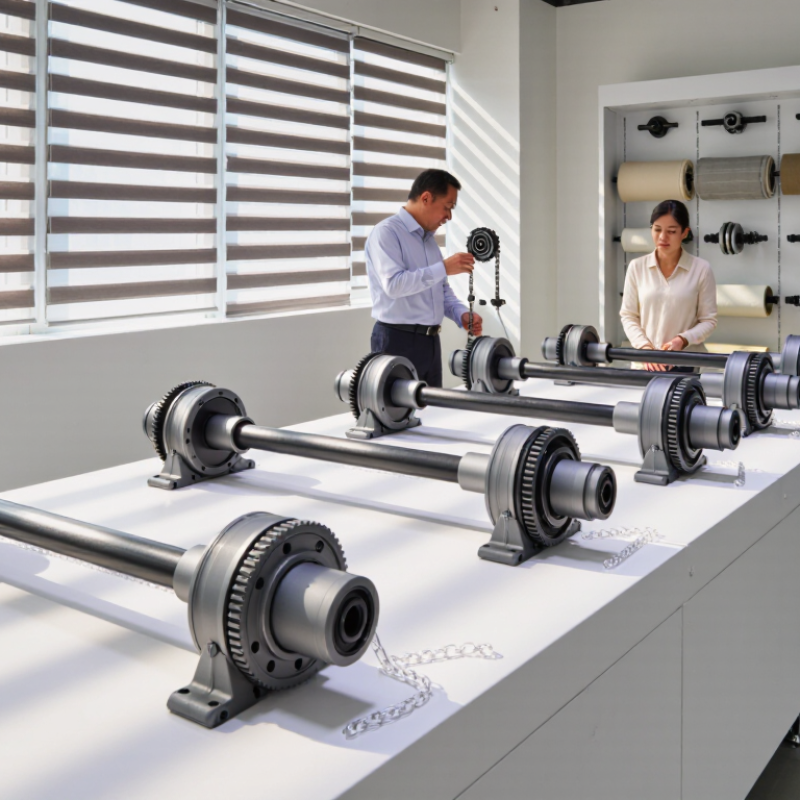
Who Is a Top Zebra Blind Mechanism Manufacturer in China?

What Is a Zebra Blind Mechanism and How Does It Work?

A zebra blind uses two layers of striped fabric, one behind the other. Each layer has alternating sheer and opaque bands. When the bands line up, daylight passes through the sheer sections. When they overlap, the darker bands reduce incoming light and improve privacy. That is the basic shift.

In a manual model, a bead chain turns a clutch inside the headrail. The clutch rotates the fabric tube, moving the layers past each other; a bottom rail keeps the fabric hanging straight. Small parts matter. A loose clutch or uneven fabric tension can make the bands drift, so smooth operation depends on accurate assembly and careful installation. Some systems use a spring or motor instead, but the fabric still shifts in the same way.

The U.S. Department of Energy’s Energy Saver guidance estimates that about 30% of a home’s heating energy can be lost through windows during the heating season. A zebra blind cannot replace insulated glazing, yet its adjustable layers let users manage daylight and privacy throughout the day. For buyers comparing manufacturers in China, useful checks include clutch durability, fabric alignment, and cycle testing. One limitation deserves attention: a light-filtering fabric may soften glare, but it does not guarantee room darkening.

How a Zebra Blind Mechanism Controls Light

A zebra blind uses alternating sheer and opaque fabric bands. The mechanism moves the fabric layers relative to one another: aligning sheer sections allows more light through, while aligning opaque sections reduces light passage and increases privacy. The chart shows a conceptual index to illustrate this relationship; it is not measured product data.

What Qualities Define a Top Manufacturer in China?

A top zebra blind mechanism manufacturer is defined by repeatable performance, not polished catalog photos. The U.S. Department of Energy’s Energy Saver guidance estimates that heat gain and loss through windows account for about 25%–30% of residential heating and cooling energy use. This figure concerns windows, not blind mechanisms alone, but it shows why dependable shade operation matters. A mechanism should raise and lower smoothly, keep fabric aligned, and hold position without a sudden drop. Small details matter.

Strong manufacturers document how they test products. Ask for cycle-test records, noise checks, load limits, and inspection steps. Compare samples using the same fabric width and weight; a mechanism that works well on a narrow sample may struggle with a wider shade. Look for traceable components and clear procedures for handling production defects. These are practical signs of process control, though paperwork alone cannot prove long-term reliability. Real installation feedback matters too.

Tips: Request a sample and test it repeatedly before ordering. Listen for grinding, check for uneven movement, and inspect the brackets and chain connection. A supplier should explain what was tested and what was not. No factory is flawless; honest answers about limitations can be more useful than broad promises.

How Are Zebra Blind Mechanisms Designed and Produced?

Designing a zebra blind mechanism begins with the window, fabric, and expected load. Engineers select a tube diameter, clutch ratio, and bracket shape to keep the blind level during operation. The fabric’s alternating sheer and opaque bands must align cleanly when raised or lowered. Small details matter. A few millimeters of uneven fabric can make the pattern look crooked.

Production typically involves forming or machining metal and plastic components, then assembling the tube, clutch, brackets, and control chain. Each part needs consistent dimensions. A clutch that fits too loosely may slip, while one that is too tight can make the blind difficult to operate. Workers check movement by raising and lowering sample units, listening for grinding, and checking whether the fabric rolls evenly. It is a simple test, but it can reveal problems drawings miss.

Manufacturers may adjust materials or dimensions after testing different fabric weights and repeated operating cycles. The mechanism should feel smooth without excessive force, and its brackets must hold securely on the intended mounting surface. Quality checks can include measurement, visual inspection, and cycle testing. Not every prototype behaves as expected. A minor change to the tube or clutch can improve operation, though it may create a new fit issue elsewhere. That trade-off deserves another test.

Who Is a Top Zebra Blind Mechanism Manufacturer in China? - How Are Zebra Blind Mechanisms Designed and Produced?

A practical overview of common design and production stages, plus criteria for evaluating a mechanism manufacturer. Specifications and processes vary by product, materials, and project requirements.

Area Design or Production Detail Purpose and Evaluation Points
Product requirements Design begins with the intended blind type, installation method, fabric dimensions, operating method, and expected use conditions. Clear requirements help determine the appropriate tube, brackets, clutch or drive system, and control components.
Mechanism design The mechanism is laid out around a rotating roller tube, fabric attachment, support brackets, and a method for raising, lowering, or positioning the shade. Design reviews commonly consider fit, alignment, ease of installation, operating smoothness, and compatibility among components.
Operating options Depending on the product, operation may use a continuous control chain, a spring-assisted system, or a motorized drive. The selected option affects the internal mechanism, controls, installation requirements, and any applicable safety provisions.
Roller tube Roller tubes are commonly made from metal, including aluminum, and are cut to a length suited to the blind design. Tube dimensions and stiffness should match the intended blind size and mechanism; one tube specification does not suit every application.
Core components Typical assemblies may include a clutch or drive unit, idler end, brackets, chain or control parts, and fasteners. Materials may include engineered plastics and metals. Component fit, material consistency, and secure assembly contribute to reliable movement and straightforward installation.
Manufacturing steps Production may involve component molding or forming, tube cutting, deburring, surface finishing where required, subassembly, and final assembly. Documented work instructions and controlled process checks help maintain consistency between production batches.
Fabric integration For a zebra blind, alternating sheer and opaque fabric bands are arranged so their alignment changes as the roller turns. Testing should confirm smooth rolling and the intended transition between light-filtering and more closed positions.
Quality inspection Typical checks include visual inspection, component and dimension checks, assembly fit, operation through repeated cycles, and packaging inspection. A capable supplier should define inspection criteria, record results where appropriate, and have a process for handling nonconforming parts.
Product validation Samples or production units can be checked for operating effort, alignment, noise, attachment security, and performance under the intended installation conditions. Test methods and acceptance limits should be agreed for the specific product rather than assumed to be identical across all mechanisms.
Supplier assessment Compare suppliers by design support, production controls, traceability, sample consistency, technical documentation, and responsiveness to corrective actions. Request product drawings, material details, inspection records, and samples to verify suitability. A “top” manufacturer should be judged against the application’s requirements, not a generic ranking.

Which Standards and Capabilities Distinguish Leading Manufacturers?

Who Is a Top Zebra Blind Mechanism Manufacturer in China?

A leading manufacturer should prove consistent performance, not just quote an attractive price. Look for documented quality checks, stable component sourcing, and clear product specifications. Ask how the mechanism handles repeated lifting and lowering, changing fabric weights, and everyday dust. Cycle-test records and torque measurements can show whether operation stays smooth over time. Small details matter. Check whether tube dimensions, brackets, and chain options match your blind design. Even slight fit differences can cause uneven rolling or excess friction.

Standards and capabilities should be verifiable. Request applicable test reports, material declarations, and inspection records, then confirm they match the exact mechanism being quoted. Requirements vary by market and product, so avoid relying on vague claims such as “international standard.” A capable factory can explain its testing method, tolerances, production capacity, and process for handling defects. It should also provide samples and respond clearly to technical questions. No supplier is flawless; weak documentation can be a warning, even when a sample looks good.

Tips: Compare samples using the same fabric width and weight. Test several full operating cycles, listen for grinding, and check that the fabric rolls straight. Ask for written specifications and batch traceability before placing a large order. Ask for evidence. A quick sample review helps, but it cannot replace production checks.

How Can Buyers Evaluate and Select a Chinese Supplier?

Choosing a zebra blind mechanism supplier takes more than comparing unit prices. Ask for drawings, material grades, load limits, and cycle-life test results for the exact mechanism you plan to purchase. A metal tube may look sturdy, but wall thickness and end-cap fit can affect smooth movement. Request samples matching your intended order’s finish and dimensions. Test them with your fabric, since fabric weight can change operating feel.

Tips: Put tolerances, packaging details, and inspection points in writing. Ask how defects are recorded. Small details matter.

Evaluate production consistency, not just one polished sample. Review inspection records, confirm monthly capacity, and ask how the supplier handles a batch that fails testing. Clear answers are useful; vague promises are not. A video call may show assembly steps, but it cannot replace checks on production samples. Compare response times and document revisions, too. One easy mistake is assuming a low quote proves value. Open specifications can lead to mismatched parts or unexpected costs. Select a supplier whose evidence matches your order, and allow time for a pre-production review.

Enquire Today

"*" indicates required fields