
Epoxy Adhesive is a critical bonding technology in automotive, aerospace, electronics, construction, and renewable energy manufacturing. It can join metals, composites, ceramics, and selected plastics. Performance depends on more than headline strength. Mix ratio, cure temperature, viscosity, open time, and moisture resistance also matter.
Industry forecasts show a growing and competitive market. MarketsandMarkets projects the global epoxy adhesives market to increase from approximately USD 7.1 billion in 2023 to USD 10.4 billion by 2028. Grand View Research also reports continued expansion through the decade, although its market estimates differ because research firms use different definitions and data models. That difference deserves attention. Market numbers are useful signals, not absolute truth.
This guide examines leading manufacturers, including Henkel, 3M, Sika, H.B. Fuller, Huntsman, and Permabond. The selection considers product breadth, technical support, manufacturing reach, certification practices, and application experience. Public company information, technical data sheets, and industry research reports provide the evidence base. Standards such as ASTM and ISO also help verify reported performance. A strong supplier should explain testing conditions clearly. For example, a two-part adhesive may show excellent lap-shear strength after curing at 23°C, yet perform differently on an oily aluminum surface. Small details matter. No ranking is perfect. Buyers should still test samples under real production conditions, review safety documentation, and confirm batch consistency before making a long-term decision.
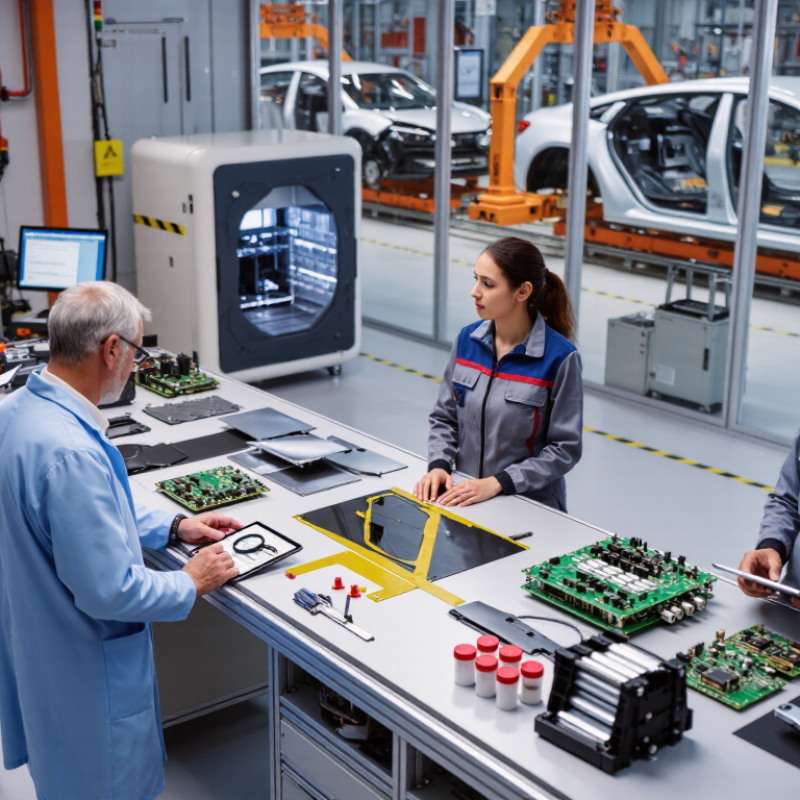
Epoxy adhesives are reactive, high-strength bonding materials made from resin and hardener components. When mixed correctly, they cure into a durable thermoset polymer. The cured bond can resist vibration, moisture, chemicals, and changing temperatures. It can also fill small gaps between uneven surfaces.
Industrial applications vary widely. Electronics manufacturers use epoxy to secure components, protect circuit connections, and improve resistance to heat. Automotive assembly uses it for metal, composite, and plastic parts where mechanical fasteners may add weight. Construction teams apply epoxy to concrete repairs, floor systems, and structural connections. Wind energy, marine equipment, and industrial machinery also depend on carefully selected formulations.
Performance begins before mixing. Clean surfaces, accurate ratios, controlled temperature, and sufficient curing time matter greatly. A fast-curing product is not always the best choice. It may reduce working time and increase application errors. A neat-looking bead can still hide weak surface preparation. That detail is easy to overlook.
Reliable manufacturers should provide technical data, batch traceability, safety documentation, and clear testing methods. They should explain tensile strength, shear performance, viscosity, pot life, and service temperature. Practical support matters too. Engineers may need help choosing a formulation for aluminum, glass, rubber, or carbon fiber. No adhesive fits every production line. Even experienced teams sometimes select by habit, then discover that humidity or thermal cycling changes the result. Thorough trials remain necessary.
| Adhesive Category | Typical Composition or Form | Main Industrial Applications | Curing Method | Typical Service Temperature* | Primary Advantages | Common Limitations |
|---|---|---|---|---|---|---|
| Two-Part Structural Epoxy | Epoxy resin and amine or polyamide hardener supplied separately | Automotive assemblies, machinery, metal bonding, construction components, marine equipment, and general structural joining | Chemical reaction after mixing; room-temperature or accelerated heat cure | Approximately −40°C to 120°C, depending on formulation | High shear strength, strong adhesion to metals and composites, gap-filling capability, and good chemical resistance | Requires accurate mixing; limited working time; generally slower to cure than instant adhesives |
| One-Part Heat-Cure Epoxy | Pre-catalyzed epoxy formulation stabilized for storage before thermal activation | Automotive body structures, electronics, industrial equipment, transportation components, and composite manufacturing | Heat activation, commonly in ovens or heated tooling | Approximately −40°C to 150°C; some engineered grades are higher | Consistent production quality, no on-site mixing, long working life before activation, and suitability for automated processes | Requires controlled heating equipment and may be unsuitable for heat-sensitive substrates |
| Toughened Epoxy | Epoxy modified with elastomers, thermoplastics, rubber particles, or other impact-resistant phases | Vehicle crash structures, rail vehicles, wind-turbine components, aircraft interiors, and vibration-prone assemblies | One-part heat cure or two-part chemical cure | Approximately −40°C to 140°C, formulation-dependent | Improved peel resistance, impact tolerance, fatigue performance, and resistance to vibration | May have lower hardness or heat resistance than highly rigid epoxy systems |
| Flexible Epoxy | Epoxy resin modified with flexible polymers or reactive diluents | Sealing, cable components, dissimilar-material bonding, appliances, and assemblies exposed to thermal expansion | Room-temperature chemical cure or moderate-temperature heat cure | Approximately −40°C to 100°C | Better flexibility, stress relief, vibration tolerance, and adhesion across materials with different expansion rates | Usually lower modulus, hardness, and maximum temperature capability than rigid structural epoxy |
| Electrically Insulating Epoxy | Filled or unfilled epoxy formulated for dielectric insulation and environmental protection | Electronic component encapsulation, transformers, sensors, motors, circuit assemblies, and electrical terminals | Room-temperature, moisture-assisted, or heat-accelerated cure | Approximately −40°C to 150°C, depending on electrical grade | Electrical insulation, moisture resistance, mechanical protection, and improved resistance to vibration and contamination | Rework can be difficult after curing; cure shrinkage and thermal management must be considered |
| Electrically Conductive Epoxy | Epoxy matrix filled with silver, copper, nickel, or other conductive particles | Electronic packaging, component attachment, grounding, electromagnetic shielding, and sensor assembly | Room-temperature or heat-accelerated chemical cure | Approximately −55°C to 150°C, grade-dependent | Combines bonding with electrical continuity, provides localized attachment, and can reduce soldering requirements | Higher material cost, possible electrical resistance changes with temperature, and sensitivity to surface preparation |
| Thermally Conductive Epoxy | Epoxy filled with ceramic, aluminum nitride, alumina, or other thermally conductive materials | LED assemblies, power electronics, heat sinks, battery systems, sensors, and thermal interface bonding | One-part heat cure or two-part chemical cure | Approximately −40°C to 150°C | Transfers heat while maintaining mechanical attachment and, in ceramic-filled grades, electrical insulation | Higher viscosity, reduced flexibility, and potentially higher processing cost than standard epoxy |
| Epoxy Film Adhesive | Pre-formed, supported or unsupported film containing a controlled amount of epoxy resin and curing agent | Composite laminates, aircraft structures, honeycomb panels, automotive parts, and high-volume bonded assemblies | Pressure-assisted heat cure, frequently using an autoclave, press, or heated tool | Approximately −55°C to 120°C; specialized systems may be higher | Uniform bond-line thickness, low waste, clean handling, and excellent suitability for composite manufacturing | Requires accurate storage, controlled temperature, pressure, and tooling during processing |
*Temperature ranges are representative industry ranges rather than universal specifications. Actual performance depends on resin chemistry, hardener selection, fillers, substrate preparation, bond-line thickness, curing conditions, and applicable testing standards.