
Why Choose a Portable Drug Detector?
A Portable Drugs Detector can bring rapid screening closer to the point where a decision is needed. A compact unit can travel between rooms, work areas, or inspection stations without requiring a fixed laboratory bench. That flexibility matters when trained staff need timely, consistent information. It does not replace professional judgment.
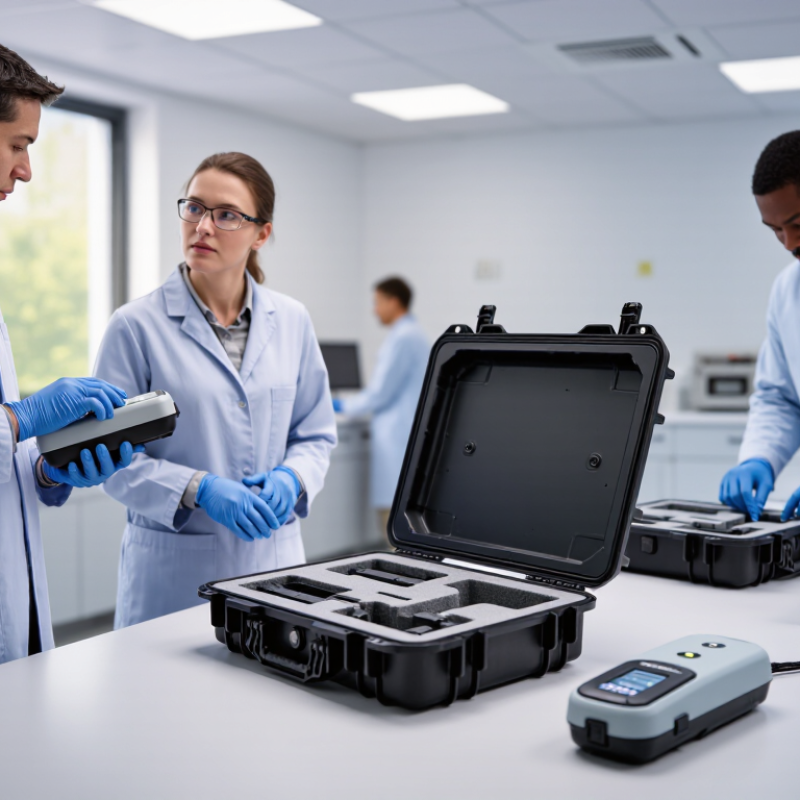
Picture a team carrying a handheld instrument in a protective case, checking its battery, and following the manufacturer’s sampling steps. Clear displays and simple workflows can reduce avoidable mistakes. But no device is perfect. Results depend on training, maintenance, sample conditions, and the detector’s stated capabilities. Verify performance claims against independent documentation, and use suitable confirmation procedures when a result carries significant consequences.
“Speed is useful only when the result is understood in context.” This is an editorially drafted line, not a verified quotation. I cannot responsibly attribute it to a named industry expert without a reliable source. A genuine expert’s name and exact words should be confirmed before publication. That small pause matters. It protects readers from invented authority and keeps product information trustworthy.
Why Choose a Portable Drug Detector?
What Is a Portable Drug Detector?
A portable drug detector is a compact instrument used to screen for selected pharmaceutical compounds outside a full laboratory. Depending on its design, it may analyze a small sample, a surface swab, or a prepared test strip. The device processes a signal and displays an indication, often within minutes. Some systems use optical sensing; others rely on chemical or electrochemical reactions.
In clinics, pharmacies, research settings, and medicine manufacturing, portability can make preliminary checks easier. A staff member might carry the unit between rooms instead of sending every sample away. Small cartridges, a clear display, and simple cleaning steps matter during a busy shift. That distinction matters: a screening result is not the same as a confirmed measurement. Sample quality, temperature, calibration, and the compounds the device is designed to recognize can affect results. False readings are possible. Operators should follow the device instructions, record relevant conditions, and seek laboratory confirmation when a result guides an important decision. A portable detector saves time, but it does not remove the need for careful judgment. Sometimes the hardest part is knowing what the reading cannot tell you.
| Topic | What It Means | Practical Considerations |
|---|---|---|
| Definition | A portable drug detector is a field-deployable instrument or test used to screen a sample for suspected drugs or drug-related substances. | Devices vary in size, analytical method, sample requirements, and whether they identify a substance or only indicate a possible match. |
| Common technologies | Portable systems may use ion mobility spectrometry, Raman spectroscopy, infrared spectroscopy, or colorimetric reactions. | Each method has different strengths. Results depend on the substance, sample condition, instrument library, and testing procedure. |
| On-site use | Testing can take place at locations such as borders, correctional facilities, workplaces, or incident scenes, subject to applicable law and policy. | On-site screening can help inform next steps, but it does not replace appropriate evidence handling or laboratory analysis. |
| Speed and portability | Many portable tests are designed to provide an indication at the point of use without sending every initial sample to a laboratory. | Actual test time depends on the instrument and workflow. Portability may involve trade-offs in sample capacity, automation, or analytical detail. |
| Sample types | Depending on the device and method, samples may include powders, tablets, residues, or vapors collected from surfaces. | Not every device can test every sample type directly. Some samples require collection, preparation, or a suitable sampling accessory. |
| Screening versus confirmation | A positive field result generally indicates that a sample may contain a target substance or a substance with a similar response. | Portable screening can produce false positives or false negatives. Confirmatory identification may require laboratory methods such as gas chromatography–mass spectrometry or liquid chromatography–mass spectrometry. |
| Mixtures and unfamiliar substances | Complex mixtures, cutting agents, low concentrations, and emerging substances can affect detection or interpretation. | Check the device’s validated substance library and limitations. An unknown or inconclusive result should not be treated as proof that a sample is drug-free. |
| Safety and training | Safe operation includes following the manufacturer’s instructions, using appropriate personal protective equipment, and minimizing direct contact with unknown materials. | Personnel should be trained in sampling, contamination prevention, result interpretation, cleaning, and evidence documentation. |
| Choosing a detector | Selection should reflect the substances of interest, sample types, operating environment, required reporting, and available user training. | Compare validated performance, detection limits, library update procedures, consumables, maintenance needs, and confirmatory testing pathways. |
Important: Portable drug detectors are screening tools, and capabilities differ by technology and device. Interpret results in context and follow applicable legal, safety, and laboratory procedures.