Top Water Control Valve Manufacturers for Global Buyers

Water control valves regulate flow, pressure, and direction across water systems, from building services to industrial plants. For global buyers, choosing a manufacturer involves more than comparing prices or product photos. Operating pressure, flow range, valve materials, connection type, and control method all affect performance. A valve suited to clean water may not fit a process with sediment or changing temperatures. Small details matter.

This guide introduces manufacturers serving international markets and outlines practical points for comparing them. Buyers can review product ranges, technical documentation, quality procedures, customization options, delivery capacity, and after-sales support. Ask for clear specifications, installation guidance, and test records that match the intended application. Check how suppliers handle spare parts and technical questions across time zones. Those details often become important after purchase.

No shortlist can identify the right supplier for every project. A polished catalogue may leave unanswered questions, and a familiar brand may not suit a specific system. That is worth remembering. Use the comparisons as a starting point, then verify claims directly with each manufacturer and, where needed, with a qualified engineer. Careful evaluation helps buyers find a water control valve that fits real operating conditions, not just a sales description.
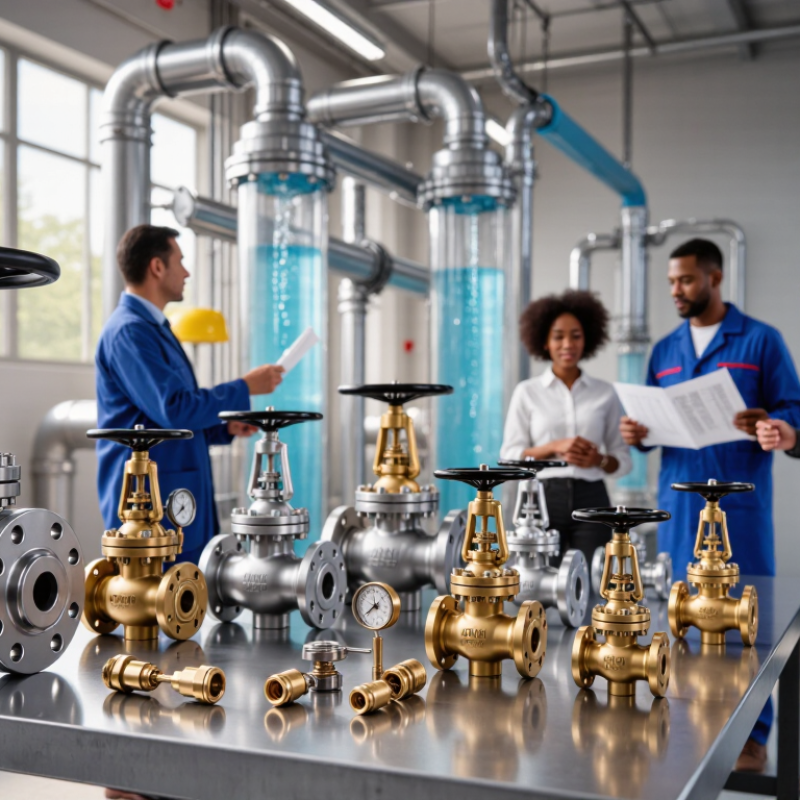
Top Water Control Valve Manufacturers for Global Buyers

Understanding Water Control Valves and Their Role

Water control valves manage where water flows, how much passes, and at what pressure. Isolation valves let crews shut off a pipe section for repairs. Regulating valves adjust flow; check valves help prevent reverse flow. Small movements matter. In a pump room, a valve that closes too quickly can create pressure surges, while a poorly sized control valve may vibrate or wear early. Selection should account for pressure, temperature, water quality, pipe size, and the system’s operating range. The installation matters too. A sound valve can still perform poorly if it is misaligned or maintained infrequently.

The U.S. Environmental Protection Agency’s 2023 Drinking Water Infrastructure Needs Survey and Assessment estimates $625 billion in drinking-water infrastructure needs over 20 years. This is a system-wide estimate, not a valve budget, but it highlights the scale of renewal work. The WHO and UNICEF Joint Monitoring Programme’s 2023 report found that 2.2 billion people lacked safely managed drinking water in 2022. Valves alone cannot close that gap. Yet dependable flow control supports treatment, distribution, and planned maintenance. Buyers should ask for pressure-loss data, materials specifications, test records, and clear maintenance guidance. Paper specifications help, but actual site conditions can be messier than the design sheet.

Common Valve Types and Their Industrial Applications

Water systems use different valve designs to regulate flow, isolate equipment, and prevent reverse movement. Gate valves commonly provide full shutoff on mains and branch lines, where they stay mostly open or closed. They are not suited to frequent throttling. Globe valves offer finer adjustment, making them useful on cooling-water lines and process loops. Small changes matter.

Butterfly valves are compact and practical on large-diameter pipes in treatment plants and building services. Ball valves provide quick isolation on smaller lines, such as equipment connections. Check valves close when flow reverses, helping protect pumps and upstream equipment. Their installation direction matters. Pressure-reducing valves help maintain a controlled downstream pressure in distribution networks, but poor sizing can cause unstable performance.

Application details should guide selection. A valve handling treated drinking water may need different materials from one exposed to warm, sediment-laden process water. Consider pressure, temperature, flow range, pipe size, and how often operators will adjust the valve. There is no universal best choice. Field conditions can differ from drawings; even modest debris may affect a valve’s movement or sealing. Access for inspection and maintenance deserves attention before installation.

Common Water Control Valve Types: Typical Flow-Modulation Suitability

A qualitative guide to how commonly used valve types typically suit adjusting water flow.

Ratings are indicative, not measured performance data: 0 means generally unsuitable for flow modulation, while 5 means typically well suited. Globe valves are commonly used for throttling; butterfly and diaphragm valves can also regulate flow. Gate and standard ball valves are generally better suited to isolation, while check valves prevent reverse flow automatically. Actual suitability depends on valve design and operating conditions.

How to Evaluate Water Control Valve Manufacturers

Evaluating Water Control Valve Manufacturers

A reliable evaluation starts with the operating conditions, not a glossy catalogue. Record pressure range, water temperature, flow rate, pipe material, and how often the valve will cycle. A manufacturer should explain how its proposed valve suits those conditions. Ask for pressure-test results and clear installation limits. Vague answers deserve follow-up.

Look closely at materials and quality controls. Request specifications for the body, seals, and internal components, then check whether they match your water chemistry and service environment. Ask how batches are inspected and how defects are traced. Useful documentation should include dimensional drawings, maintenance guidance, and test records. A sample valve can reveal rough threads or a stiff handle, though one sample cannot prove consistent production.

After-sales support matters when a valve leaks at an inconvenient hour. Check response times, spare-part availability, warranty terms, and whether technical staff can review installation questions. Speak with buyers who use similar valves under similar conditions. Price still matters, of course, but the cheapest quotation may omit testing or support details. I have seen comparison sheets make products look equal when their service assumptions were not. That part is easy to miss. Ask each supplier to quote against the same requirements, and keep unanswered questions visible before approval.

Top Water Control Valve Manufacturers for Global Buyers - How to Evaluate Water Control Valve Manufacturers
Evaluation dimension What to assess Evidence to request Buyer’s evaluation check
Application and valve type Confirm the manufacturer’s experience with the required valve function, such as pressure-reducing, pressure-relief, flow-control, or isolation service. Product data sheets, application references, installation instructions, and operating limitations. Check that the proposed valve’s function and control method suit the system; do not compare products solely by nominal size.
Pressure and temperature ratings Verify allowable working pressure and temperature for the complete valve assembly, including body, trim, seals, and actuator where applicable. Published pressure-temperature ratings, design documentation, and test records for the offered configuration. Match ratings to the system’s operating and transient conditions. Pressure class and temperature limits vary by design and material.
Size and connection compatibility Check nominal size, face-to-face dimensions, end connections, and any required installation orientation or straight-pipe allowance. Dimensioned drawings, connection standards, and installation guidance. Confirm compatibility with the project’s piping standard and available space before ordering.
Materials and water quality Review body, internal components, coatings, and elastomers for compatibility with the water, operating conditions, and intended service. Bill of materials, material specifications, coating details, and documentation for wetted components. For drinking-water applications, verify the applicable local requirements for every wetted material and the exact product configuration.
Drinking-water approvals Determine whether product approvals are required in the destination market and whether they cover the specific model, size, and materials. Current certificates or listings from the relevant approval body, with scope and model details. NSF/ANSI/CAN 61 addresses health effects of drinking-water system components; NSF/ANSI/CAN 372 addresses lead content. Requirements and accepted approvals vary by jurisdiction.
Pressure and leakage testing Establish which inspection and pressure tests are performed and what acceptance criteria apply to the valve type. Inspection and test plan, test reports, and stated test standard and edition. ISO 5208 and EN 12266-1 cover pressure testing of industrial valves; confirm that the selected standard and test procedure are appropriate to the product and project.
Quality management Assess whether manufacturing and inspection processes are controlled and consistently documented. Quality-management-system certificate, its scope and validity, and applicable inspection procedures. ISO 9001 certification concerns a quality management system; it is not, by itself, a product approval or guarantee of valve performance.
Control performance For regulating valves, review flow capacity, controllable range, response, stability, and any required control signal or fail-safe action. Flow or sizing data, control diagrams, actuator specifications, and operating instructions. Ask for sizing against the project’s actual flow, inlet pressure, outlet pressure, and operating range rather than relying on nominal pipe size alone.
Traceability and documentation Check whether supplied valves can be linked to their materials, production batches, inspections, and test records. Sample nameplate, serial or batch identification details, material records, and document index. Agree on required records, language, format, and retention expectations in the purchase specification.
Serviceability and spare parts Evaluate access to maintenance instructions, replacement parts, and technical support over the expected service period. Exploded parts list, maintenance schedule, spare-parts lead times, and support contacts or service terms. Confirm which components are serviceable in the field and whether special tools or trained technicians are required.
Export and delivery readiness Review packaging, shipping protection, delivery terms, and the supplier’s ability to provide complete export documentation. Packaging specification, stated lead time, shipping terms, and a sample document pack. Confirm delivery responsibilities, destination requirements, and document needs before placing the order.

Leading Manufacturers Serving Global Buyers

Manufacturers serving global buyers need more than a broad valve catalogue. They must understand different water systems, operating conditions, and procurement expectations. A useful supplier can explain how pressure range, flow rate, water chemistry, and installation position affect valve selection. Small details matter. A valve suited to a building’s cooling loop may not fit a high-pressure treatment line.

Reliable manufacturers provide clear drawings, material specifications, test records, and practical installation guidance. Buyers should check that documents match the exact model and configuration being quoted. Ask about body and seal materials, allowable temperature, connection types, and inspection procedures. These questions can prevent costly mismatches after delivery. Not every supplier answers them equally well.

Global orders also depend on communication and continuity. Confirm production lead times, packaging for long-distance transport, replacement-part availability, and how technical questions are handled across time zones. Regional requirements can differ, so buyers should verify applicable specifications with qualified local professionals rather than assume one document covers every market. A sample review or factory inspection may reveal issues that paperwork misses. Even experienced teams can overlook a detail; checking assumptions early is often worth the extra time.

Global Sourcing, Standards, and After-Sales Support

Global sourcing begins with the duty conditions, not the catalogue photograph. Buyers should share media type, pressure range, temperature, flow rate, and connection details before requesting quotations. These specifics help manufacturers recommend suitable valve materials and configurations. A practical comparison also checks production capacity, inspection records, lead times, and export packaging. Details matter.

Standards vary by market and application, so confirm which product and quality requirements apply to the destination. Request current certificates, test reports, and traceable material documentation; then verify that their scope matches the quoted model. A neat certificate can still leave questions. One overlooked detail, such as an incompatible flange dimension, can delay installation after the shipment arrives.

After-sales support deserves the same scrutiny as price. Ask how quickly technical questions are answered, whether replacement parts are available, and what information is needed to assess a fault. Clear installation guidance and a realistic warranty process can reduce downtime. A written response-time commitment is useful, though it cannot replace skilled local service. Even experienced procurement teams may miss small operational needs. Share site photos, maintenance constraints, and spare-part preferences before placing the order. This gives both sides a more practical basis for support.

Enquire Today

"*" indicates required fields